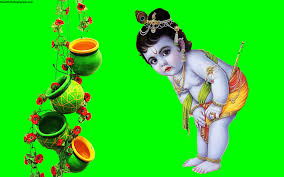
Episode # 53 – Bhagawan Vishnu delegates the job of “CREATION” to Bramha!!!

Little Krishna

In the previous episode, we had witnessed Sage Sukhaachaarya’s extended reply to King Parikshit on how Bhagawan has created this world, step-by-step. As we’ve seen, Bhagawan first created the “Tathva”, and from there, He created 23 different constituents that comprises the world today. Then, to control all these 23 different constituents, Bhagawan created the 24’th constituent called the “Mind” or the “Manas”. This is why we see that our mind controls all of our behaviours, attitudes, activities, etc.

However, all of these 24 items would be considered “dead” and “useless”, if one more constituent is not there! Here comes the 25’th constituent, which is nothing but the “Aatman” or the “Soul”. As we know by now, the “Aatman” is the basic fundamental ingredient for all life to prosper in this world. Every living being has an “Aatman” dwelling inside – Including plants as well. Although we do not realize this, we should understand that even plants, shrubs and trees have an “Aatman” within them. Of course, all of us know that animals (including human beings) are born with this “Aatman” and when we die, our “Aatman” either gets transferred to another physical body (depending on our “Karma”) or reaches Bhagawan (“Moksha”). Thus from this point, we realize that the “Aatman” is an item that can never be destroyed and it just sticks to us wherever and in whatever form we are in this world. It is not only us here – There are crores and crores of “Aatmans” that are to be created in this world. As Bhagawan thinks of giving these “Aatmans” some life to live, he creates the seven “Lokas” or “Worlds”. Many of us might be knowing the seven lokas here – “Bhooloka (Where we are right now), Bhuvar Lokha, Suvar Lokha, Maha Lokha, Jana Lokha, Tapo Lokha and Sathya Lokha.

It is thus only within these seven “lokhas” that these “Aatmans” need to be implanted! It is to be remembered that so far whatever Bhagawan has created, are all non-living beings. Anything in this world without an “Aatman” within, is considered to be a non-living being. For instance, a table, chair, wall, etc. are non-living because of this same reason. Similarly, a dead body’s condition is very similar too!

Now the question is how is Bhagawan going to do this? Bhagawan first creates the most important “Aatman” from His lotus-like lips. This “First Aatman” is going to be responsible for the creation of thousands and millions of “Aatmans” in this world. This “First Aatman” is none other than Bramha Himself, who is four-faced and sitting on a beautiful lotus. Each of the four faces of Bhagawan Bramha indicates four different Vedas – Rig, Yajur, Saama and Atharvana.

Thus, Bhagawan Vishnu creates the “First Aatman” called Bramha, and teaches him all the four Vedas. At the end of the teaching, Bhagawan says to Bramha thus, “Oh Bramha Deva! From today, you would take the responsibility of creating all the Aatmans in all the seven worlds! I’ve done enough by creating 25 different items!” As Bhagawan Vishnu says thus, Bramha takes up the huge responsibility of “creation”! He then starts creating “Aatmans” by 10 different types of “Shrishtis” or “categories” of living organisms on this world – Based on the ways in which they move, talk, producing sounds, reproduce, etc. In this way, Bhagawan Bramha creates even the Devas (Celestial Beings), Raakshasas, Dhaanavas, Yakshas, Kinnaras, Gandharvas, Yama Dharma Raja, etc. etc. etc. – The list goes on, on and on! Thus, whatever, whoever need to be created in this world, Brahma makes it a point to create all of them in the world.

Thus, here we can witness two types of creations – One was from Bhagawan Vishnu, wherein He created the world with all the non-living items and finally culminated by creating Bhagawan Bramha! From this point, the second type of creation starts, wherein Bhagawan Brahma takes over from his “Creator”, Vishnu. Now Bhagawan Bramha creates all the “Aatmans” inclusive of all sorts of living beings in the world, and also in the celestial space. The creations that Bhagawan Vishnu had made are referred to as “Samashti Srishti” and those creations that Bhagawan Bramha makes, after He officially takes over the batton from Bhagawan Vishnu is called “Vyashti Srishti”.

It is at this point in the third “Skanda” that we are in at the moment. Now as Bhagawan Vishnu delegates the responsibility of further creation of this world to Brahma, the first creation of Bramha that Sage Sukhaachaarya talks about in the Bhaagawatha Puraana is a person by name “Svaayambhuva Manu”. It is only from this stage, is the story of Shrimad Bhaagawatha Puraana starts flowing like a continuous river! From this point onwards, it is all going to be a vast but interesting storyline! We shall wait till the next episode to commence witnessing the interesting accord of this Svaayambhuva Manu – Who is this person? Why is he so important? What can we learn from his story? Let’s answer all these questions in the upcoming episode! Stay tuned! 😊


Episode # 52 – “Bhagawan creates the “Mind” and “Aatman” – Sage Sukhaachaarya explains!!!

cropped-little-krishna1.jpeg

In the previous episode, we had witnessed the continuation of Sage Sukhaachaarya’s detailed answer to King Parikshit as to how this world is created by Bhagawan. He gives an important phase of the answer here – The world is created out of the five elements, which are collectively called as “Tathva”. This “Tathva” is created from something called as “Ahankaara”. This “Ahankaara” is created from another raw-material called “Mahaa”. This “Mahaa” is created from a raw material called “Prakriti”. All of us living beings are created from “Prakriti” and this is why we’re called as “Praakrita” objects. This “Ahankaara” is used by Bhagawan to create the five elements – “Prithivi”, “App”, “Tejas”, “Vaayu” and “Aakaasha”. From these five elements, arise all living and non-living beings in this world! With these five elements, Bhagawan creates the five types of experiences that we’re able to witness in this world – “Sabhdha”, “Sparsha”, “Roopa”, “Rasa” and “Vaasana”. We’ve seen a detailed accord of all of these in the previous episode. To understand the meaning of these five “experiences”, Bhagawan has created the five sensory organs in all living beings – Eyes, nose, skin, ears and tongue.

In our Sanaathana Dharma texts, these five senses are often referred to as “Gnyaana-Indhriyaas”.“Indhriyaa” means “senses” and “Gnyaana-Indhriyaas” means the senses that this physical body of ours can experience.

To maintain a count thus, we’ve witnessed five main elements in the form of “Prithivi”, “App”, “Tejas”, “Vaayu” and “Aakaasha”. Subsequently, Bhagawan created five types of experiences that arise out of these five elements – “Sabhdha”, “Sparsha”, “Roopa”, “Rasa” and “Vaasana”. To understand the meaning of all these, Bhagawan again created five sensory organs – Eyes, nose, skin, ears and tongue. These put together are fifteen in number. Now this is not the end of all.

We’ve got another five “Indhriyaas” called as “Karma-Indhriyaas”, apart from the five “Gnyaana-Indhriyaas” that we’ve seen till now. What are those five “Karma-Indhriyaas”? They are nothing but “Vaak”, “Paani”, “Paada”, “Paayu” and “Upastham”. I shall give a brief accord on all these five now. “Vaak” signifies our communicating ability. We use our mouth and tongue, not only to taste food and water, but also for talking, isn’t it? Thus, the mouth is the most important mode for communication – Not only for human beings, but also for animals too. Next thing is “Paani”. As we move on with life, we’ve to do lot of actions and tasks, isn’t it? What are those organs that we use to do work? Our two hands! Thus, “Paani” signifies the mechanisms through which we perform tasks, which is nothing but our hand. Next comes “Paada” – Can we be stationary and immobile at one particular place? We can never be! To make us mobile from one place to the other, we need some instrument to carry our body from place A to place B. This is enabled by our feet! Hence, “Paada” signifies our capability to walk from one place to the other, which is possible with our two feet. Now moving on to the last two – “Paayu” and “Upastham”. Whatever we consume, has to be filtered and the waste has to be thrown out of the body, isn’t it? This is why we have the two openings in our body through which the unwanted waste items are excreted outside.

Thus, put together, we have 23 different constituents that comprise this world. Still there is one person, who would be the leader of all these 23 items. Who is that? There should be somebody to rule all of these 23 items, isn’t it? This “leader” of all these 23 items is nothing but our “Mind” or “Manas” It is only the mind that decides whether to see a particular object or not, whether to taste a particular food item or not, whether to smell something or not, whether to listen to something or not and whether to touch or not! Similarly it is the mind that decides whether to do some work or not, whether to walk from one place to the other or not, etc. This is why we say that the “Mind” is the leader” and the “instruction provider” to all of these 23 different items that constitute the world.

Saying thus, this world is constituted of 24 different items, including the “Mind”. All these are first created by Bhagawan in this world. It is only after all these 24 items, Bhagawan creates one more important item, which is nothing but the “Aatman” or the “Soul”. As we know by now, the “Aatman” is the basic fundamental ingredient for all life to prosper in this world. Every living being has an “Aatman” dwelling inside – Including plants as well. Although we do not realize this, we should understand that even plants, shrubs and trees have an “Aatman” within them. Of course, all of us know that animals (including human beings) are born with this “Aatman” and when we die, our “Aatman” either gets transferred to another physical body (depending on our “Karma”) or reaches Bhagawan (“Moksha”).

Thus from this point, we realize that the “Aatman” is an item that can never be destroyed and it just sticks to us wherever and in whatever form we are in this world. It is not only us here – There are crores and crores of “Aatmans” that are to be created in this world. As Bhagawan thinks of giving these “Aatmans” some life to live, he creates the seven “Lokas” or “Worlds”. Many of us might be knowing the seven lokas here – “Bhooloka (Where we are right now), Bhuvar Lokha, Suvar Lokha, Maha Lokha, Jana Lokha, Tapo Lokha and Sathya Lokha.

It is thus only within these seven “lokhas” that these crores and crores of “Aatmans” need to be implanted! How is Bhagawan going to do this? An interesting accord awaits us next episode! Stay tuned! 😊


Episode # 51 – “How does Bhagawan create this world?” Sage Sukhaachaarya’s answer continues!!!

Little Krishna

In the previous episode, we had witnessed the extension of the discussion on the different “states” through which the world transcends every time – “Sthoola” and “Sookshma”. From yesterday’s explanation we witnessed that this process of transformation between the two states of “Sthoola” and “Sookshma” is a continuous cycle and is a perpetual one. It is only within this cycle that we as “Jeevaatmas” are stuck too! This is what we precisely call the “birth-and-death-cycle” too. How do we get ourselves released from this vicious cycle and reach Bhagawan? For this, Bhagawan has given us the golden opportunity of being born as a human being and has given us the apt infrastructure to perform spiritual practices so that we train our mind towards spiritual growth. It is now up to us to use this opportunity given by Bhagawan to utilize these “tools” and “guidelines” to attain “Moksha” and to liberate ourselves from this vicious cycle of birth and death.

Now moving on further, let us witness the next phase of answer given by Sage Sukhaachaarya. Here he is going to explain to King Parikshit as to how has Bhagawan created this world. Basically, as we might know well, this world comprises of two types of constituents – Living beings (Also called as “Chith” in Sanskrit) and non-living beings (Also called as “Achith” in Sanskrit). Living beings are of course ourselves (human beings), other kinds of animals, insects, reptiles, plants, trees, etc. Non-living beings are of course stones, sand, wood, etc. that do not have a life of their own. In fact, Sage Sukhaachaarya presents a very interesting point here – Bhagawan creates this world only from non-living beings – In other words, the table, chair, wood, body of animals, plants, also inclusive of our human body are all considered to be lifeless. It is to be noted that bodies of living beings are originally lifeless and they come to life only because of the “Aathman” (Soul) that is within them. Thus all of these so-called “non-living entities” are comprised of the five main elements of the world“Prithivi” (Land), “App” (Water), “Tejas” (Fire), “Vaayu” (Wind) and “Aakaasha” (Sky or Open space). Thus, Bhagawan first created these five elements, also called the “Tathva”. This “Tathva” is like the nucleus for everything. It is only with this “Tathva” is Bhagawan going to create all other beings in this world. For instance, only if we have clay, we can make a pot. Only if we have wood and iron, we can make chairs, tables, etc. Thus for creating something, we need some “raw materials”, isn’t it? Similarly here, Bhagawan uses the “Tathva”, which comprises of the five main elements as the raw material to create the world.

In fact, this Tathva also is made of another raw material. This is called “Ahankaara”. Readers should be careful here, not to get confused. I shall explain it in a simpler way – The world is created out of the five elements, which are collectively called as “Tathva”. This “Tathva” is created from something called as “Ahankaara”. This “Ahankaara” is created from another raw-material called “Mahaa”. This “Mahaa” is created from a raw material called “Prakriti”. Thus we can see here that all of us living beings are created from “Prakriti” and this is why we’re called as “Praakrita” objects. However, this term called “Praakrita” is valid only until the point we’re living in this world with this physical body. Once we reach Moksha, we would then be called “Apraakrita”. The “Aprakrita” objects are not derived from “Prakriti” and hence the name. Thus we should understand here that those objects and entities that are made out of “Prakriti” are the ones that are subjected to creation and destruction with the passage of time.

Thus, “Prakriti” gives rise to “Mahaa”. “Mahaa” gives rise to “Ahankaara”. This “Ahankaara” is used by Bhagawan to create the five elements – “Prithivi”, “App”, “Tejas”, “Vaayu” and “Aakaasha”. From these five elements, arise all living and non-living beings in this world! I hope our readers are now getting more clarity on this subject.

Now moving on to the subsequent context, these five elements have their own characteristics. For instance, “Prithivi” (Land) has a characteristic called “Smell” or “Vaasana”. Many of us might have the experience of getting the smell of earth – Especially when it starts to rain! “Aakaasha” (Open space) has the characteristic of “Sound” (“Sabdha”) . “Vaayu” has the characteristic called “Sparsha”, which is “Touch” or “Feel”. If we experience breeze flowing towards us, we feel so pleasant and relaxed, isn’t it? “Tejas” has the characteristic of “shine” and “glitter” (“Roopam”). If we witness fire, we of course can see it with a glow, isn’t it? Next is “App” or Water. Water is characterized with “Taste”. If we drink water, we discover many tastes from it, isn’t it? This is called as “Rasa”. Thus, “Sabhdha”, “Sparsha”, “Roopa”, “Rasa” and “Vaasana” are the five important characteristics that the five elements of the earth possess.

Next, comes the five senses. In order to experience these five characteristics, Bhagawan creates one sense organ for each of the characteristic. For instance, to experience sound, we have ears. To experience touch, we’ve got our skin. To experience taste, we’ve got our tongue. To experience smell, we’ve got our nose. To experience the vision of the glitter and shine, we’ve got eyes.

So for today, let us recollect and understand all of these points. Readers are requested to take adequate notes of all these points for remembrance and understanding. We still have five more elements to look into. Let us wait till the next episode to continue this discussion further! Stay tuned! 😊


Episode # 50 – “Why should we meticulously perform spiritual practices?” – Sage Sukhaachaarya’s key reply!!!

Little Krishna

In the previous episode, we had witnessed a very important discussion on two important aspects of the world – “Sthoola” and “Sookshma”. Sage Sukhaachaarya explains all of this to King Parikshit as he asks the important question of how this world came into existence and what is the real nature of this world. Sage Sukhaachaarya thus gives a detailed response to King Parikshit by saying that the world is an ever-perpetuating entity that can never have an end as such. All the beings in this world go through two states called “Sthoola” and “Sookshma”. Whereas the world that we see around us every day in the physical form, is “Sthoola” in nature, all of this would attain the state of “Sookshma” after a period of time. This state of “Sookshma” can be invisible in nature, but it is still there and not disappeared. We’ve to understand this concept very clearly. I’ve tried to explain this with various examples in the previous episode.

However, in all of these Sthoola and Sookshma states, Bhagawan is present! This is why we always keep saying that Bhagawan is “omni-present” everywhere in this world, and He exists in the “Sookshma” form. If we say that Bhagawan Krishna exists in the form of Shrimad Bhaagawatha Puraana text itself, it means that Bhagawan Krishna is existing in the “Sookshma” form inside this text. Similarly, Bhagawan resides inside all of us. However, He cannot be visibly seen, isn’t it? This is exactly like how milk goes through various stages to take the form of ghee. How do we get ghee? We’ve to boil the milk, transform it into curd, drill the curd and process it to make it into butter, heat the butter to a high temperature and make ghee out of it. However, even though ghee has its own properties and taste, it is still a milk product and milk is very much existent as part of the ghee, isn’t it? Similarly, Bhagawan is present inside all of us. But how do we realize Bhagawan’s presence? Just like how we process the milk through several stages to realize the ghee in it, we’ve to process our mind and heart by performing various spiritual practices to realize Bhagawan. Thus, the main purpose behind performing spiritual practices regularly is to slowly condition and tame our mind in such a way that we would be able to realize Bhagawan within us. It is just like processing milk through several stages to obtain ghee, which is the most desired forms that we like and consume. We’ve to realize that Bhagawan is everywhere and within all of us, just like how milk is present in abundance in this world. However, just like we realize the ghee from milk by putting it into innumerable processes, we’ve to realize Bhagawan within us by putting our mind into innumerable spiritual practices and conditioning it.

Moreover, who is controlling all the activities that are happening in this world? It is Bhagawan himself! Out of His kindness and mercy towards all of us, Bhagawan has created this wonderful earth and has given us an opportunity to experience its beauty. It is just like what a male peacock does. We must have observed – Whenever the male peacock comes across a female peacock, or a bunch of rain clouds gathering around the sky, it becomes very happy. As a result of the happiness, the male peacock expands its beautiful wings and starts to dance here and there with joy. Similarly, out of happiness, Bhagawan too expands his beautiful “wings” in such a way that this beautiful world is created. However, when the period of happiness ends, the male peacock again shreds its wings into itself, isn’t it? Similarly when the appropriate time comes, Bhagawan too shreds off this world and takes off its beauty by “destroying” it (Samhaaram)! This process keeps happening at the end of every “Yuga”, wherein “Adharma” increases and Bhagawan has to incarnate on the earth, to set things right and restore the Dharma back on the earth. In this process, there would be varying amounts of destruction (Samhaaram) that the world would have to undergo. Thus, it is important for all of us to understand how the world transforms from the state of “Sthoola” to “Sookshma”. As “Samhaaram” happens, the world goes into the state of “Sookshma”. However as time progresses, the world again transforms itself from the state of “Sookshma” to “Sthoola”, wherein people get born, population increases, activities are on the rise, “Adharma” increases, etc. and again Bhagawan takes an incarnation to convert this Sthoola into Sookshma state.

Thus from this explanation we can witness that this process of transformation between the two states of Sthoola and Sookshma is a continuous cycle and is a perpetual one. It is only within this cycle that we as “Jeevaatmas” are stuck too! This is what we precisely call the “birth-and-death-cycle” too. How do we get ourselves released from this vicious cycle and reach Bhagawan? He has again given us the golden opportunity of being born as a human being and has given us the apt infrastructure to perform spiritual practices to train our mind towards spiritual growth. It is upto us to use this opportunity given by Bhagawan to utilize the “tools” and “guidelines” to attain “Moksha” and to liberate ourselves from this vicious cycle of birth and death.

So for today, let us ponder over this important point once more and let us take a conscious effort to do the needful! We shall wait till the next episode to witness the continuation of Sage Sukhaachaarya’s reply to King Parikshit! Stay tuned! 😊


Episode # 49 – “Sthoola” and “Sookshma” – Two important “states” of the world!!!

Little Krishna

In the previous episode, we had witnessed King Parikshit sitting down with Sage Sukhaachaarya to commence the proceedings of the Bhaagawatha Puraana. King Parikshit asks a series of questions to Sage Sukhaachaarya and the answers that come out of each question, form the contents of this text. Of course, Sage Sukhaachaarya gives detailed narrations from various examples and also from Bhagawan’s various incarnations in this world. He illustrates the answers with what Bhagawan do in this world to establish and re-establish the Dharma at different points in time!

In that way, King Parikshit asks Sage Sukhaachaarya the first question as to how this world was created and what is the nature of this world. Sage Sukhaachaarya says that the world is conceptualized and created by Bhagawan as per the rules and regulations ascertained in the Vedas. Post that, the world can never be destroyed by whatever force. The world will keep running and chugging ahead, irrespective of whatever “Yuga” or whatever might be the nature – “Dharma” or “Adharma”. Of course, as Bhagawan Krishna has said in the Bhagawad Gita, He would incarnate in this world to set things right as per the Dharma, at a time when Adharma reaches its peak. Although Bhagawan “destroys” few people in the process, this could not be termed as “destruction” in the literal sense. Everything on this earth, be it a living or a non-living being, can never be totally destroyed – It can still take up some form or the other and exist in this world. This is where we witnessed the example of a mud pot. If the pot is intact, then we say that the mud exists in the form of a pot. Whereas, if the pot is broken down, the mud is still there, but now it is in a powdered form. Similarly, carbon can exist in different forms like Graphite, Diamond, etc. In the science of Chemistry, this phenomenon is referred to as “Allotropy”. If we burn down the diamond, it is going to be reduced to carbon ashes. Although the diamond stone might be considered to be “destroyed” in the process of burning, it still exists in a different form – That is, ashes of carbon!

Hence from all these discussions, we can see that this world can never be destroyed. It has a perpetual existence yuga after yuga. However, there is another important point to be noted here, which is a continuation of the previous point. If we say that the world is getting “destroyed” because of various natural calamities, it is not the literal meaning here also. It just means that the “state” in which the world exists, is changing. This is why we say that the world is susceptible to “change”. For instance, if we take a look at the geographical map of the world that existed around 10,000 years ago, we would be able to see a huge difference in which various continents were placed. For instance, until few thousands of years ago, geologists claim that the land masses of today’s Asia and Africa were together without any separation, and the landmasses of today’s Australia and adjoining Indonesia were totally smudged with the Asian landmass. However, over thousands of years, the world has gone through innumerable changes and thus today we see Asia and Africa separated by the Arabian Sea, Australia, New Zealand, etc. taking shape and the land masses of Indonesia, Malaysia, etc. also coming into the picture. Thus, we can see here that the world undergoes change, but can never be destroyed.

Similarly, today the world contains plants, animals, human beings, buildings, houses, etc. However, these things are not going to be permanent. After some point in time, all of these are going into a state of “Sookshma” and the process by which these things are attaining this “Sookshma” stage is called “Samhaara”. Readers need to be very careful in understanding these terminologies here, as it might get a bit confusing. However, these things that have attained the state of “Sookshma” can again take forms of plants, animals, human beings, etc. in this world, and this phenomenon is called as “Sthoola”. Thus, whatever might be in the “Sookshma” state today, can take the form of “Sthoola” tomorrow, and vice versa. Thus, “Sthoola” is the state of all objects in the world, which can be seen as a definitive form by our naked eyes. “Sookshma” is a state wherein all of these objects do exist, but in the invisible form.

There can be a slight confusion here – How do we say that if something exists, but still cannot be seen? Is this possible? Yes, it is possible! For instance, if we take a towel, rinse it with water, wash it, take it out of water, squeeze it and put it in the open for drying, is the water still existing in the towel? Yes, isn’t it? It is only because of the presence of the water in the towel, we say that the towel is “wet”. Although we might not be able to see water in the towel in the normal form, small and minute granules of water is still sticking on to the fabric of the cloth, thus making it “wet”. In fact, in the wet towel, water is everywhere in it. However, if we look at the towel, we can only see the cloth but not the water in it. This means that the water in the towel is in a “Sookshma” form and not in the “Sthoola” form. The “Sthoola” form here is the towel that is hanging on the rope. We can see the towel with our naked eye, but not the water that is making the towel “wet”. This “wetness” of the towel is referred to as the “Sookshma” form of water.

Similarly, the world that we see around us every day, is “Sthoola” in nature. All of this would attain the state of “Sookshma” after a period of time. However, in all of these Sthoola and Sookshma states, Bhagawan is present! This is why we always keep saying that Bhagawan is “omni-present” everywhere in this world, and He exists in the “Sookshma” form. If we say that Bhagawan Krishna exists in the form of Shrimad Bhaagawatha Puraana text itself, it means that Bhagawan Krishna is existing in the “Sookshma” form inside this text.

So for today, let us ponder over this important point and understand the difference between the two states of the world. We shall wait till the next episode to witness the continuation of this discussion further. Stay tuned! 😊


Episode # 48 – “The world can never be destroyed!” – Sage Sukhaachaarya explains to King Parikshit!!!

Little Krishna

In the previous episode, we had witnessed two important aspects wherein Sage Sukhaachaarya is training King Parikshit into the spiritual pursuit. Although it’s hard, Sage Sukhaachaarya makes King Parikshit go through the initial hardship so that he gets the requisite level of maturity to grasp the contents of Shrimad Bhaagawatha Puraana correctly. Sage Sukhaachaarya initiates King Parikshit into several rounds of penance, wherein King Parikshit fails every single time! As he fails, Sage Sukhaachaarya lowers the level a bit, yet he relentlessly makes King Parikshit try. We witnessed the various reasons why he did that.

Now moving on with the episode further thus, Sage Sukhaachaarya makes King Parikshit a fully trained person in terms of focusing the mind in a proper way towards Bhagawan. Now King Parikshit and Sage Sukhaachaarya sit together for discussion as the Bhaagawatha Puraana commences. The first question that King Parikshit is asking Sage Sukhaachaarya is thus: “Oh Sage! Please explain to me how was this world created. You’ve taught me how to do meditation, penance, etc. But now I have few questions that follow. Please give me the knowledge on this. As King Parikshit asks this question, Sage Sukhaachaarya replies thus:

“Bhooya yeva vidithsaamin bhagawaan aatmamaayayaa!

Yathedham srijathe vishwam dhurvivaabhyam adheeshvaraihi!!

Yathaa gopaayathi vibhuryathaa sanyachhatheh punaha!

Yaamyaam shakthim upaashrithya purushakthihi parah pumaan!!”


Sage Sukhaachaarya replies to King Parikshit thus: “Oh Parikshit! You’ve asked a very important question. Now let me explain the concept of how this world functions. This world is a combination of two important parameters – Creation and Destruction. These two parameters would keep on happening, irrespective of whichever “Yuga” the world transcends through. If there is a creation, there is definitely going to be a destruction. However, when we talk of the term “Destruction”, it doesn’t take the literal meaning of being destroyed. Things in the world would keep changing their forms from one to the another with the passage of time!”

This is one important concept that we should remember – There’s nothing called “destruction” in this world. For instance, if we have a gold ornament today in our hands, for whatsoever reason tomorrow, this ornament might be melted into liquid gold and can be changed into another ornament, isn’t it? For instance, we get a gold necklace today, and we can convert it into a golden bangle or a earring, etc. isn’t it? Similarly, we have diamond which is one of the most precious items in the world. Diamond is nothing but an “allotropic” form of carbon. If we heat diamond to a high temperature, it would get burnt down to just ashes in no time, which is another form of carbon. Thus, the element called “Carbon” is the same – It doesn’t get destroyed. However, from time to time, this carbon changes its form from ashes to graphite and from graphite to diamond, or from diamond to ashes again! Similarly, when we make a pot out of mud, it can remain as a pot for sometime. However, if we “destroy” it, maybe the pot might be broken, but it would become mud again. The mud is never going to change. Again if we want, we can mix water with the mud, make it into a clay and make a pot out of it in turn! After the making of the pot, if someone says, “Oh! The mud is missing!”, where does this mud go? It is just in the form of the pot. The mud hasn’t gone anywhere.

This is how our human life is too – We’re in the form of this physical body today. After this birth is over, we might take a different physical body. After that birth is over, we again keep changing our form. However, our “Aatman” (Soul) is the same and it never gets destroyed. This is exactly what Newton proposed in Physics too. In his second law of motion, he says, “Energy can never be destroyed! It can only be transferred from one form to the other”, isn’t it? Similarly, this entire world, as it passes through different “Yugas”, would not be “destroyed” as such, but would pass through various subtle stages wherein Bhagawan would show His presence everytime to alter things.

This is exactly how the world functions and this is what Sage Sukhaachaarya teaches King Parikshit first up! So for today, let us think and ponder over this important point and we shall wait till the next episode to continue this discussion further! Stay tuned! 😊


Episode # 47 – Why is Sage Sukhaachaarya repeatedly initiating King Parikshit into penance, despite failures? An important message!!!

Little Krishna

In the previous episode, we had witnessed Sage Sukhaachaarya initiating King Parikshit again into meditation and penance. We had a detailed discussion as to why is he doing this again and again, although knowing that King Parikshit wouldn’t be able to succeed in any of his attempts. The reason behind this is very simple – Only if someone is initially shown the hard path, will they realize the significance of the task. Spirituality is no exception to this. Here, Sage Sukhaachaarya makes sure that King Parikshit walks the hard path first. He has to experience the toughness and only then, the craving to attain Moksha would get stronger. Had Sage Sukhaachaarya directly initiated him into Shrimad Bhaagawatha Puraana, he would never have understood the importance of reaching Bhagawan’s feet.

This is why, he first made him sit and meditate upon Bhagawan by imagining him to be taking the form of the 14 “Lokas”, with each of the Lokas representing each of His body parts. King Parikshit failed miserably in imagining such things, as he has never seen Bhagawan in that way! Second time, Sage Sukhaachaarya simplifies the assignment a little bit by telling him that he should again go and meditate by imagining Bhagawan as a small boy, blue in color, with an attractive and a charismatic form, with a flute in His hands, with a peacock feather on His forehead, etc. As King Parikshit sits to meditate with this assignment in mind, again he fails! He is still unable to imagine and recollect this form of Bhagawan too! So he runs back to Sage Sukhaachaarya saying thus, “Oh Sage! I think I’m not tailor-made for spirituality! I’m somewhere in the lowest of the low levels of spiritual development. I can never succeed in doing all this penance and things! So is there any other easy way that I can take, so that I attain Moksha quickly?”

Upon these words from King Parikshit, Sage Sukhaachaarya gives more descriptions of Bhagawan and tries to bring Bhagawan right in front of King Parikshit with his beautiful way of talking! He explains Bhagawan’s ravishing beauty and charismatic face, explains each and every unique feature of Bhagawan’s body and the weapons that He has in His hands. Sage Sukhaachaarya gives thus a long description of each and every aspect of Bhagawan and now again initiates him into penance. As King Parikshit has listened about Bhagawan twice now, he thinks that his job would become much easier. He again sits to meditate, and now he is able to capture a beautiful portrait of Bhagawan in his mind. He now tries to focus his mind and retain that beautiful portrait of Bhagawan and meditate. This time, he is more successful.

Now comes the question – Why is Sage Sukhaachaarya repeatedly trying to initiate King Parikshit into penance for the third time, given the fact that he had failed twice before and he had also asked for an easier method of attaining Moksha? Why is Sage Sukhaachaarya stone-hearted like this? Why can’t he show mercy on King Parikshit and atleast after 2 failed attempts, give the easier way? The answer for these questions is that before rendering the Shrimad Bhaagawatha Puraana, which is such a sacred text, King Parikshit should be made “qualified” and “eligible” for receiving it. Only if a person is having the requisite qualification, can he / she be given something isn’t it? For instance, we apply for jobs in corporate companies – Only if our Curriculum Vitae contains the important and requisite qualifications that the employer is looking for, we would be called for the job interview, isn’t it? Else we might be rejected in the first stage of the recruitment process itself! Similarly here too, Sage Sukhaachaarya makes sure that King Parikshit attains all the requisite qualifications to receive the great and sacred text – He knows that initially King Parikshit being a Kshatrya prince, is not yet ready for such high levels of spiritual understanding. He thus trains King Parikshit by creating the awareness about Bhagawan and his beauty slowly, so that King Parikshit becomes mature enough to understand the contents of Shrimad Bhaagawatha Puraana.

One more continued reason as to why Sage Sukhaachaarya is training King Parikshit the hard way is that, if he is not trained like this, he would never be able to relate whatever is being said. For instance, only if I have a little knowledge and basic understanding of Mathematics, Pythagoras theorem would make sense to me. Only if I have some basic understanding of Chemistry, will I be able to understand the contents of the periodic table. Similarly, only if I have some basic understanding of Physics, will I be able to understand Newton’s laws of motion. Similarly, here too, only if we have a basic understanding about Bhagawan, and only if we’re able to have a basic level of mental training, will we be able to understand and appreciate the contents of a sacred text like Shrimad Bhaagawatha Puraana. As I’ve mentioned earlier, although the contents of this text are in the form of interesting stories, there is a vast depth of underlying messages that are deep-rooted in every small story! In order to have an understanding of it, we would definitely need some basic training of our mind. This is why, Sage Sukhaachaarya is putting King Parikshit to task!

Moreover, “training the mind” is not an easy task as well! For instance, if we’ve to sit down for doing our regular prayers and spiritual practices, even if it is a 20-minute-job, is our mind completely focused on Bhagawan for all the 20 minutes? The simple answer is “NEVER”! Our mind starts wavering here and there, thinking about thousand things that are totally irrelevant to that context. Else, someone keeps disturbing us for something or the other during that 20 minutes. If such is the case, where is our focus on Bhagawan? Only if we have that focus, will we be able to bare any fruit of doing a prayer. This is also one of the reasons why Sage Sukhaachaarya is very particular that King Parikshit is able to develop that focus on Bhagawan. He makes sure that although King Parikshit fails repeatedly, he is again and again initiated into meditation, so as to calm his mind down. Only if the mind is calm and focused, can any spiritual growth and development happen.

So for today, let us ponder over all of these above-explained points and let us take a conscious effort in training our mind towards what Sage Sukhaachaarya is going to narrate. This training exercise is not only for King Parikshit, but for all of us too! So let’s do the needful starting today! We shall wait for the next episode to continue further! Stay tuned! 😊


Episode # 46 – Sage Sukhaachaarya initiates King Parikshit into penance – King Parikshit fails miserably!!!

Little Krishna

In the previous episode, we had witnessed a very interesting point wherein, Sage Sukhaachaarya is trying to find a remedy for King Parikshit’s curse. He wants to reassure King Parikshit that seven days is not a small time at all, to attain Moksha. He cites the example of King Khatvaanga who just had 48 minutes, and he was able to attain Moksha with that small a time! Thus, Sage Sukhaachaarya motivates King Parikshit that all has not ended now. With this motivation, he tries out the first solution – He tries to initiate King Parikshit into deep penance. He gives the initial guidance to King Parikshit that he has to imagine Bhagawan in the form of this entire world. He gives instructions to King Parikshit accordingly. However when King Parikshit sits down to meditate, he is all in soup! He’s unable to focus on anything as Sage Sukhaachaarya had instructed him to do! He therefore runs back to Sage Sukhaachaarya saying thus: “Oh Sage! This is not going to work in any way! I don’t know how am I going to succeed in all this!” Saying thus, King Parikshit started getting more and more dejected!

Upon seeing this, Sage Sukhaachaarya says thus, “Oh Parikshit! Do not worry and do not get dejected! This is just one of the many ways to attain Moksha! If you’re unable to follow this path, it’s totally fine. I shall suggest you another way now!” Hearing this from Sage Sukhaachaarya, King Parikshit thinks within himself, “Oh! Why is he trying to test me like this? Doesn’t he already know that I’m not a Sage like him and I’m just a normal Kshatrya prince? Doesn’t he know that I’m not that spiritually advanced like him or other sages? Why didn’t he suggest the second method first, (if at all it might be easier to follow)?”

Here comes an important question – Why did Sage Sukhaachaarya do this? Why did he make King Parikshit feel the difficulty first and then initiate him into the easier ones? It is only because, he wanted King Parikshit to realize that nothing in this world can be got easily! He first made King Parikshit realize that attaining Moksha is not a very easy thing to do and a person should take a conscious effort forward, so as to attain it.

Even in our daily life, if we get something very easily, we wouldn’t realize the significance of it. Only if we’re made to run to get that something, we would be able to realize the significance of it. For instance, in olden days, people used to slog and work hard to earn even a small sum of money and pay the school or college fees for their children. Thus, if people undergo their education in that situation of money scarcity, they would be able to realize the significance of what they’re getting and thus would be serious enough in their studies. However now what is happening? We’re witnessing in many places, people spending lakhs of rupees on their children’s education very easily, owing to the higher standards of living that we experience today! Now the real question to be asked is that, whether today’s children are realizing the worth of the education that they’re receiving? Just because they’re getting all what they require at their doorstep, (thanks to their parents), most of the modern-day children today never take anything seriously! This is indeed an alarming concern as we move forward. This is what is happening with modern-day governments in some Indian states too – Giving everything to people as “freebies”! Such societies would never be able to prosper as these kinds of “schemes” would only make people lazy! They’ll never understand the hard way of earning money legitimately and lead a decent lifestyle.

This is exactly what Sage Sukhaachaarya doesn’t want to do with King Parikshit – He could have suggested the easy methods first up, and thereby attain Moksha. But he did not want to do that. He initiated King Parikshit into the tough path of penance, and thus made him realize that attaining Moksha is not a joke! He had to slog for it and finally when he himself came running back multiple times saying that he couldn’t walk the tougher paths, Sage Sukhaachaarya initiates him into the easier path of listening to Shrimad Bhaagawatha Puraana. Thus, the message from this important episode is that, nothing good or valuable in this world can be obtained for free or very easily! We need to slog out the hard path, so that we put our efforts in the right direction and obtain that valuable item.

It is now Sage Sukhaachaarya replies to King Parikshit thus, “Oh Parikshit! You don’t need to go this path of penance. You can attain Moksha by the following different way:

“Paramparam vaishnavamaagatthi tadhyannethi neetheedyadhuh kshyasukshavaha!

Svapaarshnee appedya budham tatho nilam sthaaneshushat soonyam adhikramahkalaha!!”

Sage Sukhaachaarya still doesn’t want King Parikshit to go so easy! He again suggests a less-tougher path and continues thus, “Oh Parikshit! If you’re not able to imagine Bhagawan in the form of the entire world, imagine Him in the form of a small boy, blue in color, with a beautiful and a charming face, a peacock feather on the top of his head, a flute in his hands and dancing in front of you with all his ravishing beauty! Imagine this form of Bhagawan and go, try and meditate!”

Accordingly, King Parikshit goes back to his seat, tries to imagine Bhagawan in this beautiful form and starts to meditate. Is he successful this time atleast? Let’s wait till the next episode to find out! 😊 Stay tuned! 😊


Episode # 45 – Sage Sukhaachaarya brings out the importance of “Meditation”!!!

Little Krishna

In the previous episode, we had witnessed King Parikshit being consoled by Sage Sukhaachaarya that, time is not a factor to be depressed about. Sage Sukhaachaarya explains to King Parikshit that a period of seven days is a lot of time for learning the important parameters that can help attain Moksha easily. In the due course, Sage Sukhaachaarya picks up the example of King Khatvaanga who just had 48 minutes of time that was remaining in his life, yet he managed to use that time wisely and attain Moksha. Now where is 48 minutes and where is 7 full days? Isn’t the latter a lot of time, as compared to the former? Saying thus, Sage Sukhaachaarya tries to motivate King Parikshit that he too can attain Moksha if he listens very carefully to what is going to be said to him for the next seven days!

Thus, here comes the importance of time management – If we’ve to do something important, time is never a factor of hinderance for us in any way. If we’ve to do something good, even 2 minutes of time can be efficient! If we’ve to know and understand something important for our life, even 5 seconds can be more than sufficient. Thus, what is more important here is the involvement which we should have! With this, we need to understand how to prioritize our time to do something if it is good for us. If we have this involvement and interest to do or learn something, we still can manage to do whatever we like to, within the stipulated time-frame that is available to us.

For instance, if we’re having a bad habit of abusing and scolding someone with bad and unparliamentary words every time and if someone points it out and scolds us on it, how do we react? Many a times we say, “Oh yes! I know I’m weak in this behavior! Give me 50 days time and I shall change!” This will never come into reality! If we’ve to quit a bad habit, we’ve to do it right away, rather than postponing it further and further! For another instance, someone is having a bad habit of smoking cigarettes and if the doctor is advising him to quit that habit. Can we go and tell the doctor that we would quit smoking within the next one year? If we’ve to quit smoking, we’ve to do it right away, isn’t it? Thus, we can understand here that, time should never be a hinderance for us to re-track our path to Dharma. If we’ve to do something good, we’ve to do it right away, without any procrastination. If we start postponing things, or if we start thinking that we do not have time for anything, it just means that we’re wasting the available time, by not having the real interest or involvement in doing that important activity. This is exactly what Sage Sukhaachaarya too says to King Parikshit. As King Parikshit is brooding over “lack of time”, Sage Sukhaachaarya motivates him by saying that seven days is a lot of time for anything in life!

As Sage Sukhaachaarya says thus, we now complete the first “Skandha” and move into the second one. We shall witness the story that commences the second “Skandha”.

“Abhyasen manasaa shuddham trividh brahmaaksharam param!

Mano yachhye jithashwaasaha brahma bheejam avismaran!!

Tatraikaavayavam dhyaayeth avichhinne na chetasaa!

Yacheedhaaranaa dheeraha hanthiyaa tathkritham bhalam!!”

As we move into the second Skandha, Sage Sukhaachaarya teaches King Parikshit to bring his mind into order and discipline. For that, what is required? Meditation is required. This is what Sage Sukhaachaarya says here in the above slokas. He says that if our mind has to accept whatever principles of Dharma is being explained, it should first flush out all the unwanted thoughts and imaginations. If one is able to flush out all of these “garbage” from our mind, we automatically would start walking the path of victory in whatever we do. Our mind is just like a shelf (Wardrobe) – If we’ve to keep new clothes in our wardrobe, we first need to flush out all the old clothes that might be torn off or dirty, isn’t it? Similarly, if thoughts of Dharma has to enter our mind, our mind has to be purified by performing meditation.

In this way if we ponder a bit more, why do we fail to understand good things most of the time? It is primarily because we waste lot of time in thinking about unwanted things, talking and gossiping about something or somebody that is of no use to us in any way, etc. This should not be the case, isn’t it? Also, many of us ask this question often – Why do we meditate? The Upanishad says that if we’re able to meditate upon the one that has created this world and all of us within this world, this itself would serve as the best way to attain “Moksha”!

Now having known this, we need to train our mind to meditate. It is to be noted that meditation is not an easy process like we think! We should first try to balance our mind, focus our mind on Bhagawan and then forget ourselves completely in the process. This is true meditation. Now King Parikshit asks Sage Sukhaachaarya thus, “Oh Sage! How do we imagine Bhagawan while meditating? In what form should we imagine Him while we are focusing our mind?” Sage Sukhaachaarya replies back thus, “Oh King Parikshit! You can imagine Bhagawan in the form of this whole world! This ‘Mother Earth’ itself is his form and nothing else! All the fourteen worlds (“Lokas”) that Bhagawan has created, are all different parts of His body! This is how you imagine Bhagawan and meditate! The “Paathaala Lokha” (Underground) is His divine feet! Thus, slowly raise up from there and the “Svarga Lokha” (Heaven) is His chest and heart! The “Satya Lokha” (Which is the aborde of Bhagawan Bramha) is Bhagawan’s head portion. This is how you imagine Bhagawan while you’re in meditation!”

Seeking this advice from Sage Sukhaachaarya thus, King Parikshit sits down and closes his eyes! He’s trying to meditate as per the instructions given by Sage Sukhaachaarya! He closes his eyes and starts meditating for few minutes. However, nothing seems to happen! 🙂 King Parikshit is unable to focus on Bhagawan, the way in which Sage Sukhaachaarya wanted him to do! This is because, he hasn’t seen any of these things in reality. For instance, we too might know our house, our street, our town, our city, etc. because we keep seeing them every day. Apart from all this, if we’ve to imagine the whole world, and that too in the form of Bhagawan, how will we be able to do that? We’ve neither seen Bhagawan in person, nor visited any other place apart from our own! This was the same problem that King Parikshit faced too – He runs back to Sage Sukhaachaarya and says thus, “Oh Sage! I can’t understand whatever you’ve said! I do not know how to imagine all of this like what you said!”

Hearing thus, Sage Sukhaachaarya gives him another suggestion. What is that suggestion? Let’s wait till the next episode to find out! 😊


Episode # 44 – Sage Sukhaachaarya’s accord on “Time Management” – An eye-opener to all of us!!!

Little Krishna

In the previous episode, we had witnessed the sequence of events wherein King Parikshit receives the curse of his life. He’s going to be bitten by a snake, seven days from now and with this, he would meet his end. Realizing this curse, King Parikshit is completely devastated beyond words. He doesn’t know what to do next. Hence at one point he decides that he has had enough and takes on the “Vaanaprastaashrama”. He comes to a conclusion that he is going to end his life by fasting until death.

As King Parikshit sits down with this agenda in mind, Sage Sukhaachaarya marks his entry into the scene! Indeed he was literally sent by Bhagawan Krishna Himself, so that this sacred Bhaagawatha Puraana gets propagated to the world, using this particular context. As Sage Sukhaachaarya arrives, King Parikshit is overwhelmed with joy upon seeing a person of such a high-stature coming towards him. He thus immediately gets up from where he was sitting, offered his respects to the great Sage and stands by his side. Sage Sukhaachaarya asks King Parikshit as to why is he alone in the forest, instead of ruling the kingdom from the palace of Hastinapura. Upon Sage Sukhaachaarya’s question, King Parikshit briefs him of all what had happened previously and how he ended up attaining a curse that is going to swallow his life very soon. As Sage Sukhaachaarya listens to all of what King Parikshit has to say, he consoles King Parikshit by saying that all is not over yet for him!

King Parikshit continues to converse with Sage Sukhaachaarya thus: “Oh great Sage! I still have only seven days left in my life! Within these seven days, I would like to know if I could do something so as to attain Moksha? I would like to do whatever Dharma I can, which I hadn’t done all these days. I would like to listen and understand all of our Sanaathana Dharma, what I didn’t know till now. All that enlightened spiritual knowledge that I hadn’t acquired by me so far, should be acquired within this seven-day period. Thus, Sage Sukhaachaarya! I’m not worried about my upcoming death. I’m only worried if I can do all of these above-mentioned items before I die. Is a seven-day period sufficient for me to do all of these? This is my biggest worry! Hence, Sage Sukhaachaarya! Please help me with a solution for this worry of mine!”

Upon listening this from King Parikshit, Sage Sukhaachaarya started to laugh a little bit. He was very happy that King Parikshit is not bothered about death, but he still wants to utilize this remaining seven days of time to attain the highest level of spirituality. He thus consoles King Parikshit and replies back, “Oh King Parikshit! I’m very happy that you have asked me this important question! Give me seven minutes! Of course, you have seven days, isn’t it? 😊 This is more than sufficient for you to attain all the knowledge and understanding that you require to attain Moksha! I’ll narrate a story for you, which contains the essence of all what you wish to attain! Don’t worry about the time-frame. All I want you to do is to listen to whatever I say with complete focus and involvement!”

Saying thus, Sage Sukhaachaarya starts narrating about a person by name “Khatvaanga”. It is to be noted that Khatvaanga was one of the great kings who ruled Ayodhya, before Bhagawan Rama incarnated. Once, King Khatvaanga helped the Devas (Celestial Beings) win a bitter battle against the “Asuras” (Demons). Happy with King Khatvaanga’s help, Indra, who is the leader of the “Devas” requested King Khatvaanga to ask him for a boon. Accordingly, King Khatvaanga asks Indra thus, “Oh Indra! I don’t want any thing from you as I’m self-sufficient. However, I would like to know my lifespan – How many more years am I going to live in this world from today?” Hearing thus, Devendra (Indra) didn’t know what to answer! However, he replies King Khatvaanga thus: “Oh Khatvaanga! You’ve asked a question that nobody has ever asked me till now! Anyways, just because you’ve asked this question, I shall tell you – Your lifespan has only one more “Muhurta” left! (One Muhurta = 48 minutes) Hearing thus, King Khatvaanga never felt sad about it! He immediately rushes back to Ayodhya, coronates his son as the next king of the country quickly, donated all his property and whatever belongings that he had, and finally sits at one place in deep penance. As the 48’th minute strikes, King Khatvaanga attains Moksha!

Narrating this short story thus, Sage Sukhaachaarya tells King Parikshit thus, “Oh King Parikshit! Now look at this Khatvaanga! He had just 48 minutes in hand with him, and still he was able to attain Moksha! You have seven days in hand with you! Isn’t it a lot of time? So, don’t worry about the time that you have in your hand! Focus on what you can do with it and how productively you can use this time!”

Saying thus, Sage Sukhaachaarya narrates the story of King Khatvaanga in detail. We shall wait till the next episode to witness the interesting story! Stay tuned! 😊