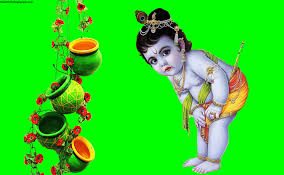
Episode # 378 – We should seek help ONLY from people who follow the path of “Dharma”!!!

In the previous episode, we had witnessed the classification of “Bhakti” into the three categories – “Satvika Bhakti”, “Raajasa Bhakti” and “Taamasa Bhakti”. Satvika Bhakti is that wherein we’re able to surrender ourselves completely to Bhagawan in all aspects – By chanting our “Mantra” continuously, by singing in praise of Him unconditionally, etc. “Raajasa Bhakti” is something wherein we “act” as if we’re performing “Bhakti” and spiritual practices, for the sake of public attention and money. In other words, if we’re trying to “commercialize” Bhakti for name and fame, Bhagawan Krishna classifies this under the category of “Raajasa Bhakti”. Finally, if someone performs Bhakti just for the sake of doing it, it comes under “Taamasa Bhakti”. In other words, if we’re going to inculcate a “fear” factor for Bhagawan, and if we’re performing our spiritual practices with this fear in us, this comes under “Taamasa Bhakti”. Hence, from this accord again, we can infer which category of Bhakti we should fall into! This needs no more explanation!

Moving on with the next point, Bhagawan Krishna is going to talk about something that all of us need to understand very precisely here. This is applicable very much to today’s scenario. Bhagawan Krishna talks about the aspect of “borrowing”. Whom can we borrow from? From whom we should never even think of borrowing anything at any point in time? Bhagawan explains to Uddhava thus, “Oh Uddhava! If you’ve to borrow something from someone, you should first understand what kind of a person he / she is. If that person is a thief and is possessing some things that he / she had obtained through some illegitimate ways, you should never borrow anything from such a person. This is because, that person’s evil and wicked character would also come into you, along with whatever item you borrow!”

This is where we’ve to be extremely careful – We might be facing tough times in life at various points of time. However, just because we’re facing that tough time, can we go and seek help from whomsever we come across? If we’re going to ask for a help from an unethical person and a person whose only business is to earn money, name and fame through all illegitimate ways, we’re going to get into all sorts of trouble! Already, we might be in trouble and only because of that, we’re going to someone and seeking their help. On top of this, if we’re going to the wrong person seeking help, we’re only going to complicate things further for ourselves! First of all, as Bhagawan Krishna explains clearly, their wicked and evil characteristics would automatically come into us as we borrow something from them. Even other than this, if we’re going to do such a thing, we’ve to understand that the other person is going to try and take advantage of our inability and “use” us to do more illegal things! Ultimately, possibility is extremely high that we might get caught for all the wrong reasons, and that person might easily escape by putting us into the dock! This is where Bhagawan Krishna is sending out a loud and a clear warning to all of us! He’s thus explaning that if at all we’ve to seek someone’s help, we should approach only those who are Bhaagawathas and who walk the path of ethics and “Dharma”.

Such is with regards to our day-to-day affairs. So the point here is that, if we’re asking for some help to someone, we should always know whom are we asking that help to. As Bhagawan Krishna continues this discussion further, we’re going to witness how kings in those days gave “Dhaanam”. When kings donate something to someone, they would take a series of “pledges”, especially when the receivers are great “Maharishis”! We shall witness more about this in the next episode! Stay tuned! 😊

Episode # 377 – “Gnyaana” (Knowledge / Wisdom) is the prerequisite for “Bhakti”!!!

In the previous episode, we ahd concluded the important discussion on “Dhyaanam”, as narrated by Bhagawan Krishna to Uddhava. He had explained in detail, various classifications of “Dhyaanam” and the salient procedures that are involved in performing it regularly everyday. We should first take care of our posture in which we sit, followed by mind control. Of course, we would find it difficult at first, but with constant and persistent practice, we could raise up our bar gradually.

Moving on thus, Bhagawan Krishna talks at length about various other allied aspects of Bhakti and how should people belonging to various “Varnaashrama Dharmas” should conduct themselves. We’ve already witnessed this before in a different context, but here, Bhagawan Krishna is elucidating the same thing once more for Uddhava’s understanding. Since we’ve already witnessed it before, we’re moving on with the subsequent points and if readers have queries, you might feel free to refer back to our previous episodes on this topic. Now, as this discussion progresses further, Uddhava asks an important question to Bhagawan Krishna thus, “Oh Krishna! Is there a difference between “Gnyaana” and “Bhakti”? If there are differences, what are they? How do we understand them? What are the ways through which we can differentiate between “Gnyaana” and “Bhakti”?

This is an important question, which might also be lingering around in our minds as well. Now let us witness Bhagawan Krishna’s answer on this. He says thus, Oh Uddhava! If you don’t have the “Gnyaana”, you would not be able to execute the “Bhakti Maarga” at all! In other words, “Gnyaana” is the prerequisite of Bhakti. If you do not have the basic understanding of the Atman, how does the Atman function, how is the Atman integrated with Bhagawan at all times, etc. you would never be able to walk the path of “Bhakti Maarga”. Hence, to practice Bhakti, Gnyaana is very important and is the fundamental step.”

“Bhaktischa gnyaana visheshaha vichischa pratishedhascha!

Nigamo ishwarastathe avekshate aravindaaksha!!

Gunam dosham cha karmanaam pitru deva manushyaanaam Vedah chakshustateshvara!!”

Through the above sloka, Bhagawan Krishna is going one step ahead and is trying to classify Bhakti into the three important categories – “Satvika Bhakti”, “Raajasa Bhakti” and “Taamasa Bhakti”. We would wonder why is Bhagawan classifying anything and everything under the three Gunas. From this, we should understand the importance of the three Gunas and how do they influence every sphere of our lives. Thus, Bhagawan Krishna explains here that “Satvika Bhakti” is where we execute the Bhakti Maarga with Bhagawan as our sole leader and sole goal to achieve. If we’re performing Bhakti with the complete knowledge and surrender to Bhagawan that we are His property and we’re performing all whatever possible according to what our “Sanaatana Dharma” is explaining in detail, it is termed as “Satvika Bhakti”.

Similarly, what is “Raajasa Bhakti”? If a person is trying to perform Bhakti for getting name and fame from the world, it is called “Raajasa Bhakti”. For instance, some well-off people would go to temples, worship the deity there, do some “photo-ops” and come back! We might see this quite often during the election times in India, wherein politicians start flocking towards temples! More than the purpose of performing Bhakti at the temple, these politicians try to woo a particular community of people and garner votes thereby. Thus, those people who do Bhakti for “photo-ops” and for a commercial purpose of obtaining name, position and fame amidst the society, are said to be performing “Raajasa Bhakti”.

Now what is “Taamasa Bhakti”? if a person performs Bhakti out of “fear” for Bhagawan, it is called “Taamasa Bhakti”. For instance, we too do this many a times – If we go the astrologer, he / she would say that if we do not perform this “Parihaara Puja”, our entire family would suffer along with us! Fearing the bad consequences thus, we too go to temples and perform various ways of “Bhakti Maarga”. All these come under the category of “Taamasa Bhakti”. For instance, again, if we would have a routine of visiting the temple every Saturday of the week – If for some reason we’re unable to visit the temple on a Saturday, we would feel thus, “What if Bhagawan gives us a punishment for not visiting the temple this Saturday? What if I lose my job because of that?” All of these fall under the category of “Taamasa Bhakti”.

Thus, we can see here that if we’re performing Bhakti with some sort of a fear factor within us, it is called “Taamasa Bhakti”. Whereas, if we’re doing it for gaining name and fame in the society, it is called “Raajasa Bhakti”. However, if we’re doing it for Bhagawan, as per what our “Sanaatana Dharma”, and if we’re doing it as part of our passion, it is termed as “Satvika Bhakti”. Now explaining all of this to Uddhava, Bhagwan Krishna says that it is the “Satvika Bhakti” that He likes the most, and the other two forms are those that He dreads about. Hence, the message is clear here! After reading through this accord, we can decide what track we should choose, so as to attain Bhagawan!

So for today, let us understand this important point, and we shall wait till the next episode to witness the subsequent points after this! Stay tuned! 🙂

Episode # 376 – Our “VAIRAGYA” (Will-power) is extremely important to succeed in “Dhyaanam”!!!

In the previous episode, we had witnessed the continuation of the discussion on the key aspects of “Dhyaanam” or meditation, as per Bhagawan Krishna’s detailed accord to Uddhava. He had commenced with the classification of “Dhyaanam” into “Satvika Dhyaanam”, “Raajasic Dhyaanam” and “Taamasic Dhyaanam”. Further, Bhagawan Krishna explains the importance of the “Satvika Dhyaanam” by listing down several key procedures of performing it. He spoke at length about the posture in which we’ve to accommodate ourselves before starting to perform the meditation. He had emphasized that we’ve to sit in an upright position with our back straight. It is obviously preferable to sit in the “Padmaasana” position, so that the correct posture is automatically ensured. We then witnessed the significance of our breathing pattern and how should we focus on it. In yesterday’s episode, we had witnessed why “Praanaayama” is important for us to achieve a definitive rhythm in our inhalation and exhalation. As we’re achieving control on our breathing, we now have to focus on our mind control thus. We witnessed that the first step for this is by chanting the sacred syllable or the “Pranava-Mantra” called “AUM”. We should chant it as per the designated number of “Maatras” (3.5 Maatras), comprising of the sounds “A”, “U” and “M”. The reason why we say that the “Pranava-Mantra” has three “Maatras” is that, for each of the above syllables we have one “Maatra” and for the extension of the sound for a few more seconds would include another half a “Maatra”. Hence, we should be aware of all these three sounds while we chant it. This would slowly bring our mind under control, by calming it down.

As we move on further thus, we should imagine Bhagawan standing in front of us, wearing a brilliant yellow “Peetambara”, with the “Shanka” and “Chakra” in both of His hands and with a charming smile. This is easier said than done, because, when we sit for meditation, this is the time we would remember our friends, our relatives, our parents, children, grandparents, great grandparents, people whom we knew 30 years before, etc.! This is where our “Vairaagya” is under test – We’ve to try and destroy the imageries of all the people who come to our mind at this point in time, and try to focus on Bhagawan’s imagery with utmost concentration. This, obviously cannot be achieved overnight, but it would take some time – Maybe a few days or few months too, in some cases. If our “Vairaagya” is strong enough, we can achieve this state within just few days. Thus, it is up to us to enhance our “Vairaagya”! But the point here is that, just because our mind is wavering for the first few days, it is not right on our part to give it up! We’ve to constantly keep trying and practising. Just like how if we’re a musician, we constantly keep practising music, if we’ve to obtain spiritual progress, we’ve to have that consistency with our practice.

For this, Bhagawan Krishna Himself suggests a simple methodology to Uddhava thus, “Oh Uddhava! As it might be difficult at the beginning, try to focus on a portrait of mine for five minutes and then close your eyes. That portrait imagery would remain for a few moments within your eyes as you close them. However, it would disappear after those few moments. At this point in time, open your eyes again and look at the portrait for the second time for the next three to four minutes and again close your eyes! Now the portrait would remain for another five more minutes in your eyes, and might start disappearing again. At this time, again open your eyes and have a re-look at the portrait, and repeat this same cycle again and again till you get the portrait fixed in between your closed eyes for a longer time. As you keep doing this regularly, at one stage, you’ll reach a point wherein you don’t even need to look at my portrait anymore. You’ll automatically be able to focus on my imagery and would be able to meditate upon it for a long time. This would give you an unending blissful experience!”

How valid is this methodology that Bhagawan Krishna is suggesting! For instance, if we look at a candle light or any light for that matter, continuously for 2-3 minutes and then close our eyes, we would be able to see that light in between our closed eyes for few moments, isn’t it? As we’re increasing the consistency of this light appearing in between our eyes for a longer time, we’re slowly moving towards the path of focusing our mind on whatever we’re wanting to think upon. Once we’re able to focus our mind like this, it automatically implies that our mind is coming under complete control and as days / months progress by, we would slowly start realizing that Bhagawan is within us.

This is an extremely important point that Bhagawan Krishna is stressing upon here. Again, we’ve to understand that this is not an “overnight” process to achieve. This is a slow process and would take time, depending upon an individual’s level of “Vairaagya”. The important point that I’m repeatedly emphasizing here is that, just because we’re finding it tough, we shouldn’t give it up. This would only make us more and more complacent and by giving up, we’re going nowhere. Even if we’re finding it tough to concentrate and focus, we should try harder everytime to achieve it. As we start trying repeatedly, we would slowly start tasting success. For this, our meticulous effort is required.

So for today, let us understand this point and let us start trying this out. As this has come directly from Bhagawan’s accord, we have all the more reason to follow it meticulously. We shall wait till the next episode to move on with the next important point that Bhagawan Krishna is going to emphasize upon! Stay tuned! 🙂

Episode # 375 – Why is the “PRANAYAMA” an integral part of the “Meditation” process? An important accord!!!

We’ve been witnessing in the last couple of episodes, the importance of “Dhyaanam” or “Meditation”, as per Bhagawan Krishna’s accord. We’ve commenced this discussion by categorizing “Dhyaanam” as per the three Gunas – “Saatvika Dhyaanam”, “Raajasa Dhyaanam” and “Taamasa Dhyaanam”. We’ve witnessed a detailed explanation in this accord. Subsequently, we had continued with this discussion to witness why “Saatvika Dhyaanam” is very important and how should we practise it regularly. In these lines, we’ve witnessed in the yesterday’s episode, the importance of “posture” while sitting to meditate. Bhagawan Krishna emphasizes heavily on posture, as this shapes us up for a great “Saatvika Dhyaanam” experience. He explains that we’ve to make sure that we’re sitting in the upright position and preferably in the “Padmaasana” position. When we sit in the “Padmaasana” position, our blood circulation streamlines from our head till the toe, resulting in the reduction of tension and anxiety in our mind. Our brain gets ample supply of oxygen and because of this, it would be devoid of tiredness and sleepy tendencies. In other words, by doing this, we’re slowly bringing down our “Taamasic” charactersitics. As we’ve discussed earlier too, once we consciously try and bring down our “Raajasic” and “Taamasic” characteristics, automatically our “Satva Guna” is going to fly high!

Moving on thus, we shall now continue with the discussion on the meditation procedure. Till now we’ve witnessed the importance of posture, and now we’re going to witness some aspects on how do we bring our mind into focus. Bhagawan Krishna explains that as we sit for meditation, we should bring our eye balls to focus on our joint between the forehead and the nose. Also, we’ve to try and streamline our breathing pattern with uniform inhalation and exhalation. There are three important aspects here – “Kumbakam”, “Rechakam” and “Poorakam”. “Poorakam” means inhalation. “Rechakam” means exhalation and “Kumbakam” means holding our breath for a few moments before exhaling. There is a “Yoga-Aasana” by name “Jalandrabandha”. This “Aasana” focuses on this point exclusively. The procedure for this is that, we’ve to inhale as much of oxygen we can and until our lungs can hold (Poorakam). Subsequently, we should try and hold our breath for a few seconds (Kumbakam). It might be for 15 seconds, 30 seconds, or more, depending upon the individual’s holding capacity. Subsequently we exhale the air (“Rechakam”). If we do this for a few times before going into the meditative state, our brain becomes fresh with abundant oxygen supply, and subsequently the capacity of our lungs would also increase, which results in deeper breaths. As we’re practising it every day consistently, we would be able to witness a phenomenal change in our breathing pattern. Our inhalation and exhalation become so streamlined that it would enable us to “watch” our breathing pattern more clearly while meditating. So we should thus make it a point that we practise this important “Yoga-Aasana” called “Jalandrabandha”, before we start the actual meditation process.

If we look at our regular “Sandhyavandanam” routine, we perform something called “Praanaayama”. This “Praanaayaama” is also a very similar exercise for breathing that we can adopt, to streamline our inhalation and exhalation processes. As most of us might be performing our “Sandhyavandanam” routine every day, we must now focus specially on this “Praanayaayaama” part. Each of us should make it a practice to perform atleast ten “Praanaayama” cycles in the morning, afternoon and evening. In total, we should perform atleast 30 “Praanaayaama” cycles per day. Once we start doing this meticulously, we would be able to observe that our blood circulation becomes normalized, our physical health would be vastly improved and also, our grasping (mental) capability would increase manifold.

Thus, we’re witnessing through all of these explanations that there are procedures dedicated for each of our routine practice that we follow in life. For instance, there is a procedure for sitting, lying down, consumption of food, etc. In fact, all of us have a myth that we’ve to consume food three times a day. According to our “Sanaatana Dharma”, it is more than sufficient if we have just two meals a day. This is now being widely accepted in all our modern-day health sciences. If we’re consuming food for just two times a day, our body becomes very brisk and would be totally devoid of any diseases as well. The more we consume food, (especially the so-called “junk” food that we consume), the more we’re laying “red carpets” for all diseases to invade our body. Hence, the point here is that, if we follow the apt procedures, our lifestyle would be shaped up accordingly and we would be able to lead a healthy life sans any diseases and disabilities.

Moving on thus with the meditation procedure, as we focus our breathing pattern thus, it is now time for us to start the process of focusing our mind. For this, we commence the process with the chanting of the sacred syllable called “OM”. Of course, there is a procedure to chant the Mantra “OM”. It should be chanted as per the number of “Maatras” associated with it. It is a known fact that the sacred syllable “OM” has three and a half “Matras”, majorly comprising of the sounds “A”, “U” and “M”. As we chant it, we should meticulously follow this procedure as well. This is the starting step for our mind control.

So for today, let us understand these important points, and let us wait till the next episode to continue this discussion on mind-control further. An important accord awaits us tomorrow! Stay tuned! 🙂

Episode # 374 – Why should we sit in the “Padmaasana” position while meditating? An important accord!!!

In the previous episode, we had witnessed the classification of “Dhyaanam” (Meditation) into the three categorizations as per the three “Gunas” – “Satva”, “Rajas” and “Tamas”. We’ve witnessed that if the meditation is performed by having Bhagawan in our thoughts totally without any blemish, it is termed as “Satva Dhyaana”. Whereas, if we’re thinking of some people whom we desire upon, for instance, people of the opposite gender while meditating, it becomes “Raajasa Dhyaana” and finally, if our bitter enemies come to our thoughts during meditation, or, if we think of people whom we dread the most in this world while meditating, this categorizes under the “Taamasic Dhyaana”. Thus, as a generic perspective, if we should increase our “Satva Guna”, we should make sure that we possess the “Bhagawad Chintana” (Thoughts of Bhagawan) fully in us while meditating.

Of course, this is easier said than done. This is something which we’ve to gain by constant practice. If we sit for meditating, Bhagawan would never be a factor in our thoughts. All what we would be able to think is who insulted us in the past, who abused us, from whom have we obtained a certain sum of money as a loan and will this person be after our life to make us return his money, etc. This is where we’ve to unleash our “Vairaagya” (Consistency and will power) to control our mind and channelize it towards Bhagawan. This is why we often keep emphasizing the fact that meditation is one important means of practising spiritual “Saadhana”. Hence, we should strive towards this goal by remembering this important point as we sit for performing the “Dhyaana”.

Moving on thus, with this above point in mind, Bhagawan Krishna is now going to teach us how to perform this all-important “Dhyaana”. He’s going to teach Uddhava the nuances of meditation, which is extremely important for all of us as well. Bhagawan Krishna first commences this important explanation with the way we should be seated to meditate. First of all, we should never keep standing always. When we sit down on the floor, Bhagawan Krishna explains that 27,000 nerves in our body automatically come under complete control. As we sit down on the floor, we should ensure that our neck’s back portion, our head and our spine are in the same vertical line with each other. This simply means that when we meditate, we should sit in a straight and an upright position. This is a mandatory requirement. Whereas, if we’re going to sit in a position that is going to give some level of comfort to the physical body, we’re going to fall asleep. This is not advisable isn’t it? This is why, Bhagawan Krishna emphasizes that posture is extremely critical for performing meditation. We’ve to thus remember that we need to sit on the floor, in an upright position, before we start meditating.

Now, Bhagawan Krishna explains the next point while sitting – He says that when we’ve to sit for meditation, of course, we’ve to sit on the floor, but it doesn’t mean that we should directly sit on the floor. We should have an “Aasana” that is spread on the ground and we should sit over that. This “Aasana” shouldn’t be cushioned in any way. It should be as flat as the floor is. It might be a small mat, or a piece of cloth, etc. Some people use a deer’s skin, spread it on the floor and sit over it. In fact, this is the best practice. The idea here is that, we shouldn’t directly be seated on the floor, but should have some sort of an insulator over it. In fact, Bhagawan Krishna is specifically explaining this point in so much of detail, because in today’s scenario, we have something called “mattress” or “bed” that is extremely cushioned. If we sit or lie down on this mattress, we would go inside it for atleast half a feet! 🙂 This might seem very comfortable for us to lie down for that moment, but in the long-term, it is going to result in severe back pains and spasms. This is why in olden days, we’ve had the practice of lying down on the floor. If we do so, our back is going to be in proper shape and we would never get any sort of pain. It might be uncomfortable in the initial days, but if we’re sustaining this practice for a number of days together, we would get used to it. This is the best way to lie down and rest.

Thus, the point here is that, if we’re sitting on a cushion of any sorts, we’re going to get unwanted comfort, and in the long-run, we’re going to experience severe pain in our spinal chord. Thus, avoiding a cushioned surface for meditation is advisable. Moreover, as we sit on the floor to meditate, it is always better if we’re able to sit in the “Padmaasana” position. For people who are familiar with some “Yoga Sutras” and “Yoga Aasanas”, sitting in “Padmaasana” might be the most fundamental aspect that would have been taught before any other “Aasana”. Sitting in “Padmaasana” means, sitting in such a way that our left thigh should be placed over our right thigh and our right thigh over our left. This position automatically would ensure that our back is upright. Even if it is not for a meditation session, it is advisable that we sit in this “Padmaasana” position atleast for 20 – 25 minutes a day. If we’re able to sit in this position for the entire one or two hour session of meditation that we’re doing, this is the best practice that can be available. However, we’ve never got used to it till date. This is why I’m saying that let us start with sitting in the “Padmaasana” position for atleast some 20 minutes a day. Sitting in this position makes sure that our blood circulation is even all throughout the body – right from head to toe. Moreover, it also ensures that the maximum amount of blood reaches the brain and we stay fresh everytime.

So for today, let us understand these important points pertaining to meditation, and we shall continue this discussion further in the next episode, wherein Bhagawan Krishna is going to explain the procedure to focus our mind and control it. Stay tuned! 🙂

Episode # 373 – Classification of “DHYAANAM” (Meditation) – “Satvika Dhyaanam”, “Raajasa Dhyaanam” & “Taamasa Dhyaanam”!!!

In the previous episode, we had witnessed the continuation of the discussion on classification of many aspects, based on the three Gunas – Satva, Rajas and Taamasa Gunas. In that way, we had moved on from the classification of a day to the classification of “Karma”. We had witnessed that those activities (Karma) that we perform as part of our regular spiritual duty and for world peace and harmony, come under the “Saathvika Karma”. Those activities that we perform for obtaining some selfish needs for our personal happiness are classified under the “Raajasa Karma” and finally, those activities that we might perform for the detrimental effect of others are classified under the “Taamasic Karma”. So, it is evident here as to which of those “Karma” we’ve to avoid and which of them to follow for our spiritual development. It is very clearly explained thus by Bhagawan Krishna that He’s going to grant us “Moksha”, based on our “Karma” and how we’re going to neutralize our “Karma balance”. We’ve witnessed this concept already in the past and readers can recollect it once more by going through our previous episodes on this context.

Now moving on further, we are now going to witness Bhagawan Krishna classifying “Dhyaanam” (Meditation) into three categories – “Saatvika Dhyaana”, “Raajasa Dhyaana” and “Taamasa Dhyaana”. If we’re meditating upon Bhagawan’s beauty and charm, it automatically classifies into the “Saathvika Dhyaanam”. If we’re meditating upon people of our opposite gender – In other words, if a man mediates upon a beautiful woman, or a woman mediates upon a handsome man, this kind of a meditation comes under the “Rajo Guna” classification. Whereas, if we’re meditating upon a person who is our enemy and if we’re constantly filled with his / her thoughts all the time, it comes under the classification of the “Tamo Guna”.

Obviosuly, this classification is easier said than done, isn’t it? We should ponder within ourselves for a moment here – Whenever we sit for a meditative session, what kind of thoughts would we be getting in our mind? Do we directly go into the “Bhagawadh Chintana” straightaway? This is never going to be possible for normal people like us! Instead, our thoughts would be revolving mostly around those people whom we do not like. For instance, we would be thinking thus, “Oh! Yesterday I had to come across my cousin, who is constantly trying to poke me with some issue or the other! Why did I even blink on his face? I should have avoided him, isn’t it? How can he make such blunt statements about me like that?” Or, even if we do not have any present events to recollect, our mind wouldn’t keep quiet. It would start digging into our past and try to “explore” who were our enemies 10 years ago! We would suddenly start thinking thus, “Oh! Fifteen years ago when I was doing my college, my classmate abused me for something!” This is exactly called “Taamasa Guna”, with regards to “Dhyaanam” or meditation and this is what we’ve to consciously try and avoid.

This is where, we’ve to understand another point – If we do not like someone for some reason, it is always best to forget that person then and there. Of course, given so many “constraints”, we’re not able to do so, and this is where the whole problem comes. This is exactly what Maareecha explains to Ravana. We might be remembering this incident from the Valmiki Ramayana, wherein Ravana is sending Maareecha as the golden deer to capture Sita’s attention. At this time, Maareecha initially is reluctant to go as the golden deer in the vicinity of Bhagawan Rama. He says to Ravana thus, “Oh Ravana! You’re trying to play with fire here! I’ve experienced Bhagawan Rama’s sharp arrows when He was a 12-year-old boy. Myself and Shubaahu had gone to destroy Sage Vishwamitra’s “Yagnya”, and it was this same Bhagawan Rama who had came to protect it. During that exercise, he killed Shubaahu with just a single arrow! When it came to me, He chased me with a number of arrows and pushed me into the ocean! With that, I had got a heavy drubbing! I can never forget that till today, even after so many years!”

Maareecha continues thus, “Oh Ravana! Because of this, my fear for Rama increased manifold! Even in my deepest sleep, if I accidentally hear the syllable “Ra”, I start getting afraid! Your name is also beginning with the same syllable, but still, the moment I’ve to say “Ravana” too, I’m getting scared of Bhagawan Rama! Hence please do not involve me in this unnecessary fiasco!” So from this accord of Maareecha, we can clearly understand that if we’re having enemies or scare towards someone, only those people’s thoughts would always keep haunting us at all times. This is where we’ve to be very careful – We should be able to develop that maturity to forgive and forget those who are hostile towards us, rather than growing the enmity further and further, for no use. Ultimately, it is only going to build up our “Taamasa Guna”, and our mind will never be able to take Bhagawan into its thoughts.

Similarly, if we had brought a loan or if we had borrowed some money from someone, only those people’s thoughts would be lingering in our minds, isn’t it? We see this in our everyday experience. We would be unable to even get a proper sleep at night, if we would have borrowed money! But in the present day, we should note one thing – If we’re borrowing less money, the headache is on us. Whereas, if we’re borrowing crores and croes of money, the headache is on the person who is lending that money to us! Scenarios are changing nowadays, isn’t it? 🙂

Thus, the point here is that, while performing “Dhyaanam”, if our thoughts are full with Bhagawan and His “Kalyaana Gunas”, we classify this as “Saatvika Dhyaanam”. On the other hand, if we’re meditating upon someone whom we desire upon, it comes under the “Raajasic Dhyaanam” and in similar lines, if we’re meditating upon someone who is an enemy of any sorts, this comes under the “Taamasic Dhyaanam”. Hence for today, let us understand this important classification and let us do the needful to channelize ourselves and our thought processes. We shall wait till the next episode to continue this discussion further! Stay tuned! 🙂

Episode # 372 – Classification of “KARMA” – “Saathvika Karma”, “Raajasic Karma” & “Taamasic Karma”!!!

In the previous episode, we had witnessed the classification of the three Gunas – Satva, Rajas and Tamas with respect to “Kaalam” or “Time period”. We had witnessed this categorization with regards to the different times of a day. We had seen that the early morning time from 4 AM to 6 AM is the most “Sathvic” in nature and is referred to as “Brahma-Muhurtham”. All important tasks that we perform in a day, like learning, practising arts, etc. yield maximum benefit when performed during this time. Of course, the greater part of the day – From 6 AM to 6 PM is classified as the “Raajasa Kaalam” and this is where we run here and there, go for work, etc. Similarly, the time after 6 PM in the evening, till 4 AM the next morning is classified as the “Taamasa Kaalam”, wherein we’ve to give sufficient rest to our body after the day’s long and packed schedule. This is where we found ample justification to the modern-day proverb – “Early to bed & early to rise, makes a man healthy, wealthy and wise”. We say that this practice makes us healthy because, if we wake up at 4 AM, it gives us an opportunity to inhale fresh oxygen from the Ozone layer, which directly has a positive impact on our physical health and mental capability. Obviously, if we’re going to use this early-morning time for our work, we’re going to be more productive than usual, which is directly going to increase our wealth and status. Finally, we’ve also witnessed that by making full use of the oxygen-rich atmosphere around us in the early morning, our brain gets activated more and more, which directly results in our intelligence factor rising up exponentially.

In fact, this is why in the “Paatashaala” or “Gurukula” system of education, even today we have the practice of getting up at 4 AM in the morning and chanting Vedas, Upanishads and other lessons. The more we chant and try byhearting the Vedas in the early morning, it becomes easier for us to retain all the verses in our memory. This is the reason why we find these people to be extremely intelligent in all their endeavors. We often mistake that the “British system” of education that we follow today in schools and colleges is making us more intelligent. Indeed, this is a huge myth. This system of education literally gives us nothing but laziness and complacency. Indeed, whatever the so-called “English” mode of education teaches today, all of it is already present in our Vedic education. In due course of time, the unfortunate reality is that, we’ve moved away from our traditional form of education to something that doesn’t add any sort of value to our lives.

Thus, the point here is that, as descendents of our great “Bhaarata Desha”, we should be able to atleast appreciate our traditional Vedic education system and strive towards learning our Vedas and Upanishads atleast a little bit. If not for a formal Vedic education, we can always spend some quality time amidst all other personal and professional commitments in learning Sanskrit and our Vedas. This, not only enhances our knowledge about our “Sanaatana Dharma”, but also gives us an opportunity to enhance our intelligence and memory power. Ultimately this is what is supposed to be the outcome of any educational system, isn’t it? So, let us take this opportunity to begin this atleast today, nevertheless if not till now.

Now moving on further, we shall now witness the same classification with respect to our “Karma” that we do every day. All the “Nitya-Karma-Anushtaana” that we’ve been witnessing for the past few episodes would automatically fall into the “Saatvika Karma”. This of course goes without saying – All that we do for Bhagawan, inclusive of our regular “Sandhyavandanam” to chanting slokas, Vedas, Upanishads, etc. are all “Saathvika Karma” and we should make sure that we’re in for all of it. Secondly, “Kaamya Karmas”, which include performing all what is required for child birth, performing “Putra-Kameshti Yaaga”, performing “Jotishta Homa” to pray for getting a place at “Svarga Lokha”, performing some other “Yaagas” and “Yagnas” for obtaining lot of money, etc. fall under the “Rajo Guna” classification.

Now coming to the third important classification – In fact, this is mentioned in the “Atharvana Veda”in detail. For instance, if we’re going to do some bad activity in the name of “Pilli”, “Shunya”, etc. so as to destroy others for our own personal gains, all of this falls under the category of “Tamo Guna” or “Taamasa Karma”. We would have often heard that some people are experts in using some “Mantras” to gain some powers with which they can spoil or adversely impact people in many ways. In fact, some people use these powers to even kill others. All of these come under the classification of “Taamasa Karma”, and these are obviously some things that we should avoid at any instance in life. Even if we come across such people, we should make it a point that we stay away from them. Else, this is going to be extremely dangerous for our sustained life.

Thus, we can witness here in a nutshell that those activities (Karma) that we perform as part of our regular spiritual duty and for world peace and harmony, come under the “Saathvika Karma”. Those activities that we perform for obtaining some selfish needs for our personal happiness are classified under the “Raajasa Karma” and finally, those activities that we might perform for the detrimental effect of others are classified under the “Taamasic Karma”. So for today, let us understand this important classification. We shall wait till the next episode to continue this discussion further! Stay tuned! 😊

“The Indian Dharma” all set to cross ONE LAKH viewership!!!

Dear Esteemed Readers,

With the divine grace and blessings of Bhagawan and with all your overwhelming support and feedbacks, “The Indian Dharma” blog has achieved a staggering increase in viewership of over 97,000 views across 120 countries worldwide! This is going to be a huge milestone as part of our ongoing effort, as the viewership is all set to cross the ONE LAKH mark in the coming days. This in itself speaks volumes of the global reach that our “Sanaathana Dharma” possesses! Of course, this has come along with the constant support and feedback from our esteemed readers from various parts of the globe. My humble gratitude to all of you!

From Valmiki Ramayana to Vidura Neeti (Mahabharata) to Shrimad Bhaagawatha Puraana:

By March 31’st 2018, we were able to complete an elaborate discussion on one of the most important and auspicious texts of our Sanaathana Dharma Literature – The Valmiki Ramayana. We’ve taken 324 episodes to witness almost each and every detail of the Ramayana text, right from the “Baala Kaanda”till the end of the “Uttara Kaanda”. We had learnt innumerable lessons for modern day life and management from all of these details. This was in itself a mega-project in all its glory. It was with Bhagawan Rama’s and Mother Sita’s divine grace that we were able to experience each and every part of the Ramayana story – Happy, sad, emotional instances, along with some important messages for leading a life according to the “Dharma”.

As we completed the Valmiki Ramayana experience, we made a switch-over to the next important text of our Sanaathana Dharma literature – The Mahabharata. Of course we did not witness the Mahabharata in its full entity as we did in the case of the Ramayana, and we just took a part of it, given the enormous size and complexity of the text. In that way, discussed a section of it called the “Vidura Neeti” wherein Vidura is trying to provide key advice to King Dhirdiraashtra with respect to the various aspects of “Raaja Dharma”. This advice spans over innumerable slokas packed into various “Adhyaayas” under the “Prajaakara Paruva”of the Mahabharata text. We’ve taken  390 episodes to complete the Vidura Neeti by May 2019 and subsequently commenced the third mega-project – Shrimad Bhaagawatha Puraana. We’ve done 371 episodes till date, and looking forward to finish this mammoth project by the end of this year! As always, there is more to come beyond this, and I shall reveal that at the appropriate time.

As always, I sincerely & wholeheartedly solicit the cooperation and support from all our esteemed readers to make these upcoming months of the year an even more productive one, both in terms of our learning as well as execution of our learning for the benefit of our society and our country at large!

There had been repeated requests from many readers across the globe for access for all the archive episodes of our blog that are online till today. For those readers who wish to go through them (Ramayana, Vidura Neeti & Shrimad Bhaagawatha Puraana), you can log on to the site

https://theindiandharma.wordpress.com/

Here you can find all our episodes and you might download and read through them at your own convenience. For those readers who are on various social media platforms, there is a dedicated page on Facebook, titled “The Indian Dharma”. Link for this page is as follows:

https://www.facebook.com/LeadershiplessonsfromMahabharata/

All you need to do is to “Like” and/or “Follow” this page and you would receive updates on every episode we publish each day. Additionally, episodes of “The Indian Dharma” blog are available on other social networking platforms such as Linkedin, Twitter and Instagram. You may follow them at your own convenience!

Once again, I take this opportunity to thank all of you for your constant encouragement and support and I sincerely look forward for the same level of enthusiasm in the upcoming months and years as well! 🙂

Episode # 371 – “Early to bed & early to rise…” – Significance of “Brahma-Muhurtham”!!!

In the previous episode, we had witnessed the continuation of the important point, wherein Bhagawan Krishna is classifying different items with respect to “Satva Guna”, “Rajo Guna” and “Tamo Guna”. We’ve seen such classifications for the Vedas / Spiritual Practices, water, people and land. Now, let us continue this discussion further and witness how we classify time with respect to the three “Gunas”. We’ve already witnessed the importance of time, classification of time, etc. in the first “Skandha”. Readers can always go back and recollect that discussion whenever possible. But now here, we’re going to classify time with respect to the three “Gunas”. Let us see how we can do that in today’s episode.

When it comes to time, we would have heard about something called as “Brahma-Muhurtham”, which is the early morning time during the day. Now readers should understand that we’re going to classify time with respect to each day. The early morning time of 4 AM to 6 AM is often referred to as the “Brahma Muhurtham” is classified as the “Satva Kaalam”. Similalry, the time after 6 AM, through the afternoon and till around 6 PM in the evening is classified as “Rajat Kaalam” and the night time after 6 PM to 4 AM next day is called “Taamasa Kaalam”. We’ve to understand this extremely carefully here. Whatever constructive activities we’ve to do, all of them should be done in the “Satva Kaalam”. For instance, if we’re learning something, preparing for an examination, “Saadagam” (Music practice), etc. all of it should be performed in the early morning time. The reason why we emphasize this practice is that, during the “brahma-Muhurtham” time, the oxygen content in the air is very fresh, and is extremely good for the activation of our brain cells. If our brain is activated, our learning ability automatically increases. Ultimately, our productivity would increase manifold.

However, in today’s trend, we’re starting to follow a wrong routine – For instance, if we’re preparing for an exam the next day, what do we do? We sit up to do a “combined study” or a “group study” all through the night, till 5 AM! Ultimately we just get 2-3 hours of sleep and with that, we go to the examination hall, only to forget all what we’ve read, due to tiredness and lack of sleep. This is a bizzare routine that we follow today. Instead, if we go to bed early the previous night, wake up at 4 AM and study fresh, our learning capability is going to increase and we’re going to learn things very quickly. Moreover, when we go to the exam hall, things are going to remain fresh in our memory, because we’ve had a sound sleep the previous night. We’re not tired too. This is the secret of success. This is why we often keep emphasizing that we’ve to do productive work during the “Brahma-Muhurtham”.

From the above accord, we should understand the significance of waking up early in the morning and go to bed early. We often hear this old proverb – “Early to bed & early to rise makes a man healthy, wealthy and wise”. This is the real meaning of this proverb. But in due course of time, our so-called “night-life” has started to take center-stage. Apart from studies for exams, we do so many things during the night, isn’t it? Right from partying to celebrating functions, etc. all of us have shifted our sleeping schedule a little bit – Normally we were sleeping from 10 PM to 4 AM, but now it has been shifted from 2 AM to 8 AM. This is what is detrimental for our health, our productivity, etc. This is where we’ve to understand that we’ve to change this routine a bit and come back to normal in the course of time.

In these lines, as we progress during the day, we go to work / school / university, etc. throughout the day till the evening, and we keep running here and there on the pretext of our work schedule, isn’t it? All of these come under the “Rajo Guna”, and this is why we classify this part of the day as the “Raajasa Kaalam”. Similarly, when we come back home from work, we feel tired and thereby go off to bed eventually after dinner. Since this is the resting period for all of us with a sound sleep, this time period is called as “Taamasa Kaalam”. Thus, from this classification we should understand that we should plan our activities such that, we do the right things at the right time periods of the day.

Similarly, there is the next classification of the three Gunas with respect to the “Karma” that we do. This is again going to be an interesting explanation and a very absorbing discussion awaits us in the next episode! Stay tuned! 🙂

Episode # 370 – Various classifications with respect to “Satva Guna”, “Rajo Guna” & “Tamo Guna” – An important accord!!!

In the previous episode, we had witnessed the continuation of Bhagawan Krishna’s important explanation as to how our “Atman” is of a much higher significance as compared to our “Shareera” or physical body. We should understand that although the “Atman” is very small and miniscule in size as compared to our physical body, without the “Atman”, the “Shareera” is nothing at all! In continuation with this point, Bhagawan Krishna explains that currently our “Atman” is imprisoned into our physical body, just like a criminal. Indeed, all of us are criminals in a way, as we’re taking birth repeatedly in this world due to our past “Karma”. We’ve seen earlier too that this physical body is taken by the “Atman”, on account of both our “Punya” and “Paapa Karma”. The real problem comes as we fail to realize that our “Atman” is jailed! We spend so much of time, money and resources in “beautifying” our jail, unknowing the fact that this jail is some day subjected to total destruction. However, if one has to be liberated from this “jail”. We should have the awareness that there is something called “Vaikunta” or “Moksha” that is permanent and if we’re going to attain that, we’re never going to come back to this world, which is full of sorrow and sufferings.

To substantiate this point, we’re going to see some excerpts from the Vedas and Upanishads as we move on further. Here, we’re going to witness a list of items that fall under the “Satva Guna”, “Rajo Guna” and “Tamo Guna”. Now we might ask a question here – What should we do by knowing all of these? The simple answer is that, we’ve to follow all the items that are listed under the “Satva Guna” and keep ourselves away from those items that are listed under the “Rajo Guna” and “Tamo Guna”. It is only then, our “Satva Guna” is going to grow. Now we’re going to witness all of these points from the Vedas directly. The branch of Vedas that talks and elucidates about the “Brahman” (Supreme Consciousness) is called Upanishads and is also referred to as “Vedanta”. This “Vedanta” talks about various aspects of “Brahman” and how do we associate very closely with it. This is pure “Satva Guna”. On the other hand, the spiritual practices that we perform regularly like our “Sandhyavandanam”, “Tarpanam”, “Homas”, “Yagnya”, so on and so forth, come under the “Karma Bhaaga” of the Upanishads, and this is engulfed within the “Rajo Guna”. On top of this, there is something called as “Paashanda Dharma”. This is nothing but some propaganda that is being done to worship some “Devata” for attaining some material gains that are very low-profile in nature. All these would come under the ambit of the “Tamo Guna”.

This above description was with respect to the Vedas and Upanishads, and which are the portions of it, that comes under the “Satva Guna”, “Rajo Guna”, “Tamo Guna”. Now, we’re going to witness the same kind of a classification with respect to water. Now this is very interesting here. How can we classify water into “Satva Guna”, “Rajo Guna” and “Tamo Guna”. We classified “Vedanta” and Vedas in that way and it was perfectly fine. But how do we classify water? Let’s witness this here – The water that is free flowing in the holy rivers like the Ganges, Yamuna, Cauvery, etc. come under the “Satva Guna”. However, the water that is preserved with all the sweet-smelling and sweet-tasting items are all categorized under the “Rajo Guna”. Today we have all these “mineral water” and “portable drinking water” isn’t it? All of these fall under the categorization of “Rajo Guna”. On the other hand, if we’re consuming water that is mixed with alcoholic drinks, this is categorized under the “Tamo Guna”. Thus, we can witness here that even water can be categorized into “Satva”, “Rajas” and “Tamas”.

Next, we’re going to witness the same kind of classification with respect to people. How different people are categorized? Sanyasins, “Mahatmas” and “spiritual masters” would automatically come under the “Satva Guna” classification. This is quite obvious as we know that these are the people who are the real spiritual seekers. On the other hand, people like us who constantly keep running behind something or the other in this world are classified into the “Rajo Guna”. Whereas, people who indulge themselves into Karma that directly signify “Adharma”, fall directly into the “Tamo Guna”. This is the classification with respect to people.

Now, we’re going to witness the same kind of classification with respect to countries (Desha). Whichever country that is totally isolated from the rest of the world is vvery high on “Satva Guna”. We would be able to witness some countries like this today too, isn’t it? Certain countries that do not have robust transport connectivity or internet connectivity with the rest of the world – All fall under this category of “Satva Guna”. Whereas, if a place is nicely developed with a planned arrangement with regards to infrastructure, economy, etc. are all classified under the “Rajo Guna”. However, if a place is full of smoke, unwanted burning, and wherein all unwanted and illegal activities thrive a lot, these places come under the “Tamo Guna”. The point here is that, when we’re associated with either of these places, correspondingly our “Satva Guna”, ‘Rajo Guna” and “Tamo Guna” are going to overpower each other accordingly.

So for today, let us understand these classifications clearly and let us wait for the next episode to witness a detailed description on what do these classifications mean to all of us. Stay tuned! 🙂