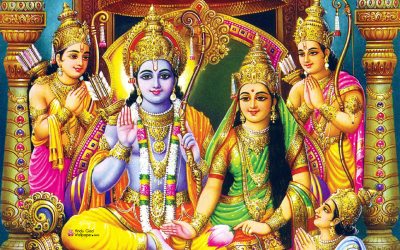
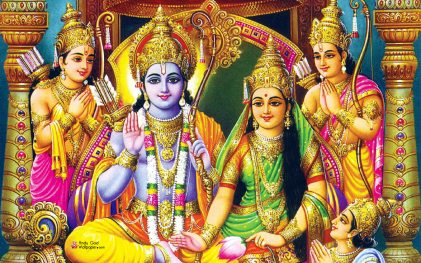
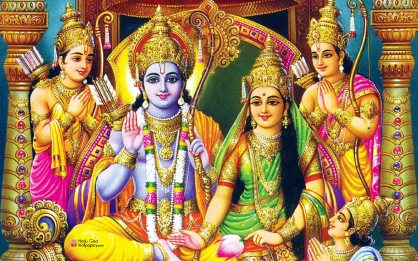
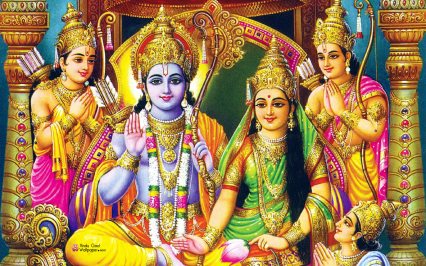
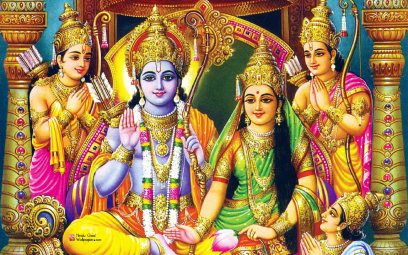
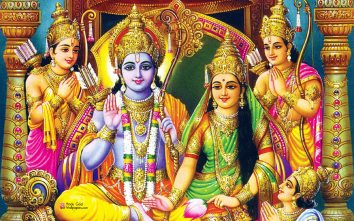
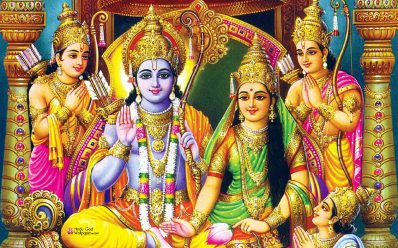
Episode 83 – “Seethaa Kalyaana Vaibohame” – Rama marries Sita!!

rama-sita

In the previous episode we entered into the marriage ceremony that was taking place at Mithilapuri wherein, the preliminary events of the marriage had already commenced! The entire city and the palace of Janakpuri were on celebration mode! People were running here and there with all smiles and happiness! It was at this time, the day of “Panguni-Utthiram” arrived and the rituals commence. Yesterday we saw the reading of the “Pathrika” of the two families. We saw a glimpse of the great dynastic history of both King Dasharata and King Janaka. Today, let us continue and experience the auspicious and the much-awaited Sita-Rama wedding!

“Prabhaathe punaruddhaaya krithvaa karmaani sapthavith!

Puthrair naravarashreshto dhaadhaaram athi kaampkshate!!”

Now, Sage Vasishtaachaarya gets up from his seat and officially declares to King Janaka and co. “Oh King Janaka! My king Dasharata from Ayodhya requests you officially to give your daughters in marriage with his sons!” Upon hearing this, King Janaka replies back, “Oh great sage! This Mithilapuri is your home too! My daughters are your daughters too! You can very well take them along with your sons and they can live happily together!”

Now, the marriage ceremony commences at Mithilapuri. All the celestial beings including Indra, Agni, Varuna, etc. were also present among the gathering. We are at the stage of “Paanigrahanam”, which is the most important phase of the marriage ceremony, even today. Of course, we do the “Thirumangalya-Dhaaranam” wherein the groom ties the “Thirumaangalyam” around the bride’s neck. But, according to the Vedas, the “Paanigrahanam” and the “Sapthapathi” is given more weightage for a marriage!  Now let us witness the all-important “Paanigrahanam”. King Janaka performs this important ritual. He takes Sita’s hands and places them over the hands of Rama and says,

“Iyam sitaa mama suthaa saha dharma chareethava!

Pratheecha yenaam bhadramthe paani grinheesva paaninaa!!”

This is a very important sloka in the Valmiki Ramayana that signifies the entire Sita-Rama wedding! Here, king Janaka says:, “Here is Sita! (“Iyam Sita”), who is my daughter (“Mama suthaa”) who will follow the path of “Dharma” along with you (“Saha dharma chareethava”)! Please have a look at this beautiful girl (“Pratheecha yenaam”)! May you be having all the comforts of life together (“Bhadramthe”)! Thus, Oh Rama, please hold her hand with yours (“Paani grinheesva paaninaa”)!

King Janaka continues…

“Pathivrathaa mahaa bhaagaa chaaye vaanugadaasathaa!

Ithyukthvaa praakshipathe raajaa manthrapoorva jalam tathaa!!”

Now, while King Janaka performs the “Kannya Dhaan” he says, “Pathivrathaa mahaa bhaagaa”, which means, “Oh Rama! My daughter is extremely blessed to be your wife! She would be an epitome of chastity! (Pathivratha dharma – We are going to talk about it in detail later on!)” As these important rituals are taking place, the people around were enthralled and felt so blissful amidst the auspicious event! They were taken beyond words to explain their happiness! There is a lot of hues and cries of joy all around the place! Valmiki Maharishi has captured each and everything of this, perfectly in his composition!

At this point, I remember Saint Thiyagaraja’s famous composition on the Sita-Rama wedding! As a Carnatic musician, I would be failing in my duty if I do not invoke the great Saint Thiyagaraja! He sings,

“Sita Kalyaana Vaibohame! Rama Kalyaana Vaibohame!

Pavanaja stuthi paathra paavana charithra! Ravi soma vadanethra ramaneeya gaathra!!

Paramesha nutha geetha bhava jalathi botha! Dharani kula samjaatha thiyagaraaja nutha!!”

Thus, having heard from King Janaka, Rama holds Sita’s hands for the first time! Thus, all the rituals take place one by one, such as “Paanigrahanam”, “Thirumangalya dhaaranam”, “Saptapathi”, Laaja homam”, etc. We would be discussing each of it in subsequent episodes. Saint Thiyagaraja has captured each of these events in various “keerthanams” (Compositions) of his. We shall witness them also in our subsequent episodes!

Thus, here starts a new phase of the Ramayana story, with Goddess Sita Devi and Lord Rama joining hands together to set an example to all of us in this world as to how to live happily together as a couple! We need to focus on this particular sloka of “Iyam sita mama sutha…” much deeper and reflect more on this! We would get to discover a very important message for all of us with respect to the concept of a marriage! Let’s wait till the next episode to start our discoveries and explorations! 🙂

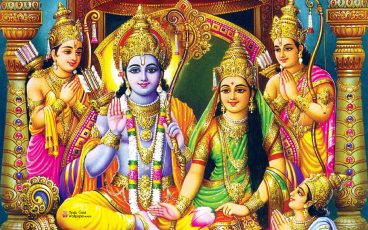
Episode 82 – The Auspicious Sita-Rama wedding – Reading of the “Pathrika”

rama-sita

In the previous episode we witnessed that King Janaka and King Dasharata formally meet each other and discuss the various aspects of the marriage ceremony. In due course, King Dasharata formally requests King Janaka to give his daughter Sita in marriage to his son Rama. In turn, King Janaka was overwhelmed and proposes the marriage of his other daughter Urmila to Lakshmana, Kushathvaja’s daughters Maandavi and Shuthakeerthi to Bharata and Shathrugna respectively. Thus there are going to be four weddings that are to take place at the same time!

Now it’s time for the reading out of the “Pathrika” of the marriage. Here “Pathirka” can be equated to the modern day invitation letter that is formally read on the occasion of marriages. It talks about the ancestors and forefathers of both the families and the invitation is given on behalf of all of them by seeking their blessings from the heaven! In today’s episode let us have a quick glance at the “Pathrika” of both the families!

We shall start with the family of Rama. Now everybody are assembled at the court room of King Janaka. Sage Vasishtaachaarya gets up and starts to read the “Pathrika” on behalf of the “Ikshvaaku” Dynasty – It starts with Lord Brahma, and then descends to his son Mareechi, Kashyapa, Vipasvaan, Manu and Ikshvaaku! It commences like this. In this great Ikhsvaaku Dynasty, Rama was the 35’th king. Thus Sage Vasishtaachaarya reads the names of all the thirty-four great kings who have descended so far in this great dynasty. We shall see it in brief:

“Tasmaan mareechihi samjagnye mareeche kashyapassuthaha!

Vipasvaan kasyavaathyagnye manur vaipasvathashmruthaha!!

Manufprajaapathif poorvam ikshvaakuscha mano suthaha!

Ikshvaakosthu tathashreemaan kukshipyeva vishruthaha!!

Vipukshethu mahaatejaaha baanaha puthraf prajaapavaan!

Anaranyaha prathaapavaan trishankuscha pratho rabhi!!

Dundhumaaro mahaayashaaha yuvanaasho mahaarathaaha!

Maandhaathaa prithivi pathihi sunrandhubhihi dhrosampathihi!!”

In the above slokas, I’ve tried to mention the main ancestors among the thirty-four great kings who have descended the Ikshvaaku Dynasty. Thus finally concluding, Sage Vasishtaachaarya says that it is the thirty-fifth descendent of this Ikshvaaku Dynasty by name Rama, standing here in front of all of us, who is to be married to the daughter of King Janaka!

Upon listening to this huge narration, the family of King Janaka was very happy. Now it is their turn to explain the rich history of their family. Thus accordingly, Sage Shataananda gets up from his seat and starts reading out the “Pathrika” of King Janaka’s family!

“Nimihi parama dharmaathmaa sarva sapthavathaam varaha!

Tasya puthro vichir naama janako mithi puthrakaha!!”

Thus, it starts from Vithi, Janaka, Udhaavasu, Nandhavardhana, Sukhetu, Devaraadha, Bruhadratha, Mahaaveera, Sudhruthi, Dristhikethu, Hayasvan, Maruhu, Devaveetha, Viputha, Saheedhraka, Keerthiraadha, Drishta roma, etc. and it is in this great clan that this King Janaka is standing in front of all of them, ready to give his daughter Sita in marriage to King Dasharata’s son, Rama.

“Seethaa raamaaya bhadhramthe urmilaam lakshmanaayavai!

Veeryashurkaam mama suthaam seethaam svaratharopamaam!!”

Thus, King Janaka declares that he is giving his daughter Sita to Rama, his other daughter Urmila to Lakshmana, Maandavi to Bharatha and Shuthakeerthi to Shathrugna.

“Bharatasya kumaarasya shathrughnascha dheemathaha!

Varayethe suthe raajan tayo raddhe mahaathmano!!

Puthraa dashatasyeme roopa yavvana shaarinaha!

Kulam dhanya vidham vannye yeshaam thou muni pungavao!!”

Thus King Janaka gets up and says out of extreme happiness, “Oh King Dasharata, today I feel that we are extremely proud to be associated with you and your family! I’m extremely glad to proceed further with the marriage ceremony!” Thus, both the families are ready to commence the main wedding ceremony in a few minutes. We shall wait for another 24 hours to witness the great auspicious wedding – Till the next episode! 🙂

Episode 81 – The auspicious Sita-Rama wedding ceremony begins at Mithilapuri!

rama-sita

In the previous episode we had witnessed that King Dasharata and co. started from Ayodhya after Sage Vasishtaachaarya approved Rama’s marriage proposal with Sita. The entire group of people reached Mithilapuri for the auspicious event and subsequently was welcomed warmly by King Janaka and his people. Subsequently the great rishis got their acts together and narrowed down on the auspicious day to conduct the marriage ceremony. It was finally decided that the event would take place on the day of “Panguni-Utthiram”. Thus the entire city of Mithilapuri was in a festive mood – All houses were decorated with beautiful eye-catching garlands and flowers. No wonder, the palace of King Janaka was extremely vibrant with lot of happiness and people running around here and there. The ambience of the place was in such a way that even the celestial beings from above desired to be present at the day of the event!

Thus, with all these celebrations going on each passing day, finally the day of “Panguni-Utthiram” arrives! Everybody are eagerly waiting for the proceedings to commence.

“Pathi sayyoba sulabham vayodrishtvaa cha me pithaa!

Chintaannava gathaf paadau naasa saara applavoyathaa!!”

Here Valmiki Maharishi mentions a very important point. Just like how a climber or a creeper plant revolves itself around a stick and grows along with it, Goddess Sita Devi with her immense love towards Rama, revolves herself around him! Why at all do we have this incidence? The simple reason is to illustrate that a “Jeevaathma” (People like us) advances towards the Paramaathma (Bhagawan) with the increase of awareness and knowledge about Bhagawan! Thus, all were in readiness for the auspicious event to commence!

King Dasharata formally requests his counterpart, King Janaka to give his daughter Sita, in marriage to Rama and send her to Ayodhya! King Janaka was extremely pleased with King Dasharata’s request and replies, “Oh great King Dasharata, I’m not just going to give you only Sita! You’ve come here with your three other sons as well, isn’t it? Hence I’m going to give my other three daughters in marriage to your other three sons as well!” King Janaka had two daughters – Sita and Urmila. King Janaka’s brother, Kushadhvaja had two daughters – Maandavi and Shuthakeerthi. Thus, King Janaka proposed to Dasharata that Sita would be given in marriage to Rama, Urmila to Lakshmana, Maandavi to Bharata and Shuthakeerthi to Shathrugna!

“Kushadhvaja idhighyaathaha pureem arthasavarchutham!

Aagnyayaath narendrasya aajagaama kushadhvajaha!!

Viditanthe mahaaraajaa ikshvaaku kula deivatham!

Abhyaktham paramo brahma shaashwatho nithya avvyayaha!!”

Thus, upon hearing this proposal from King Janaka and Kushadhvaja, King Dasharata and Sage Vasishtaachaarya were extremely happy and pleased and immediately accepted the proposal! Thus there were four marriage ceremonies that were to take place simultaneously!

Thus, everything was in readiness and the next part of the ceremony is the reading of each other’s “Pathrika” (Marriage proposal). Normally the “Pathrika” serves as a remembrance of the great forefathers and ancestors of both the families. There was a huge list of forefathers and ancestors that both the families read out! We already know that both the families were no less significant in comparison to each other. How did it go? Let’s wait to find till the next episode!

Episode 80 – Ayodhya goes into a festive mood – For the second time!

rama-sita

In the previous episode we witnessed that Sita was about to garland Rama after he broke the “Shiva Dhanush” as part of the Syamvara. Upon seeing Sita approaching him with the garland in her hands, Rama immediately stops her, turns towards King Janaka and says that all these marriage related matters should only be discussed with King Dasharata and not directly to him. On hearing this from Rama, both King Janaka and Sita were extremely happy. Immediately, King Janaka sends his messengers to convey the happy news to King Dasharata at Ayodhya. Upon hearing the news, King Dasharata immediately takes it to his Guru, Sage Vasishtaachaarya and seeks his advice on this regard.

We are currently at this stage of discussion, and Sage Vasishtaachaarya carefully listens to King Dasharata’s explanation about the situation. At the end of it, Sage Vasishtaachaarya was overwhelmed with the news and conveys to King Dasharata, “Oh Dasharata! Don’t you remember what I told you when I asked you to send Rama along with Sage Vishwaamithra to the forest? Didn’t I tell you that Sage Vishwaamithra is calling your son for something auspicious? Now here is that auspicious happening that is going to take place in your son’s life! Come on.. Let’s go!” King Dasharata was extremely happy upon hearing this from Sage Vasishtaachaarya and he sends back King Janaka’s messengers with the happy news of his approval for the marriage!

Meanwhile, this happy news spread to the entire city of Ayodhya and all the citizens were overwhelmed with happiness! The entire city was in celebration mode! All the people were singing and dancing in praise of King Dasharata and their little Rama! King Dasharata, along with his wives, Kaushalya, Kaikeyi and Sumithra, his sons Bharata and Shatrughna get ready to start their journey to Mithilapuri. Sage Vasishtaachaarya also accompanies them. Along with them, there are numerous other people like Brahmin pandits, soldiers, etc. The entire lot of people commence their journey towards Mithilapuri, while the other citizens of Ayodhya are waiting for their young prince Rama to arrive with his newly wed wife, Sita!

Thus, the entire group reaches Mithilapuri. Upon hearing their arrival, King Janaka runs to the entrance to welcome them! King Dasharata is given a warm reception and all of them make their way into the palace of King Janaka.

“Janakaanaam kule keerthim aaharshyathi me suthaa!

Geethabhakthaaramaasathya raamam dasharathaathmajam!!

Mama sathyaa prathignyaasaa veerya sukhyethi kaushika!”

Thus, King Janaka is in all smiles and happiness in welcoming King Dasharata and expresses his deepest gratitude to Sage Vishwaamithra for bringing Rama and Lakshmana to Mithilapuri and for all the successive events that took place! Just like Ayodhya, Mithilapuri was also in a complete festival mood as their darling daughter Sita is about to get married! Sage Vasishtaachaarya now enters the palace along with King Dasharata. Upon seeing all of them, Rama runs towards them and bows down to Sage Vasishtaachaarya. Upon seeing this, Sage Vishwaamthra thinks to himself, “Alright!! Till now, Rama was worshipping me all the way… But now when Vasishtaachaarya comes, he switched sides! All the hard work is done by me, and the benefits of it is going to be reaped by somebody else!” 🙂 

Thus, when everybody were at the palace, Sage Vishwaamithra, Sage Shataananda, Sage Vasishtaacharya and the other great sages who were present there, get together and fix up the auspicious date and time for the marriage function to take place. After lot of deliberations, it was decided that the day would be when the “Utthiram” star falls, during the month of “Panguni”. (This can be approximately equated to the present day months of March-April of the modern day calendar.)

Thus, everybody were eagerly waiting for this auspicious day to come! We shall also wait for this day till the next episode and find out what happened next! 🙂

Episode 79 – Rama refuses to be garlanded by Sita!!

rama-sita

In the previous episode we witnessed one of the major divine acts of Lord Rama, wherein he stunned the world not only by lifting the great ‘Shiva Dhanush’ in his hands, but also by breaking it to everybody’s amazement! Upon seeing this, King Janaka was happy beyond words and so was Sita! Sita was stunned for a moment and with all happiness and shyness, approaches Rama with a garland in her hands.

Thus, Goddess Sita Devi walks towards Lord Rama. The way she walked towards Rama was as if a divine celestial being is walking on the earth! Such a beautiful sight to admire – Her small hips were shaking as she walked and every step she took and placed on the ground was as if it would cause pain for “Bhoomaa Devi” (Goddess of the Earth). Such was the beauty of Sita’s walk towards her beloved Rama. Valmiki Maharishi also adds in this context that, while Sita was walking, there were a innumerable ornamental bits and pieces of gold that were spilling on the floor from her hair and there were people who were assigned to collect all those bits and pieces that fell on the floor! Such was the richness of Sita and her father, King Janaka!

Thus, as per the words of her father, Sita comes in front of Rama with the garland in her hands and shyness and smile in her face! Upon seeing her coming close to him, Rama thought to himself, “Oh boy! My ‘Aachaarya’, Sage Vishwaamithra asked me to go and lift the Shiva Dhanush and I did what he instructed me to do! That’s it! There was no agreement of marriage that was negotiated to me with this exercise and I cannot accept such things!” Thus, thinking this way, Rama turns to King Janaka and tells, “Oh King Janaka! Please stop this! I cannot accept this offer of marrying your daughter directly! All these important events should be discussed and approved by my elders – Specially my father, King Dasharata! Only if he gives his approval, will I proceed to marry your daughter!” Upon hearing this, Sita was doubly happy and impressed! In fact, it is said that only at this moment Sita really felt happy and impressed on Rama! It is because, had Rama accepted the garland from Sita’s hands by getting carried away in her beauty, Sita wouldn’t have liked it much! Whatever beauty or status might have been associated with her, Rama showed his true character!

Here is another “Dharma” that all of us should note: Whatever maybe the situation, a son should always be obedient and receptive to the words and instructions of his father! Rama once again proved to be an epitome of this “Dharma” through this episode! Rama thus conveyed his decision clearly to King Janaka that it is only with the approval of his father, King Dasharata, will this marriage proceed!

Accordingly, King Janaka was also overwhelmed by Rama’s call, and immediately sent a few of his messengers to Ayodhya to convey this news! Thus, Sita became sure about Rama’s valor as well as his ability to handle delicate situations well. Sita says to her father and Rama, “I shall wait for the marriage to happen! Let my father in law approve it and I would be more than glad to meet him first before the marriage!”

Thus, King Janaka sends his messengers to Ayodhya. Within three nights these messengers reached the palace of Ayodhya and meet King Dasharata with the news of the marriage proposal at Mithilapuri. (Geographically, we can draw a straight line here – From Ayodhya in Uttar Pradesh to Mithilapuri in Nepal, would be a distance of about 200 miles or around 300 kilometers.) King Dasharata, upon hearing the news from King Janaka’s messengers, neither felt happy or sad, and he straight went to his Guru, Sage Vasishtaachaarya for advice! Here is another example of “Guru-Bhakthi”Even though King Dasharata was the father of Rama, and even though he was entitled to make his decisions for his son’s future, he still goes and consults his Guru and seeks his guidance! Such is the “Guru-Bhakthi” exhibited by King Dasharata. It should also be remembered that in one of the previous episodes we’ve already seen how king Dasharata immediately sent Rama and Lakshmana along with Sage Vishwaamithra, the moment his Guru, Sage Vasishtaachaarya instructed him to do so!

Thus, King Dasharata meets Sage Vasishtaachaarya and tells him, “It was only with your instruction that I had sent along Rama and Lakshmana along with Sage Vishwaamithra to the forest! Now, there is this news that Rama is getting an opportunity to marry the daughter of King Janaka of Mithilapuri! What should I do now? Do we proceed or reject this offer? I request your advice on this matter!”

Sage Vasishtaachaarya listens to King Dasharata carefully! Now the onus is upon him to make the final decision on this matter. What was his decision? Did he approve the marriage proposal? Or, did he reject it? Let’s wait and find out in the next episode!

Episode 78 – Rama lifts and breaks the “Shiva Dhanush” to everybody’s amazement!

rama-sita

In the previous episode we were witnessing that the Syamvara had begun and different kings from different kingdoms were trying their hands on the “Shiva Dhanush” and none of them were successful in lifting it off the ground! It is at this time. Sage Vishwaamithra asks the child Rama to go and “have a look” at the Shiva Dhanush. Normally we would assume the meaning of this phrase “have a look” as to just go and survey the Dhanush and come back. But Rama, being an invincible “Kshathrya” prince, knows the in-depth meaning of this phrase, that is, to “Lift it in his hand and then have a look”! Thus, Rama walks towards the Shiva Dhanush as everybody around him looking with awe! All of them were having a feeling as to how can a little child lift this heavy Dhanush, while even the most powerful among the powerful kings couldn’t lift it!

Thus, Rama initially has a look at the Shiva Dhanush and surveys it’s length and breadth in his mind for a moment. He bends down and touches it with his small and tender hands. He spots the center of the big Dhanush and holds the center portion tightly with his left hand. Why is he using his left hand here? It is because, only if he lifts the Dhanush in his left hand, he can insert the arrow within the bow (Dhanush) with his right hand. Lord Rama normally employs this technique in every war that he has fought. In Mahabharatha, Arjuna had a nickname called “Savya-Saaji”. That is, Arjuna was a person who was capable of lifting the bow with both the right and the left hands. We can equate Arjuna to the modern day term of “Ambidextrous” wherein some people can use both left and right hands with equal power to perform any action. By this way, in a war with Arjuna, the enemy would be confused at every moment as to which hand is he going to use to release the arrow from his bow! It is thus said that Karna, the great warrior from the Kaurava camp, lost to Arjuna predominantly because of this confusion! Such is Arjuna’s valor with respect to the bow and arrow! But normally, Lord Rama holds the bow in his left hand and employs the arrow with his right hand. Thus, Rama settles his left hand on the Dhanush, and is about to lift it! Valmiki Maharishi beautifully describes this in the following sloka:

“Pashyathaamnru sahasraanaam bahuunaam Raghu nandanaha!

Aaroopayascha dharmaathmaa saleelamiva tath dhanuhu!!”

Thus, as thousands of kings/princes from various territories were looking on (“Pashyathaamnru sahasraanaam”), Rama lifts the Shiva Dhanush in his hands, just like lifting a toy from the ground! (“Sa leelamiva tath dhanuhu”!) Valmiki Maharishi continues,

“Aaropayithvaamaurbhincha poorayaamaasa tath dhanuhu!

Tath bhahancha dhanur madhye naraha shreshto mahaayashaaha!!”

Rama doesn’t stop by just lifting the Shiva Dhanush in his hands. He takes it and firmly stations it with his hands, positions it vertically on the ground with the help of his left foot. After stationing it firmly, he takes one end of the rope from the ground and tries to tie it with the top end of the bow. (It is to be remembered that only if the rope is tied to both the ends of the bow, can the arrow be mounted on it). Thus, while tying the rope to the top end of the bow, Rama applies so much of pressure. At one stage, not withstanding the extreme pressure from Rama’s hands, the center portion of the Shiva Dhanush cracked up and finally broke away into two! (“Tath Bhabhancha dhanur madhye”)!

The audience, who were looking on, were just able to see that Rama lifted the Shiva Dhanush in his hands, and within a fraction of a second, there was a huge amount of light emitting from the huge and heavy Shiva Dhanush, and immediately a huge sound of it breaking up was heard! Thus the audience were left stunned and speechless! The world trembled and everything shook off the ground for a moment! King Janaka was surprised and was overwhelmed beyond words and is in all smiles around! His entire family was happy! Sage Shataananda, his “Kula-Guru” was happy beyond words! Sage Vishwaamithra is equally happy too! Thus with all this happiness and the stunning surprise, Lord Rama proved his divine power to the world once more!

King Janaka was extremely happy, turns to his daughter Sita and says; “Now you can go and put the garland around Rama’s neck!” Sita is equally stunned and happy at Rama’s valor and she starts walking towards the little prince with all her womanly shyness and happiness mixed together in her beautiful face! Sita comes close to Rama for the first time with the garland in her hands! Let’s wait till the next episode to see how did Rama tell Sita for the first time!

Episode 77 – The Syamvara begins – Rama “has a look” at the Shiva Dhanush!

rama-sita

In the previous episode we witnessed the emotional scene of Lord Rama and Goddess Sita Devi looking at each other for the first time, as Rama enters the palace of King Janaka! We also experienced the beauty of the Kamba Ramayana in this regard. We are currently at a stage wherein all the kings from various kingdoms have assembled at Mithilapuri for the Syamvara. As discussed before, King Janaka had posed the rules of the Syamvara that, whoever is that person who lifts the Shiva Dhanush and sustains it in their arms, will become eligible to marry his daughter, Sita.

Accordingly, everybody has taken up their seats and King Janaka arrives at the venue. The Syamvara commences. King after king come forward to try their arm with the Shiva Dhanush, but none of them are able to even lift it an inch from the ground! King Janaka and all of them in the courtroom were looking on with awe! There is a little bit of a commotion too because at one stage, none of the kings assembled there were able to lift the Shiva Dhanush and it became too much of an ask for everyone!

It is at this point that Sage Vishwaamithra tells the child Rama who is standing by his side, “Hey Vatsa Rama.. Dhanur pashya!” Here, Sage Vishwaamithra says, “Oh dear child Rama! Go and have a look at that Shiva Dhanush!”

Valmiki Maharishi beautifully brings out this scene in the following slokas:

“Idam dhanur dharam raajan poojitham sarvadhaadhibihi!

Idham dhanur varam brahman janakair athi poojitham!!

Pasyathaamthu sahasraanaam bahoonaam Raghu nandanaha!

Aaropayascha dharmaathma saleelamiva tat dhanuhu!!”

Thus, after hearing the instruction from Sage Vishwaamithra, the child Rama gets up from his seat and walks towards the Shiva Dhanush. The entire courtroom was looking at him with awe and admiring the beauty with which Rama walked towards the Shiva Dhanush! Valmiki Maharishi mentions here beautifully that Rama’s walk is as if a healthy fat lion is walking towards it’s prey, confident of catching it! Such was the confidence of Rama too, in this context! Sita is looking on and on at Rama and is completely lost in him! It is to be noted that both Rama and Sita were completely lost into each other, the moment their eyes met each other’s!

Thus, Rama reaches the podium wherein the Shiva Dhanush is stationed. At this point, let us recall what Sage Vishwaamithra had instructed Rama to do – “Dhanur pashya!”, means “Look at the Shiva Dhanush”! If we were in that situation, we would have just looked at it and come back! But Rama knows the inner meaning of the instruction – That is, “Look at the Dhanush”, internally means, “Lift it in your hands and look at it!” In other words, Sage Vishwaamithra instructed Rama to try and lift the Shiva Dhanush and prove to the entire courtroom that he is an invincible child with extraordinary powers!

Thus, the child Rama is standing in front of the Shiva Dhanush now. He first has a look at the entire length of the Dhanush, makes an approximate measurement of it’s dimension in his mind before bending down and touching it! This is the specialty of Lord Rama’s way of doing things – We should also learn a very important lesson from this: As per the proverb “Slow and steady, wins the race”, we should maintain our composure, be calm but steady in our approach in dealing with any problem or situation and here, Lord Rama illustrates this to all of us through his own example!

Now, Rama bends down and touches the Shiva Dhanush with both his hands as there is a shiver in the spine for everyone who had assembled there! Did Rama succeed in lifting it? What happened next? Let’s wait to find out in the next episode!


Episode 76 – Rama at Mithilapuri – Sita and Rama look at each other for the first time!!!

rama-sita

In the previous episode we witnessed the interesting historical significance of the “Shiva Dhanush” and how did it transcend through the six generations of king Janaka. In due course, we also witnessed that King Janaka had taken a wow that he would give his daughter Sita in marriage to that person who is able to lift that Shiva Dhanush in his hands with ease!

Accordingly, King Janaka had arranged for a “Syamvara” for Sita’s marriage. Here we should note that “Syamvara” means, there would be numerous kings invited from numerous kingdoms and a challenge would be posed to all the kings. Everybody would be given a fair chance to attempt the challenge and that person who succeed the challenge within the set rules and regulations, would be declared the winner and this winner would be the person who will marry the daughter of the king who would conduct this “Syamvara” event. Such was the custom and tradition in those days to marry off a king’s daughter! (Of course it is a debatable topic if it fits within women rights or not! But we are not interested in this debate right now!) 🙂 As per this custom, King Janaka had invited numerous kings/princes from different kingdoms around Mithilapuri. It was at this time that Rama and Lakshmana were also part of the big group, along with Sage Vishwaamithra.

As all the kings/princes reach the venue, King Janaka and the entire Mithila kingdom welcomes all of them. At this point, the big “Shiva Dhanush” was brought to the venue in a vehicle comprising of sixteen wheels, pushed by around 500 people. Sita is all dressed up in beautiful attire like a bride and is waiting with the garland in her hands! She is waiting eagerly to see who would be that special person who is going to lift the Shiva Dhanush and enter into her life!

At this moment, while glancing at all the kings/princes assembled there, Sita’s eyes fall on Rama for the first time! This beautiful moment is brought out extremely well by Kambanaadar in his Ramayana text in Tamil.

“Sezhimani kodigalennil kaigalai neeti andha kadi nagar

“Kollai kamala chengan ayyanai ollai vaa endru azhaippana pondradhamma!!”

Kamba-Ramayanam in Tamil is extremely beautiful in terms of descriptions of each event of the Ramayana story. Of course we are now looking at Valmiki Ramayana in every episode. At important points, I shall elucidate some “paasurams” from Kamba-Ramayanam also, so as to add more beauty to the context! Thus, Valmiki Ramayana in Sanskrit and Kamba-Ramayanam in Tamil are both like two eyes for us! We should make a sincere attempt to learn both these languages, so as to understand and experience the deeper meanings! Of course we are currently doing it in English, however, we should understand that the original text is in Sanskrit and Tamil. How much ever we try, it might not be possible for us to experience the beauty of the text completely in English, since English is after all a foreign language. Hence, it is important for all of us to make a conscious attempt to learn Sanskrit little by little and this would open up a new way of looking at this Ramayana text altogether!

Thus in the above “Paasuram”, Kamba Naadar describes the entry of Rama into Mithilapuri and into the palace of king Janaka! He says that while Rama enters the city, all the trees that were aligned on the way, were shaking their branches and their leaves and it seems like conveying the message that, “Oh Rama! Welcome to Mithilapuri wherein you are going to make an entirely new beginning in your life, upon entering this kingdom!”

For those readers who know Tamil, can also relate this similar kind of context in a book called “Silappadhikaaram” written by the famous Tamil poet Elangovadigal! In this context we can see that Elangovadigal uses a similar approach of trees shaking it’s branches and leaves, but tries to convey the message to Kovalan who is trying to enter the city of Madurai that, “Oh Kovalan! Please do not come inside Madurai! You have danger waiting for you! Please go back!” This kind of a description is called as “Thar-kurippetra Ani” in Tamil grammar (Also called “Alankaar Shaastra). It simply means that a poet takes an event happening normally in nature (In this context, the trees shaking it’s branches and leaves during a windy time) and tries to convey a message or views regarding the story context through this natural happening!

Anyway, coming back to the context, Kamba Naadar continues in his description of this beautiful situation: Sita is peeping out from a small window and trying to look at who is coming for the “Syamvara”, and the moment she sees Rama approaching:

“Annalum nokkinaar avalum nokkinaal… Aavi varuvana pondradhamma!!”

The moment Sita sees Rama and Rama sees Sita, both of them were speechless for sometime! Kamba Naadar says that Rama’s emotions ran into Sita and Sita’s emotions ran into Rama and they were lost into each other! Twelve years after coming down from Vaikunta, it is at this point that both of them are seeing each other! We can imagine the significance of this moment!

Thus, as both Sita and Rama are looking at each other, King Janaka shows this “Shiva Dhanush” to Sage Vishwaamithra. King Janaka tells, “Oh Brahma-Rishi! This is the great Shiva Dhanush from Lord Shiva! Please have a look at it!” Upon hearing this from King Janaka, Sage Viswaamithra immediately quips, “Oh Janaka! You need not show me the Shiva Dhanush! The person who is entitled to see this Dhanush is this boy, Rama! You show it to him!”

With this, the “Syamvara” is all about to commence! All the kings/princes have taken their places allotted to them. What happened next? What are the next series of events that unfolded? Let’s wait till the next episode to find out!

Episode 75 – Rama at Mithilapuri – An interesting history of the “Shiva-Dhanush”

rama-sita

In the previous episode, we had witnessed that Sage Vishwaamithra along with the two children Rama and Lakshmana enter into the city of Mithilapuri, and reach the palace of King Janaka. Upon seeing the three of them, King Janaka was overwhelmed and welcomed all of them. Subsequently in this context, Valmiki Maharishi has given us a very interesting annexure regarding the history of King Janaka as narrated by Janaka himself, which we had discussed in the previous episode. In today’s episode we are going to witness the interesting facts about the “Shiva Dhanush”, as described by King Janaka to Sage Vishwaamithra, Rama and Lakshmana.

As we move on, let’s witness a few more interesting points continuing from where we left yesterday. Since the subsequent kings after Devaratha were born out of the “Mathanam” (Excavation) of his body, this kingdom became to be known as “Mithila”! Since all these kings were born from a human being that didn’t exist, they were called “Janaka”“Jananam” means “Taking birth”, and “Janakam” means “Taking birth from a body that was dead! (It is to be noted here that all the subsequent kings from King Devaratha were called by the name “Janaka”. Hence, the name “Janaka” is like a family name!). Since Sita was born in this dynasty in the city of Mithilapuri, she is also referred to as “Mythili”. Since Sita was the daughter of King Janaka, she is also referred to as “Jaanaki”. Since she was born in the clan of the “Videhas” (It is to be remembered here that King Devaraatha was cursed that he lose his human body and thus became “Videha”), she is also referred to as “Vaidehi”. Thus, Sita has numerous names like “Jaanaki”, “Mythili”, “Vaidehi”, etc.

Finally, let’s see why is her name “Sita”“Sita laangula patdhathihi” – King Janaka was childless for a long time and he wanted to have a son. Thus he was preparing to perform a Yagna for the same. While preparing the “Yaaga-Shaala”, (Place of the divine offering), he was drilling the ground for making it. Thus, the term “Laangula” is the instrument with which the earth is drilled. While drilling deeply over an area of land, it leaves a mark on the ground and this is called “Sita”. It was while drilling the ground that Sita was born!! Since Sita was born directly from the earth, without any human interface, she is also referred to as “Bhoomija”! This place of Goddess Sita Devi’s birth can be worshipped even today! It is a place called “Sita-Mari” in the country of Nepal. There is a big lake at this place and this lake is the venue of Sita’s birth! It is a place filled with natural beauty and is a must-visit place for all of us!

Now Sage Vishwaamithra says to king Janaka “Ok fine! Enough of your history! Now come to the context of the Shiva Dhanush!” Immediately Rama was thinking to himself “Ha!! So far during the journey, this Sage Vishwaamithra was narrating and boring me with his own stories! Now when my father-in-law is narrating his story why is he getting angry? Anyway, Sage Vishwaamithra is known for his anger and I do not want to interfere unnecessarily!” Hence Rama and Lakshmana were waiting patiently and looking on what was happening.

Now King Janaka starts the story of the “Shiva Dhanush”. Once upon a time, there was a war-like situation between Lord Shiva and Lord Vishnu. (Of course both the Gods wouldn’t fight, however their disciples would keep on fighting every time! We can see that even today – Between the “Shaivaites” and the “Vaishnavites”!) Thus, both Lord Shiva and Lord Vishnu were standing in front of each other and getting ready for a battle. Lord Shiva was having this “Dhanush” in his hand and was preparing himself. Lord Vishnu was preparing himself with his “Chakra” and was doing the “Hum-Kaara” (It’s just like sending out a message with sounds, to the enemy that they are ready for the fight to begin!). It is said that the moment Lord Vishnu did the “Hum-Kaara”, that was enough for this big and heavy Dhanush to break away! Since the “Dhanush” was broken, both of them decided to make peace and not fight further! It was this “Shiva Dhanush” that Lord Shiva had given to King Devaraatha when he was alive. This Shiva Dhanush has been with them for the past six generations and is now with the present King Janaka. Thus King Janaka has decided that he would give his daughter in marriage to the person who lifts and breaks this “Shiva Dhanush”.

Thus, this is the brief history of the “Shiva Dhanush”. Narrating this history, King Janaka had arranged for a “Syamvara” for Sita’s marriage and had invited many kings from across different kingdoms. It was at this time did Rama and Lakshmana enter the palace of King Janaka, along with Sage Vishwaamithra. Starting from the next episode, we shall see the interesting events that took place during the “Syamvara” and subsequently enter into the auspicious “Sita-Rama” wedding ceremony! Stay tuned!

Episode 74 – Lord Rama enters Mithilapuri – History of King Janaka!

rama-sita

In the previous episode we witnessed that Sage Vishwaamithra took Rama and Lakshmana along northwards via Vishaala city and are about to enter into Mithilapuri. On the way, they pass through Sage Gautama’s ashram wherein his wife Ahalyaa Devi was lying as a stone. Lord Rama granted her relief from the curse and she retook the form of a living woman. After this episode, the three of them proceed further towards Mithilapuri.

From today’s episode we are going to witness the build up for the auspicious event of Sita-Rama wedding!

Thus after a strenuous journey, Sage Vishwaamithra, Rama and Lakshmana reach Mithilapuri, the kingdom of the great King Janaka. They march towards the palace of King Janaka. At the entry point, they come across Sage Shataananda, who is the “Kula-Guru” of King Janaka. (Just how Sage Vashishtaachaarya is the “Kula-Guru” of King Dasharata). Sage Vishwaamithra tries to introduce the children Rama and Lakshmana to Sage Shataananda. He lists one by one – The son of the great King of Ayodhya, Dasharata, an expert in the artillery of bow and arrow, etc. Sage Shataananda never seemed to show interest in all these! At the end, Sage Vishwaamithra says, “It is he who granted relief to your mother from her curse!(It is to be noted that Ahalyaa Devi is the mother of Sage Shataananda). Upon hearing this, Sage Shataananda was stunned and looked at Rama for the first time! He was extremely happy on hearing this from Sage Vishwaamithra and immediately took them to King Janaka inside the palace. King Janaka also meanwhile sent an invitation to the three of them, upon hearing the arrival of Sage Vishwaamithra!

We’ve seen in one of the previous episodes, the purpose of Sage Vishwaamithra’s visit to Mithilapuri – King Janaka had invited him for performing a “Dhanur-Yaaga” Here, the “Dhanur-Yaaga” is a special kind of a spiritual offering done for the “Dhanush” (Means, Bow). I’ll try and explain the history of this “Dhanush” very soon. King Janaka is so happy and tells Sage Vishwaamithra, “Oh Brahma-Rishi! I’m extremely overwhelmed at your arrival here! I know the reason for which you’ve come here!”

As I had mentioned, “Dhanush” is nothing but a big bow. This Bow is long and heavy and was once in the hands of Lord Shiva. (It is because of being in Lord Shiva’s hands, this “Dhanush” is referred to as the “Shiva Dhanush” or “Shiva Chaapa”). This “Shiva Dhanush” is in the palace of King Janaka for a long time now – In fact for the past six generations! King Janaka had taken a vow that he would marry his daughter Sita to the person who lifts this “Shiva Dhanush” and breaks it! King Janaka conveys this to Sage Vishwaamithra through the following slokas:

“Prathyuvaacha munishreshtaha vaakyam vaakya vichaarathaha!

Drashtu kaamau dhanussreshtam yadedathvayi drishtathi!!

Yetad darshaya bhadramthe kritha kaamau nupaagrajau!

Darshana tasya dhanushaha yadeshtam pratheeyaashruthaha!!”

King Janaka continues to narrate the history of how he was born and how this “Shiva Dhanush” came to Mithilapuri.

“Devaraatha ithignyaathaha nime jeshto mahee pathihi!”

I shall narrate the story in brief: There was once a king by name “Nimi”. This King Nimi was the great ancestor of Sita – before six generations. This king Nimi wanted to perform a “Puthra-Kaameshti Yaaga” for the want of a son and requested Sage Vashishtaachaarya for it. Sage Vasishtaachaarya accepts his invitation to come, but says that he has already committed to Indra (The leader of the Devas) for another Yaaga, and thus he would come after completing that commitment. King Nimi thought that Sage Vasishtaachaarya would come within a day or two and accepted his words! However, the time taken to perform the Yaaga for Indra was 500 years! King Nimi waited and waited, and at a point he lost patience. Thus he went ahead with some other maharishis and performed the Yaaga! After 500 years, Sage Vasishtaachaarya comes to Nimi’s palace and learns that the king had already performed the Yaaga. Upon hearing this, Sage Vasishtaachaarya became angry for the reason of being “cheated” and cursed King Nimi that he would lose his physical body forever! Thus, King Nimi became formless. (Also called “Vi-deha” in Sanskrit. “Deha” means body, “Vi-deha” means formless or “Without a body”).

However, the maharishis who had performed the Yaaga for King Nimi became angry on Sage Vasishtaachaarya because, they felt that it was only after consulting him and his delay that the king went ahead with the Yaaga with the other sages and they started to try and retrieve Nimi’s lost body! King Nimi was frustrated with the competition and revenge between the sages and confessed to them that he doesn’t want to live anymore, however he had just one wish – That is, King Nimi prayed to the rishis that he should always be present in between the two eyelids of every human being! It is only because of this reason that the time taken by a human being to wink his/her eye is called “Nimisham”! However, in the present day we address the word “Nimisham” to 60 seconds (with respect to the measurement of time), but in the Sanskrit literature, the word “Nimisham” refers to the wink of an eye! Thus, since King Nimi resides between the two eyelids, the term “Nimisham” is used to refer to the wink of the eye, wherein the eyelids close and open within a fraction of a second!

Thus, King Nimi was granted his wish! However, the kingdom needed a king to continue, because of the unfortunate and the untimely death of King Nimi. Hence, all the maharishis started to dig and excavate his dead body with the help of a “Math” (Can be equated to a spade or something like this). Here, “Mathanam” or “Manthanam” in Sanskrit means, “To explore” or “To excavate”. Thus, while excavating his body, the next king by name “Devaraatha” took birth and the sixth successor of King Devaraatha was King Janaka.

Now we’ve seen the background of King Janaka. We shall wait till the next episode to witness the interesting story behind the city of Mithilapuri and also the “Shiva Dhanush”! Stay tuned!