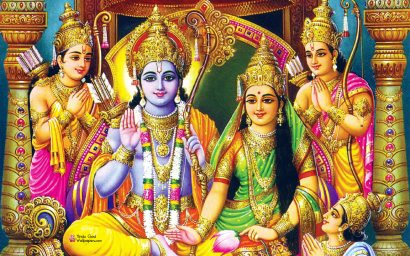
Episode 93 – Commencing the “Ayodhya Kaanda” – King Dasharata thinks of coronating Rama as his successor!!

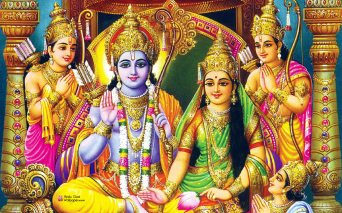
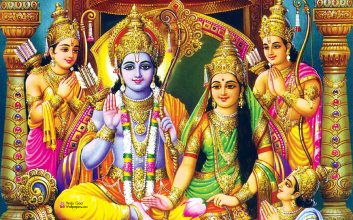
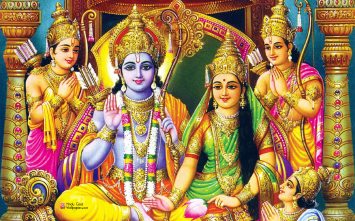
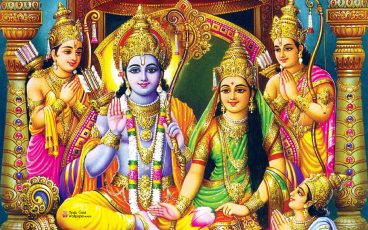
rama-sita

In the previous episode, we witnessed the last significant event of the “Baala Kaanda” wherein Sage Parasurama confronted with Rama as the entire family along with King Dasharata were en-route Ayodhya. We witnessed that Rama, with his invincible abilities lifted the “Vaishnava Dhanush” from Parasurama and thus his anger was reduced. After this encounter, the entire caravan reached Ayodhya and once the people of Ayodhya saw all of them approaching, they were so eager to see their little Rama along with his newly married little Sita! They were thronging the streets to have a glimpse of their beloved prince! Thus, Rama and others reach the palace and all of them commence their married lives happily! Their happiness continued for the next twelve years and thus marks the end of the “Baala Kaanda”!

In today’s episode we shall commence with the “Ayodhya Kaanda”. This second “Kaanda” (or Part) of the Ramayana talks about all those events and happenings in the city of Ayodhya after Rama’s marriage. We shall discuss all the important events one by one in the subsequent episodes. The “Ayodhya Kaanda” commences by saying that, after 12 years of happy marriage, Bharata and Shathrughna, the other two sons of King Dasharata leave for the “Kekeya Desha” to spend some time with Kaikeyi’s father and brother. Thus, Bharata leaves to his uncle’s place and as we know, Shathrughna follows Bharata wherever he goes (We discussed about “Bhaagawatha Paarathanthriyam” in one of our early episodes, and here we can see the example of it).

“Gacchathaamaathula kulam bharathena tathaa anakaha!

Shathrugnaha nitya shathrughnaha neethaha preethi pulaskruthaha!!”

Thus, Valmiki Maharishi begins the Ayodhya Kaanda with the above sloka, wherein he says that Bharata leaves for his uncle’s (Mother’s brother) place by name Kekeya. Kaikeyi’s brother is Yuthaajith. Bharata thus goes to the kingdom of Kekeya to spend some time with his uncle Yuthaajith. Shathrughna follows Bharata and goes wherever he goes!

“Sahi devair udheernasya raavanasya vadhaarthibhihi!

Architho maanushe lokhe jagnye Vishnu sanaathanaha!!”

As Rama and Sita were living happily with each other at Ayodhya, in the meanwhile, the Devas (Celestial beings) are talking with each other – “Oh! Vishnu and Mahalakshmi are living happily in the “Manushya lokha”! Is this what we asked for? We had requested Lord Vishnu to incarnate in the world so as to destroy Ravana and that hasn’t taken place even after 24 years! When will this ultimate event take place?” Thus, it is to be noted here that the Devas are those people who only care for their own comfort and luxury. They never care for Bhagawan and His comfort! Whereas, if we take the case of our Aachaaryas and Aalwars, they always care about Bhagawan’s comfort, rather than their own comforts! This is why Periyaalwar, in his famous “paasuram” in Tamil says after worshipping Bhagawan,

“Pallaandu pallandu pallaayirathaandu! Pala kodi nooraayiram pallaandu!

Un sevadi sevvya thirukkaapu…”

Here, the phrase “Un sevadi sevvya thirukkaapu” means, “Oh Bhagawan! You should be fine without any problems! You are coming to this “Dushta Desha” full of corrupt people like us all around! Hence, you should be fine without any problem!” This is an example of how our Aalwaars and Aachaaryas care for Bhagawan, more than for themselves! Whereas for Devas, they are more interested in getting the “Amrut” (Divine Nectar) along with loads of comforts for themselves!

Even if we take our own examples every day, whenever we go to a temple, do we pray to Bhagawan that he should be comfortable and fine? We never do that! 🙂 All we pray for is our comfort and our things to be executed well! Lord Krishna himself says, “Only those people who care for my comfort and my well-being, more than theirs’ are my true devotees!”

Thus while the Devas were talking like this, Lord Rama also realized that it is time to move on! He made his “Sankalpa” and it is only at this moment, things start moving forward! King Dasharata once again calls for the assembly of his court. Once the court assembled, King Dasharata expresses his desire to coronate Rama as his successor to the throne. He says, “I should have made this decision twelve years back! However, that didn’t happen as Sage Vishwaamithra had come and taken Rama along with him, and subsequently he got married. For the next twelve years I didn’t want to disturb Rama as he was newly married! Now since I’m aged and since I’m not very confident in defending and protecting our kingdom as efficiently as I was doing before, I think it’s time now to hand over the reigns to my eldest son Rama, as per the norms of our Ikshvaaku Dynasty! Oh rishis, and manthris, I seek your suggestions on this subject!”

Once King Dasharata expressed his decision, Sage Vashishtaachaarya looks at him gets up from his seat. As we all know that Sage Vasishtaachaarya is a “Brahmarishi” and he has the ability to foresee things that are about to happen in future, something was holding him back! However, ignoring that “something”, he slowly gets up from his seat to reply to King Dasharata’s decision. What did Sage Vasishtaachaarya reply? What was his idea? What was going through his mind? Let’s wait to find out in the next episode!
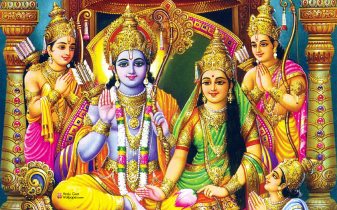
Episode 92 – Sage Parasurama confronts Rama – End of “Baala Kaanda”!!

rama-sita

In the previous episode we concluded the auspicious event of the Sita-Rama wedding with the important ritual of “Thirumangalya Dhaaranam”. In the due course of the entire discussion on this subject, over the last 10-15 episodes, we also witnessed how important is a marriage even in the modern day and the various important purposes of getting into this happy bonding in life.

Now moving on further, after the marriage ceremony is over at Mithilapuri, King Dasharata and co., start their journey towards Ayodhya with his sons and their newly married wives! King Janaka gives his daughters a tearful send-off as they commence their journey. During the midst of the long journey, King Dasharata suddenly started seeing bad omens all around! By seeing the bad omens, he was pretty sure that some danger awaits him and his children. The danger came in the form of Sage Parasurama! Sage Parasurama, as I had described in an earlier episode was an embodiment of anger! He was coming in front of King Dasharata and Co. with all his fury, and while he came towards them, King Dasharata was stunned and became scared!

It might be surprising for us that King Dasharata got scared when he saw Parasurama in front of him, although being one of the greatest warriors and an invincible king! But why did he feel scared? The simple answer is that, upon seeing his little Rama and Sita, any great warrior will feel scared! King Dasharata was saying to himself, “Oh!! May God protect these little tender children! May they be unharmed!”

“Ghoraasthu pakshino vaacho vyaaharanthi samanthathaha!

Bhoumaaschaiva mrigaassarve gacchanthisma pradakshinam!!”

Thus, in the above sloka Valmiki Maharishi beautifully explains that King Dasharata is seeing all the possible bad omens upon the arrival of Sage Parasurama – He says that the animals were walking in a peculiar fashion, birds were making some unusual sounds, they were flying and rounding about in an anti-clockwise direction, etc. Thus, amongst all these bad omens, Sage Parasurama arrives!

“Poorvam kshatravatham krithvaa gadhamanyur gadhajjvalaha!

Yeva mukthvaakthamaadhaaya bhaargavam bheema darshanam!!”

Thus, Sage Parasurama came in front of them with all his fury! He was having a fierce look of anger on King Dasharata and especially on the little Rama!

“Dhanusho bhedhanam chaiva nikilena mayaashrutham!

Thatatgadha manu chintyamcha bhedanam manushat gathaa!!”

Now Sage Parasurama talks to Rama and he says with all his anger, “Oh Rama! I heard that you were widely appreciated at Mithilapuri just because you had lifted a broken Shiva-Dhanush! I cannot accept all that! Now I have the unbroken “Vaishnava-Dhanush”! I can accept you as an invincible prince only if you’re able to lift this from my hand!” Upon hearing this, King Dasharata was shocked beyond words! He doesn’t know what to do and hence he falls on Parasurama’s feet and begs for mercy! But Sage Parasurama is not going to relent from his stand!

It is at this moment Lord Rama steps in! He accepts Sage Parasurama’s challenge and to the utter amazement of everybody around him, Rama easily grabbed the “Vaishnava Dhanush” from the hands of Sage Parasurama! Upon seeing this, Sage Parasurama was stunned and his anger started to come down slowly! King Dasharata was astonished at the miraculous event that has just taken place!

However, once Rama lifts the bow and locks the arrow inside it, it cannot be withdrawn! It is called “Amoha-Baanam”! Thus, Rama asks Sage Parasurama as to where should be fire the arrow. Sage Parasurama requests Rama to fire the arrow on his “Tapo-Bhalam” (The power obtained by his immense penance)! Thus, after this episode it is believed that Sage Parasurama proceeded towards the southern direction and reached the “Vaamana-Kshethram” (The present day south Indian state of Kerala) and was doing penance for a long time!

“Hum kaarena mahaadevaaha tamvidhodat trilochanaha!

Adhikam medhithe vishnum devaaha sarshiganaarthaha!!”

Thus, Sage Parasurama accepted his defeat in front of Rama and proceeded towards Kerala for doing penance! King Dasharata was relieved after he left that place and thus all of them proceeded towards Ayodhya! Since then, all of them were living happily together for the next 12 years!

With this note, we come to the end of the “Baala-Kaanda”! Phew! We’ve taken 92 episodes to finish Baala Kaanda alone! However, the reason why we took so much of time is that, there were loads of important things to talk about and describe in detail! We shall move on a bit faster from now on! Now the story shifts the scene to twelve years later! What happened next? We shall start with the “Ayodhya Kaanda” from the next episode! 🙂

Episode 91 – “Maangalyam thandhunaa anena..!” – Meaning of “Thirumangalya Dhaaranam”

rama-sita

Till now for the past few episodes we have been experiencing the beauty of the auspicious Sita-Rama wedding and meanwhile we were also talking about the significance of various rituals that are performed as part of a marriage ceremony. Particularly in the previous episode we had discussed the significance of two of the major rituals – “Sapthapathi” and “Laaja Homam” and why are they performed! Today we shall conclude the discussion on the marriage ceremony by extending the discussion on “Laaja Homam” forward and taking it into the all-important “Thirumangalya Dhaaranam”.

During the discussion about the “Laaja Homam” I had mentioned that in this ritual, the wife prays to Agni Bhagawan for the longevity of life for her husband. On a lighter note, we can say from all these rituals that, the husbands are a little bit smarter! 🙂 In a way, even the “Shaastraas” indirectly make the wives pray for the long life for their husbands! But does the vice versa happen? 🙂 We should indeed think for a moment! This now leads us to the very important and the culminating ritual of a marriage ceremony – The “Thirumangalya Dhaaranam”. Basically this ritual, as all of us know that this entails the husband tying the “Thiru Maangalyam” around the neck of his wife. The basic significance of this ritual is that, this “Thiru Maangalyam” in the neck of a woman is the one, which indicates that her husband is alive! Thus, this ritual of “Thirumangalya Dhaaranam” signifies that the husband and wife should live together for a long time!

We have a very famous sloka that is associated with this ritual. If we actually look deeper, this particular sloka is not part of the Vedas nor is it a “Manthra”. It is just a sloka. The sloka is as follows:

“Maangalyam thanthunaa anena mama jeevana hethunaa!

Khande bhadhraami shubage tham jeeva sharadasshatam!!”

Thus, this is just a sloka and not a manthra! Interestingly, the Vedas doesn’t give much importance to this “Thirumangya Dhaaranam” but only gives prominence for the “Saptha Pathi”. Of course, in the modern day wedding, we give so much of importance to the “Thirumangalya Dhaaranam”.

Anyway, now let us explore the meaning of the above sloka: It says, “Khande bhadhraami shubage”, which means, “Oh my dear wife! I’m tying this sacred thread containing the “Thirumaangalyam” around your neck!” Why is this sacred thread being tied? “Maangalyam thanthunaa anena mama jeevana hethunaaa!” – The husband says,It means that this thread is the proof that I’m alive! With this sacred thread around your neck, oh my dear wife! You also live with me for a long time!” If the husband says like this, what does he mean? J He is indirectly requesting his wife to pray for his long life! 🙂

Thus, this “Thirummaangalya Dhaaranam” is a ritual that is performed as a prayer for a long life together as a couple! It is thus; Sita and Rama married each other and prayed for a long lasting life together as a “Dhivya – Dhampathi”.

Before we conclude the discussion on the Sita-Rama wedding, I received a question from one of my readers that was very interesting to me! I shall address this question before I conclude this discussion: It goes like this:  “Sita and Rama are Goddess Mahalakshmi and Lord Vishnu incarnates on this world! They are already married for so many “Yugas”! Now when they are born on this earth, why do they need to get married again in this elaborate fashion?”

It’s a really interesting and a valid question! I shall try to give an answer to this. My answer has two parts:

Firstly, as I had been mentioning for so many episodes right from the commencement of this blog, the very purpose of the “Rama – Avatar” by Bhagawan is to teach us the way of living a righteous life by following the path of Dharma. Thus, “marriage” is a very important dharma for a human life! It is only to illustrate this “Dharma” and show us how we should live together as a couple, Lord Rama marries Sita! Thus, for the question pertaining to why did Sita and Rama get married, one of the main answers is that, it is not for their pleasure – It is for us to understand the significance of a marriage!

Secondly, another reason why Rama and Sita married each other is to bless all of us – “Jeevaathmaas” together as a couple! If Rama were alone without marrying Sita, he would definitely end up killing all of us, for the amount of sins that we’ve accumulated over so many births! This, can be witnessed all through the entire Ramayana story – Any killing or punishment meted out by Rama would have been when Sita was away from him! For instance, the Maareecha and Shubaahu episodeSita was not there with Rama; The killing of ThaatakaSita was not there with Rama; Killing of the 14,000 Raakshasas Again Sita was not there near Rama; Killing of Vaali by Rama – Again, Sita was not there near Rama; Ultimately, when Rama killed Ravana, Kumbakarna, etc. during the war, Sita was not there near him! Hence, we can see at every instance of the Ramayana that, whenever Sita and Rama are together, Rama doesn’t kill anybody! He is a “Karunaa – Murthy” (The Lord who is always merciful) to all his devotees when he is with his beloved wife! For instance, when the “Kaakaasuraa” came and attacked Sita in the presence of Rama, ideally Rama should have killed him! However, due to the presence of Sita near him, he let him off! Thus, it becomes evident as to why Sita married Rama!

Moreover, If we as devotees go and stand in front of Bhagawan when he is alone, we can be sure that we would be burnt down to ashes by him, for the amount of sins that we keep committing every day! The Vishnu Sahasranaama describes Bhagawaan’s eyes as “Chanda sooryouscha nethre!” – It means, Bhagawan’s one eye is as cool as a moon and the other is as hot as the sun! When we go and stand in front of him, we would never know which eye would focus on us! If our sins are very high in number, it is for sure going to be the eye that burns us down! It is for this reason, we should always go to the person whose both eyes are as cool as the moon – And this person is none other than Goddess Sita Devi! Her eyes are full of mercy for Her children and she is the person who will forgive us for all our sins and unite us with Bhagawan! Ultimately she is our Divine Mother! 🙂

Hence, it is for this main reason that Sita and Rama are together! I hope I had answered the question of my reader in a satisfactory manner! Anyway, after all the marriage rituals were over, King Dasharata along with his sons and his newly wed wives, leave from Mithilapuri and start their journey towards Ayodhya. What happened next? Did all of them reach Ayodhya safely? Were there any hindrances that they had to face? Let’s wait and see in the next episode! 🙂

Episode 90 – “Paani grunheeshva paaninaa!!” – Sita & Rama perform “Saptha-Pathi” & Laaja-Homam” together!

rama-sita

In the last few episodes we’ve been talking at length about the auspicious Sita-Rama wedding, and the inner meaning of the sloka “Iyam Sita mama suthaa..” – The most important sloka in the Valmiki Ramayana that beautifully portrays the auspicious event. As an extended discussion, during the last couple of episodes we were witnessing a very important social evil called “Divorce” and we pondered upon why divorces and separations happen at ease in the modern day. The last episode also focused on some possible solutions to curb this social menace. We discussed the importance of “Satsangs” and “Saadhu-Samaagama” wherein we said that, by channelizing ourselves towards good and healthy friendships with people around and by enhancing our “Bhagawat-Chintana” by reading and exploring various spiritual texts, music in the praise of Bhagawan, etc., it gives us the ultimate divine pleasure and automatically, the relationship between the couple would enhance further and thus follow the path of Dharma together!

In today’s episode, we shall continue to discuss about a couple of very important rituals done as part of the marriage ceremony, even today – The “Saptha-Pathi” and “Laaja-Homam”. Of course we’ve spoken a bit about “Saptha-Pathi” already, but today we shall discuss it in more detail. To begin this discussion, we recall here that the most important lesson to be learnt from the Sita-Rama wedding is that; Marriage is a bonding – A divine and a happy bonding between the couple – The bonding that is undertaken by us with the guidance of the “Shaastraa”, in front of “Agni Bhagawan”. Given this extremely high level of significance, there is absolutely no question of breaking away from this divine bonding! Now let’s go back to our subject on the Valmiki Ramayana.

“Iyam sitaa mama suthaa saha dharma chareethava!

Pratheecha yenaam bhadramthe paani grinheesva paaninaa!!”

In the last phrase of this all-important sloka, King Janaka says, “Paani grinheesva paaninaa”, which means, “Oh Rama! Hold her hands with yours!” For this, Periyavaachaan Pillai gives a beautiful description in one of his commentaries on the Ramayana. He says, “Oh Rama! You can hold Sita’s feet later on! Now, hold her hands first!” Rama asks back, “What are you saying? I’m a great prince! Why should I hold someone else’s feet?” He again says, “Oh Rama! I’m not telling this! The Shaastras are saying!” While the “Saptha-pathi” is going on, the boy has to hold the girl’s foot and place it slowly on a stone (“Ammikkal” in Tamil), and chant the following manthra:

“Aathishtenam asmaanam asmenathvaa sthiraa bhava!!”

This manthra signifies that “Oh my dear wife! Please harden your mind and heart like this stone and get yourself prepared! You will need to do lot of work and you’ll need to shoulder lot of responsibilities after our marriage!” This same manthra would be employed for boys when they do their “Upanayanam” – wearing their sacred thread (Poonool, or Saarani). In that context, the meaning would be, “Oh son! You are now becoming a Brahmachaari and would be going to the ‘Gurukula’ to learn your lessons, wherein you would not get to be physically comfortable! Hence, harden and prepare your mind for the challenges ahead!” Here we say the following:

“Aathishtenam asmaanam asmenathvaa sthiroo bhava!!”

Thus, for the boy it is “Sthiroo bhava” and for the girl it is “Sthiraa bhava”. This is the only difference – The former is “Pullinga” (Masculine) and the latter is “Streelinga” (Feminine). Thus, the significance of the “Saptha-Pathi” is that, the girl is preparing herself to enter her husband’s home, wherein she has to shoulder numerous responsibilities! This is exactly what Aandaal says in the following lines:

“Ammi midhikka kanaa kanden thozhi naan!

Thee valam seiya kanaa kanden thozhi naan!

Kaithalam pattra kanaa kanden thozhi naan!!”

As I had mentioned before, the phrase “Kanaa Kanden” in Tamil means “Dreaming about”. Thus, Aandal dreams about her marriage with Lord Krishna, and hence she invokes each and every ritual of the marriage ceremony and says that she is dreaming about performing all these important rituals, holding hands with Lord Krishna! She continues to explain one more important thing:

“Pori muharndhu atta kanaa kanden thozhi naan!”

Here, the phrase “Pori muharndhu” signifies another very important ritual called “Laaja-Homam”. The girl’s brother should perform this ritual. Accordingly, the girl’s brother, takes his sister’s hand and places it on her husband’s, and places a handful of puffed rice (“Pori” in Tamil) on their hands together. Now the husband has to chant manthras, while the wife should pray to Agni Bhagawan for a long life for her newly wed husband. This is a very important event and is called “Laaja Homam”.

There is one more event in a marriage ceremony that is very significant – The “Thirumangalya Dhaaranam”. This is a unique event and has to be covered in detail. Why do we perform the “Thirumangalya Dhaaranam”? What is it’s significance? Let’s wait till the next episode to talk about this! 🙂

Episode 89 – How do we tackle the problem of divorce?? Significance of “Satsangs” and “Saadhu-Samaagamam”

rama-sita

In the previous episode, during the discussion of the Sita-Rama wedding in a deeper detail, we spoke about one of the most unfortunate happenings of the modern day society, which is divorce. We were witnessing a few common reasons for divorces to happen in the modern day. In today’s episode, we shall continue and extend this discussion a bit more and also look into some possible ways and means to prevent and curb this menace.

Yesterday we looked into some “reasons” what modern day youngsters give for applying for a divorce and one of them was “Chemistry – Not working!” In the due course of the discussion yesterday, I had stressed upon the point that this so-called “Chemistry” between two individuals will prosper slowly over time and we need to be a bit patient. Some people might be lucky that the “Chemistry” works out well very soon, whereas some might have to wait! It is quite natural for this to happen, and hence we need to develop the patience and tolerance for many things in life. I had also mentioned a bit about the art of “Sacrificing” – The moment we start sacrificing small things in life for the happiness of the other person, the “Chemistry” will automatically start blooming nicely! Unfortunately in the modern day, we somehow fail to understand this logic!

Another big reason for divorce and separation in the modern day is probably the changes in the lifestyle over the period of years – In olden days we had the concept of a “joint family” and there were many people to support and bring us out of problems and issues and in that way, things were relatively smooth. (Of course, there are numerous other issues with respect to a joint family, and we shall talk about it in a later context). Whereas, today we’ve developed the concept of a “Nuclear family” wherein we’ve virtually isolated ourselves from other people – In fact, this has gone even one step further today that we do not even know who our neighbor is! This is the highest level of “individualistic” lifestyle that we are into, in the present day! To be very frank and blunt, as human beings, if we do not meet and interact with people around, we tend to get bored and frustrated within ourselves over time and unfortunately we tend to vent out our frustration to our life partner (husband or wife), which may sometimes go overboard and thus end up in separation!

Moreover, as a consequence of being in a “Nuclear family”, we are away from our relatives (Parents, In-laws, etc.) and friends by a big margin and hence, if there is any problem between the couple, there is nobody in the vicinity to mediate and solve the issue! This is a big problem! Also, nowadays, since the percentage of divorces and separations are going up dramatically, we witness numerous such cases around us in our daily life! This itself might be a pushing factor for a few people to go for a divorce! Also, there is a new way of life that is brewing up of late – “Live-in relationship”, wherein there is no formal marriage between the couple but still they live together! Let us think for a moment – Where are we going nowadays and what are we up to? I do not want to comment on this more!

Now what is the solution for this problem? How do we tackle this issue? Of course, due to professional compulsions many of us either live abroad or in major metro cities within India and the nuclear family is inevitable nowadays! However, as I had mentioned a while back, even within a couple, seeing each other day in and day out, might be boring – Although the girl would be one of the most beautiful creations on earth by Lord Brahma and the boy might be the most handsome person on earth! 🙂 But logically speaking, how long can we look at each other? This is where the importance of “Satsangs” and “Saadhu-Samaagama” comes into picture. The moment we associate with good people around with healthy friendships (Saadhu-Samaagama), we get to hear good things (Satsang) and thus we would be able to channelize our minds and hearts towards “Dharma”. It is to be thus noted here that by exercising this healthy association with good people, both the husband and the wife are happy and in-turn, the family life would prosper beautifully! The more we develop the “Bhagawat – Chintana” (Thoughts about Bhagawaan) and the more we talk about the aspects mentioned in the Ramayana, Mahabharata, Bhagawat Gita, Bible, Quaran, etc. at home, Bhagawan dwells in all our hearts and homes and thus in turn, happiness will rule!

Thus, reading these holy books of various religions should ultimately lead us towards the path of spiritual advancement and self-realization! It is so unfortunate and saddening to note in the present day that reading spiritual books are politicized, especially in India and are used as tools and means to take on political opponents! Today I came across an article in the news that a so-called leader of a so-called “Grand old” political party in India declaring that he is reading through the Bhagawat Gita to take on the opponent political party! 🙂 How funny is this!!!! Frankly, I didn’t know whether to laugh or cry after reading through this! It is shameful to know that we’ve stooped to such low levels to politicize a religion in the modern day!

Thus, coming back to our subject, the important lesson to be learnt by us in the modern day from the Sita-Rama wedding is that, the couple should be united together in all circumstances – both happy and sad, and follows the path of “Dharma” together, without the question of a divorce or a separation in any case!

There are a few other important rituals in connection with a wedding ceremony that are to be talked about. We would look into the reasons why we perform those rituals and what is the significance behind each of it. Let’s wait till the next episode to find out! 🙂

Episode 88 – “Paani Grunheeshva Paanina!” – Why are divorces increasing in the modern-day society?

rama-sita

In the previous episode we witnessed the importance of “Saptha-Pathi” during a marriage event. We saw how important it is even in the modern day. In the due course, we also saw that once the “Saptha-Pathi” is done, there is no question of separation between the couple. Thus we also saw that if we take the marriage ceremony seriously and chant all the manthras and slokas with utmost sincerity and dedication, definitely the married life would be a heaven for all of us!

In today’s and perhaps tomorrow’s episodes we shall extend this very important point in a bit more detail and see what are the challenges, couples encounter in the modern day, and some possible solutions to overcome them. Of course, this is a very subjective and a sensitive topic; however, I shall just talk about my perspective in a generalized way.

In the last couple of episodes we’ve repeatedly been seeing that the very purpose of a marriage between a couple is to undertake and follow the path of “Dharma” (Righteousness) together. You might all be wondering as to what is this “Dharma” all about! My answer to this question is the following: There are various aspects of life that are embedded within the term called “Dharma” – Predominantly the “Varnaashrama Dharma” (Performing the duties and responsibilities of one’s family). Within this “Varnaashrama Dharma” there are numerous sub-aspects to be looked into – For instance, maintaining peace and harmony within the family, performing the “Pithru-Kaaryam” (Periodic rituals for our parents after their demise), and the list goes on! We’ve spoken in detail about the “Pithru Kaaryam” in the previous episodes and I’m not going into it at the moment. The main duty to be discussed at this moment is how to maintain peace and harmony within the husband and the wife.

Thus, once the “Saptha-Pathi” ritual for Rama and Sita is done, it means that there is no question of separation after that! Whatever issues, problems, etc. that confront in front of us, we need to tackle them together as a couple! This is one of the biggest problems that pose a threat to the modern day society. Nowadays, the husband and the wife are losing patience and the will to take on challenges and problems together, thus ending up fighting with each other, the fight goes overboard and thus finally ending up at the court premises, filing for a divorce! Let us think for a moment – What are we going to benefit from all this? Do we really think that we would be a much happy person after the divorce? Do we spare a moment to think that we are complicating our life even further by resorting to a divorce? We should understand one basic fact of life here: There would definitely be some good days and some bad days in our life. This might arise due to numerous reasons – Perhaps because of the various planetary positions which we undergo every day in our lives – There might be terrible days of not concurring with the views of the other person. But that doesn’t mean that we proceed for a divorce!

I strongly feel that that whenever there is an issue at home, it is always better not to exaggerate it too much. We should try to let go of certain things. We should learn to agree to disagree! We should know that life becomes sweeter when we learn to sacrifice things! Why am I saying this? In our lives, there are going to be certain times when we are going to be extremely happy and victorious in whatever we do! And there might be certain times wherein we need to undergo failures (sometimes disasters too). We need to prepare ourselves to face any situation with adequate mental strength. Most of us might know an old proverb, which says “There hasn’t been a person who was happy continuously for 30 years, and there hasn’t been a person who faced failures continuously for 30 years!” Thus, it is very important for all of us to understand that both success and failure in life are bound to happen and this should not in anyway tamper the harmony between the husband and the wife! In fact, we should not even have the smallest of the smallest thought of “Separation” or “Divorce”! Whatever maybe the issue, whatever may be the fight, we should still live together and try and resolve it within us!

Another issue in the modern day society that I commonly see on numerous occasions is that, many people start giving out “innovative” reasons for divorce. Most importantly, present day people have a new term to describe – “Chemistry”! Nowadays, it’s a common trend amongst youngsters, proclaiming that the “Chemistry” with their spouse isn’t working well and hence we are going for a divorce! According to me, all these so-called “innovative” arguments are just rubbish! My only question to these people is that, instead of blaming “Chemistry” for their separation, why can’t they use their “innovation” to make this “Chemistry” work well with their spouse? Moreover, I strongly opine that all these “Chemistry”, “Physics”, “Biology”, etc. will automatically augur well within a couple, but will take time. We need to be patient for it to happen! This is why I repeatedly keep saying that the more we sacrifice and let go of our ego, the more happier we would be in life! The moment the other person realizes that we have sacrificed a lot for them, he/she would definitely be in tears and the “Chemistry” will automatically start growing! All of us know how many problems did Rama and Sita encounter together. Did they ever speak of separation even for a single moment? If Bhagawan comes and takes birth and encounters this much of difficulties, what are we? Hence it is very important for us to realize this fact of life!

There is one more important issue that hampers the harmony within a couple of the modern day, which we shall discuss in the next episode! Stay tuned! 🙂


Episode 87 – “Paani grunheeshva paanina” – Significance of “Saptha-Pathi” in the marriage ceremony

rama-sita

In the last couple of episodes we’ve been witnessing the in-depth meaning of a marriage and it’s purpose. Especially in the last episode we witnessed in detail that a marriage is performed between a boy and a girl so as to follow the path of “Dharma” together in their lives. Valmiki Maharishi has beautifully bought out this meaning through the phrase “Saha Dharma Chareethava”! We had concluded in the last episode that even after King Janaka explains with all these important phrases, Rama is still not seemingly convinced! King Janaka was puzzled and he tries to divert Rama’s attention towards Sita. What did he say next? Let us discuss further in today’s episode.

King Janaka has so far said, “Iyam Sita mama suthaa saha dharma chareethava!” Now he continues to say, “Pratheecha yenaam”. Velukkudi Shri. Krishnan Swami gives a very beautiful explanation for this in one of his discourses – He says, Rama is proud of himself being the most handsome person on earth! Hence he is just looking at the ceiling thinking how handsome he is and in that way, he never wants to look at the charming and the beautiful little Sita, who is eagerly awaiting Rama to look at her! King Janaka spots this and says “Pratheecha yenaam”, which means “Oh Rama! Please do not gaze here and there! Instead, have a look at this beautiful girl who is eagerly waiting for you!”

Thus after these words from King Janaka, Rama looks at Sita with all his merciful eyes full of love and Sita is overwhelmed beyond words in all her shyness! Now, King Janaka continues further and says “Paani grunheeshva paanina”, which means, “Oh Rama! Hold Sita’s hands with yours!”

There are various interesting insights to these two phrases of the sloka discussed so far. Let us see one by one! Now let us continue our yesterday’s discussion on the purpose of a marriage. We saw clearly yesterday that the main purpose of getting married is to follow the path of “Dharma” together. This journey is like a cart pulled by two bulls. The cart will move smoothly forward and complete it’s journey only if the two bulls pull the cart together in the same direction. If the two bulls start pulling the cart in two different directions, then the cart will break down and fall on the ground! Similarly, after the marriage, the husband and wife should together follow the path of Dharma and this is very important! This should be the main purpose of the marriage. Instead, if we think that the purpose of getting married is just for physical pleasures, earning money, property, gold, land, etc. the marriage will never be a happy bonding and it would lead us to numerous problems!

Also, it is very important for us to note that, in our Hindu “Sanaathana Dharma”, if the marriage happens between a couple, there is no question of separation or divorce after that! In fact, to be more precise and blunt, there is no “Manthra” for divorce! It might be there in some other religion but certainly not in the Hindu “Sanaathana Dharma”! Thus, according to our “Dharma”, a marriage is a big agreement between the couple. We perform a ritual called “Saptha-pathi” as part of the marriage ceremony – The couple takes seven steps together and this is called “Saptha-pathi” and this is perhaps the most important ritual in the entire marriage ceremony. This is what “Aandal” sings in her famous “Vaaranam Aayiram” in Tamil. What does she say in that?

“Thee valam seiya kanaa kanden thozhi naan!”

Here, “Thee Valam seiya” means, taking seven steps around the “Agni” (The divine sacrificial fire). Thus she says, that she was dreaming (Kanaa Kanden) that she is taking seven steps around the “Agni” (Thee valam seiya) and this ritual is called “Saptha-pathi”. Even today, if you go to a court, the marriage will not be accepted only if the “Thirumanngalya Dhaaranam” (I shall talk about this also in detail in the next episode). The conditions of the marriage would be fulfilled only if this “Saptha-pathi” is done! Thus this “Saptha-pathi” is extremely important! There is a very important agreement at the end of the “Saptha-Pathi”, which says to each other, “You and me are now coming to a big agreement for life! According to it, we should stay together till our last breath! Both of us should not deviate from this agreement!” This is a huge agreement within the couple! You might ask me, where is the signature? 🙂 But this is even bigger than just having a signature – “Agni Saakshi” (The Lord of fire – Agni is the proof for this agreement!) Once Agni Bhagawan takes his place in the marriage ritual, the focus should only be on him and not anything or anybody else! There would be numerous VIP’s or VVIP’s coming for the marriage and many of us would be focusing our attention in welcoming them! Ultimately many of us do the mistake of deviating from the main ritual of “Agni Aavaahanam” and this is quite unfortunate in the modern day weddings! Hence we should ensure that we take the rituals of the marriage seriously, especially the “Saptha-Pathi”.

There are other important rituals as part of the marriage ceremony. What are they? Why do we do all of that? Let’s wait till the next episode to find out! 🙂

Episode 86 – “Mama suthaa – Saha Dharma Chareethava” – The most important purpose of a marriage!

rama-sita

In the previous episode we commenced our deeper exploration into the most important sloka of Valmiki Ramayana, depicting the auspicious Sita-Rama wedding. In this all-important sloka, King Janaka officially offers his divine daughter Sita in marriage to Rama. So far we’ve seen the reason as to why King Janaka starts by saying “Iyam Sita” which means, “Here is Sita, with all her beauty!” We saw very interesting explanations pertaining to this.

However, Rama was not impressed and convinced with this phrase of King Janaka. He did not turn back and look at Sita’s beautiful face! Rama was thinking within himself, “Oh! Just because a girl is beautiful, can I marry her? Sometimes this beauty may lead to many problems!” King Janaka was quick enough to spot that Rama is not convinced yet and continues to say, “Mama Suthaa”!!

We saw the meaning of the phrase “Mama suthaa” in the previous episode, which simply means, “My daughter”. Why is King Janaka specifically mentioning “Mama Suthaa” here, although as we saw in that he was a “Raja-Rishi” with absolutely no blemish? He never has that “I-me-mine” attitude in his life and yet he says “Mama Suthaa”. Why? Let’s continue the interesting exploration further in today’s episode. The simple reason is that, Sita is so flawless in her beauty as well as her character, that upon seeing this girl, anybody in this world would feel proud to say “Oh! She is my daughter!” In this way, King Janaka was no exception! Although he is completely blemish less, upon looking at the beautiful girl with both her internal and external beauty, King Janaka is in tears of joy and utters, “Mama Suthaa!” with all his emotions seen in his two eyes! It is to be noted that while this marriage ceremony was taking place, Rama was twelve years old and Sita was six! Thus, it might astonish all of us that even at the tender age of six, Sita was such a “Gunavathi” (A woman with noble character)!

Rama was still not convinced! He was thinking within himself “Just because Sita is your daughter, can I marry her? I want more explanation!” It is at this stage that King Janaka explains the most important aspect! He says “Saha Dharma Chareethava!” It means, “Oh Rama! If you follow the path of Dharma (Righteousness), she will follow you in it! However, if you deviate from the path of Dharma, she will not deviate along with you, but she will correct your actions and bring you back to the path of Dharma!” What a beautiful way of summing up the importance of a marriage!

Thus we now come to a very important point in describing the very purpose of a marriage, which is very much applicable even to the modern day! Why at all do we get married? It is for us to realize that both the wife and the husband should follow the path of Dharma together, hand in hand! Thus, a marriage is nothing but a union between two people to follow Dharma!

Now let us look at King Janaka’s words again – “Saha Dharma Chareethava”! Every woman in this world should have this characteristic of following the path of Dharma along with her husband and if there is a deviation, she should have the power and knowledge to correct him and bring him back to the right path! (Of course, when the husband is already following the path correctly, the wife needn’t ask much!) This ideology should exist mutually between both the husband and wife – That is, if the husband deviates, the wife should correct him, and if the wife deviates, the husband should correct her!

So when we say “Saha Dharma Chareethava”, it doesn’t mean that only the wife should keep correcting her husband! The vice-versa also holds good! It is beautiful to witness that even in those days, both genders were given equal preferences and treated on the same page! Nowadays we talk a lot about gender equality, glass ceiling, woman empowerment, etc. in the management arena! And how interesting is it to note that all these concepts were spoken about in the Ramayana itself! It’s also extremely interesting to learn from the Ramayana that all these concepts of modern day management start from home!

Thus, the message from this important phrase of “Saha Dharma Chareethava” is that, the marriage is done so that both the husband and wife complement each other to follow the path of Dharma! A marriage is a happy bonding and is perhaps the happiest event in a person’s life! The real happiness between the couple will arise only if both of them follow Dharma! On the contrary, what are we doing in the modern day? We go behind money, dowry, property, gold, etc.! Modern day parents are more specific in terms of money and jobs – On a lighter note, I’ve personally heard some parents asking “Oh! Is your son/daughter working with TCS or CTS?” 🙂 Of course, the IT industry today is in a downtrend and nowadays this question has become a bit irrelevant! 🙂 However today, people have gone to an extent by putting pre-conditions for a marriage like, “The boy/girl should be a student of IIT or IIM! He/she should have more than 90% marks! He/she should be a gold medalist! He/she should earn atleast Rs. 1 lakh per month!” Let us think for a moment – Where are we heading to today? Is this the “Dharma” that we follow in the present day? Of course, I’m not saying that money and status is not important. Yes, it is required! But my question is about the “preference”! Is money and social status more important or character more important? If character and purity is present, money and status would automatically follow! Isn’t it true? So, which is the “Dharma” that we need to follow? Let us take some time and ponder over it!

Now coming back to the context, King Janaka sees that Rama is still not convinced even after saying “Mama Suthaa.. Saha dharma chareethava”! King Janaka was puzzled for a moment! He thinks, “What is this guy expecting? Why is he not convinced still?”

Why was Rama still not convinced? Let’s wait and find out in the next episode! 🙂

Episode 85 – “Iyam Sita Mama Suthaa…” – Key lessons for the modern day from the Sita-Rama Wedding!

rama-sita

Till the previous episode we witnessed the most beautiful event of the entire Ramayana story – The Sita-Rama Wedding! We saw numerous ways in which Valmiki Maharishi has described this amazing event! In addition, during the last episode we looked into the “Thiyagaraja – Ramayana” wherein, we saw how Saint Thiyagaraja, the most eminent music composer in Carnatic Music (Also referred to as “Thiyaga-Brahmam”) has captured the key events of the wedding! We shall witness more excerpts from the “Thiyagaraja – Ramayana”, along with the Valmiki Ramayana as we proceed further.

However, starting from today, for the next few episodes we shall see the important messages that can be taken by us in the modern day, from this auspicious event of Sita-Rama wedding.

We shall commence with the in-depth explanation of the following important sloka from the Valmiki Ramayana. We’ve already discussed this sloka in the previous episode in a brief manner. Now let us go into the detail:

“Iyam sitaa mama suthaa saha dharma chareethava!

Pratheecha yenaam bhadramthe paani grinheesva paaninaa!!”

King Janaka says: “Oh Rama, Here is Sita!” (Iyam Sita). Why does King Janaka point out to Sita and explains to Rama that this is Sita? Doesn’t Rama know by himself that Sita is standing next to him? There is a comical explanation to this. Shri. Velukkudi Krishnan Swamy beautifully brings this out in one of his “Upanyaasams” (Discourses): He says that once Rama enters into the city of Mithilapuri, he sees Sita standing in the balcony of King Janaka’s palace! So from that moment he sees Sita standing there, he was so carried away with her, that he sees Sita everywhere around him! He starts to see Sita in everybody around him! This is quite dangerous isn’t it? Even in our daily life, if we like someone so intensely, we would get to see his or her face in everything that we do! Rama is no exception here! Hence, it seems that King Janaka was concerned if Rama would mistake Sita for somebody else and garland him or her! This is why he points out to Sita and says “Iyam Sita!!”

Saint Thiyagaraja beautifully portrays this scene of Sita and Rama looking at each other for the first time. He sees Sita looking at Rama for the first time. In those days, all of us know that the girl would not be allowed to look at the boy before the marriage. It was a strict tradition that was followed! However, Sita was so curious to look at Rama and how he looked like! Because, it has been twelve years since she saw her husband! (It is to be noted here that Goddess Sita Devi is the incarnation of Goddess Mahalakshmi, the wife of Lord Vishnu, who is none other than Lord Rama himself!) So Sita was so curious and she tries to look at Rama without anybody noticing her! None of them noticed, but Thiyagaraja Swami does! 🙂 

He sings the following verse in one of his famed “Pancha-Ratna Kritis” – “Kana kana Ruchi ra!”

“Thala thala manu mukha gala galigina Sita kula kuchu ora kannulanu juche ninnu – Kana kana ruchira! Kanaka vachana ninnu!!”

Here, Thiyagaraja Swami uses the phrase “Ora kannulanu juche”, which means, Sita is trying to look at Rama with the corner of her eye, without getting noticed by anybody! She is so curious to see how her Rama looks like! Thus, Sita and Rama look at each other and King Janaka explains to Rama that here is Sita, standing in front of you!

Moving on, King Janaka continues to say, “Iyam Sita.. Mama Suthaa!” Here, “Mama Suthaa” means, “My daughter!” It is to be noted here that, King Janaka is referred to as a “Raja-Rishi”. It means that although he is a king, he had all the qualities of the highest of the highest Saint! He doesn’t know any blemish! If there is no blemish in a person, he/she would never feel that anything in this world is his or hers. In other words, the “I, me and my” attitude completely vanishes! King Janaka was an epitome of this characteristic.

Let me justify this with a small story: Once upon a time, King Janaka was a student (Sishya) of the great Sage Yaagnyavalkya! Of course he was a “Raja-Rishi”, but still he had that humility to learn more and more from the great Sage! Sage Yaagnyavalkya was also very pleased with this humility of King Janaka and every passing day, he would start the lessons only after King Janaka arrives and takes his seat! Seeing this, the other students of Sage Yaagnyavalkya were not very happy – They had an impression that their Guru was partial towards King Janaka since he was a great king! Sage Yaagnyavalkya knew this intention of his students and one day he wanted to teach a lesson to all of them! With the help of his “Gnyaana Drishti” (Power of his intellect), he created an illusionary portrait of the entire kingdom of Mithilapuri ravaging by a huge fire! Upon seeing this, all other students except Janaka ran away in panic! However, King Janaka did not move even an inch from his seat! After a while, all the other students came to know that this was just an illusion and returned back to their seats. Sage Yaagnyavalkya asked them: “Oh students! I’m amused at the level of panic all of you were in! What kind of a connection do all of you have with Mithilapuri? You are all saints! Whereas, look at King Janaka! His entire kingdom was illusioned to be in fire and yet he didn’t move a bit! Such is the devotion I expect from my students! Today you’ve all failed in your subject!” King Janaka replies to his teacher, “Oh Great Sage! I always have this principle in my life that nothing is mine in this world! Everything is the asset of God and I’m just an instrument! I just thought for a moment and understood that this is an illusion created by you! Hence I didn’t move!”

Such is the thought process of King Janaka! However in this context, King Janaka says “Mama Suthaa” (My daughter)! Why is he saying this? We might think for a moment that this is in contrary to the explanation I had given before! Let’s wait till the next episode to find out the reason of King Janaka’s words and also subsequently a very important “Dharma” of a marriage!

Episode 84 – The auspicious Sita-Rama Wedding comes to an end!!

rama-sita

In the previous episode we finally witnessed the auspicious event of the wedding ceremony at Mithilapuri, wherein Sita gets married to Rama. Similarly, Lakshmana married Urmila, Bharata married Mandavi and Shathrugna married Shuthakeerthi. Thus, the four sons of King Dasharata were married to the four daughters of the great kingdom of Mithilapuri. There are a few more significant points to be highlighted before we go into exploring the lessons for the modern day that can be learnt from this very important event of Ramayana.

Thus with the marriage ceremony taking place in the grandest of the grand fashion, everybody including Sage Vishwaamithra, Sage Vasishtaachaarya, Kings Dasharata and Janaka, Rama, Sita, etc. were extremely happy! However, irrespective of all these people’s happiness, there is one important person who should be happy with all the happenings and if that one person is not happy, the happiness of everybody would turn into a disaster!! Who is that one person? It is none other than the mother-in-law of Sita – Kaushalya Devi! 🙂 Was she happy? Yes! Kaushalya Devi was the happiest person amongst everybody on seeing the little Sita holding her child Rama’s tender hands!

Thus, after the main ceremony of the wedding is over, there is the concluding event called “Nalungu” that takes place. It is like a small get together with the two families and they have some fun with each other! This event is in practice in today’s weddings too! Saint Thiyagaraja sings “keerthanams” (compositions) for each of the events that took place as part of the grand wedding! Here too, as the “Nalungu” event approached, Thiyagaraja Swami sings the following famous composition:

Nagumomu galavaani naa manoharuni! Jagamelu shuruni jaanaki varuni!!

Devaadi devuni divya sundaruni! Shri vaasudevuni sitaa Raaghavuni!!

Bodhato palumaaru poojinci neraadhincu Shri thyaagaraaja sannutuni!!”

During the occasion of the marriage ceremony, there were innumerable priceless ornaments and other jewelry in terms of gold, silver, diamonds, etc. accompanied with flowers that were countlessly used. Flowers like lotuses, roses, etc. were spread around the “Divya Dhampathis” (Noble couple) of Rama and Sita. Saint Thiyagaraja sings the following:

“Challare Raamachandru nee pai puula!!

 Sompaina manasuto impaina bangaaru gampalato manci campakamulanu!!”

Thus in this fashion, the marriage ceremony was held and celebrated at Mithilapuri in a grand fashion. Rama was extremely happy that it was his parents who conducted the marriage ceremony in such a grand fashion. Similarly, Sita was happy that she got her precious “gem of a husband” with the approval of her parents! Thus, as common people like us, we should pray that this auspicious “Dhivya Dhampathi” should stay happy together and bless all of us throughout our lives!

Saint Thiyagaraja sings the following famous composition in praise of this newly married couple:

“Shobaane!!!!

 Vadana dyuti jita soma vasudha maanasa! Kaama mada maanava gaana bhima maam paahi Shri Raama!!

 Janaka suta hrd-ramana jamadagnija mada harana! Pranataakhaanala vruna paahi maam muni sharana!!

 Vara thyaagaraajanuta vaarija sambhava taata parama kalyaana yuta paahi maam shubha charita!!”

 Thus, it is time for the four newly married couples to commence their journey towards Ayodhya, after all the rituals were over! King Janaka and co. was in tears while sending off his dearest daughter Sita to Ayodhya! However, he was extremely pleased and happy while doing so! Thus the couples finally leave for Ayodhya to start a new journey of life!

There are innumerable lessons that are to be learnt from this auspicious Sita-Rama wedding! We shall commence them from the next episode! Stay tuned! 🙂