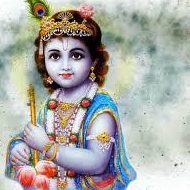
Episode # 11 – Vidura ‘s “Selfless Bhakti” moves Lord Krishna to tears!!!

cropped-cropped-lord-krishna.jpeg

Till the previous episode we had set up the background for discussion about the important “Vidura-Neeti” from the great Mahaabhaarata text. As part of setting the background, in the previous episode we had seen who is this Vidura and what was his family roots and how did he emerge significantly. We witnessed that Vidura was none other than the incarnation of Yama-Dharma-Raaja who in turn is the embodiment of all the “Dharma” (Righteous paths) put together! If Vidura has to say something, it would surely be about Dharma and hence it is very important for all of us to learn it and implement it in our daily lives. Hence in this way, the “Vidura-Neeti” is extremely important and is highly applicable for our day-to-day lives. In the subsequent episodes we are going to experience the important aspects of Dharma as explained by Vidura to King Dhirdriraashtra.

But before going into the Vidura-Neeti, we need to understand another significance of Vidura. I’ve mentioned in one of my previous episodes that if Vidura opened his mouth to talk something, it would be only about Dharma and nothing else. He doesn’t know to appease somebody or praise somebody for unwanted reasons. He is always blunt and straight to the point and this is one thing that all of us should also follow while we talk! Apart from this important quality, Vidura was a person who exhibited one of the highest forms of “Bhakhi” or “Devotion” towards Bhagawan Krishna. We shall see one interesting instance of this quality of Vidura and then take it from there.

One fine day Lord Krishna pays a visit to Vidura’s house. This was amidst all the tension that was gripping the Kaurava and the Paandava camp regarding the Hasthinaapura kingdom split and subsequently the war. Vidura did not anticipate Lord Krishna’s sudden visit to his house at that particular time and hence he and his wife were not prepared to receive and host him. However, when Lord Krishna arrives and calls upon Vidura, he immediately rushes out to welcome the Lord inside his small home! He gives a seat for Lord Krishna to sit and they start talking with each other! Vidura is overwhelmed that the mighty Lord Krishna has come to this poor man’s home too!

Eventually as their conversation was going on, Vidura wants to offer something for Bhagawan to eat. Hence he picks up a bunch of bananas and starts offering one by one to Bhagawan Krishna. In the process of doing so, he peels of each banana’s skin and gives the actual skinless fruit to Bhagawan. However as both of them get engrossed in their conversation, Vidura started to do something weird – He starts to put down the actual fruit on the floor and starts giving the peeled skin of the banana to Krishna! After a while, Vidura’s wife comes into the room and she is shell-shocked on seeing what her husband was doing! She immediately pats her husband on his back and warns him saying, “Please understand that you’re doing a huge mistake! Instead of giving the fruit, you are giving it’s skin!” As Vidura notices this, he is shocked as well! He was totally unaware that such a blunder is happening and hence he immediately seeks forgiveness to Lord Krishna and now gives the peeled banana.

Upon looking at Vidura’s innocent face, Lord Krishna smiles and he is moved to tears! He is touched with Vidura’s devotion. Bhagwan replies back, “Oh Vidura! I’m really touched by your devotion! It is not the banana or the skin that is important for me! It is your level of Bhakti that moved me to tears! Oh Vidura! Let me tell you today – My blessings are always with you and from this episode, the world would appreciate Vidura as an epitome of selfless Bhakti!”

Such is the level of devotion or Bhakti, Vidura exhibited towards Bhagawan Krishna! Thus we can see from this episode that Vidura is not only an embodiment of Dharma, but also is an embodiment of selfless Bhakti towards the Lord! Hence with all this significance of Vidura, it is extremely important for us to know and understand what Vidura has advised King Dhirdriraashtra.

We might immediately ask a question that this advice given by Vidura is only for King Dhirdriraashtra. It is not for us! Then why should we listen to it? The answer is very simple! All of us have two types of eyes – External and Internal. The external eyes are those that we use to see the outside world every minute! The internal eyes are those that are needed to look within us and introspect our own actions and behaviors. As far as King Dhirdriraashtra is concerned, he did not have both these types of eyes in him – External eyes were already blind, and internal eyes were also blind for him because he was entangled with his sons (Duryodhana and Co.) in following Adharma! If we consider our case, of course by Bhagawan’s grace, our external eyes are perfect and we are able to see the external world. But what about our internal eyes? Are we looking inwards into us and introspecting our behavior and actions? Many a times, the answer might be “NO”!

Hence this “Vidura-Neeti” is an opportunity for all of us to awaken and open our “Internal eyes”, which would in-turn enable us to look within us and introspect! Let’s stay tuned for the next episode to commence the Vidura-Neeti in full swing! 🙂

Episode # 10 – Vidura – An incarnation of “Yama-Dharma-Raaja”!!!

cropped-cropped-lord-krishna.jpeg

In the previous episode we had witnessed the birth of Vidura. We witnessed that Satyavati had requested her son Sage Veda-Vyaasa for a second chance, after her daughter-in-laws Ambika and Ambaalika had delivered two handicapped children. After repeated convincing, Sage Veda-Vyaasa accepted his mother’s request and this time, Ambika was smart enough to send one of her servants to meet him, rather than she going for the second time! Eventually as the servant woman was very happy to meet him, Sage Veda-Vyaasa’s grace transcended upon her fully that she delivered a normal and a perfectly fit child, who is none other than Vidura. However, as Satyavati comes to know of the plot planned by Ambika, she again gets depressed that her plan has backfired miserably than ever! How can a servant’s son succeed the kingdom? Such is the complexity of the situation and from this point onwards the entire text revolves around the various kinds of disputes that are going to erupt between the family of Dhirdriraashtra and Paandu. However, one such exception was Vidura, as he himself distanced away from all these confusions and succession fight to the throne. Rather, Vidura was a highly educated and a brilliant person, owing to the divine grace of Sage Veda-Vyaasa!

Moreover, in the last episode I had mentioned that Vidura was an incarnation of Yama-Dharma-Raaja. How can that be possible? Let’s discuss it today. Once there was a great sage by name “Aani-Maandavya”. It is only because of the curse from this sage, Yama-Dharma-Raaja had to be born in the world as a normal human being, as Vidura. I shall narrate in brief as to how this curse transcended on Yama-Dharma-Raaja.

When Sage Aani-Maandavya was a little child, he used to capture small ants, torture them and play with them! However as he grew up with age, he was tremendously focused on his penance and yoga. But somehow, there arose some allegation on his name. Accordingly the king of that particular kingdom had launched an investigation into the matter and unfortunately, Sage Aani-Maandavya was held guilty in the issue just because he did not open his mouth and talk so as to defend himself! Since the sage was found guilty, he was sentenced to death by the king! However it should be noted that Sage Aani-Maandavya was deep into penance that he did not even know what was happening around him! He did not know that he was being framed in a false allegation; he did not know that the king was investigating him and finally he did not even realize that he was being sentenced to death as well!

Thus according to the king’s sentence, the soldiers and other assistants carry Sage Aani-Maandavya upon their shoulders and take him to the place where he was supposed to be hanged to death! As the sharp guillotine started to poke his body, it was only at this point that Sage Aani-Maandavya realized what was happening to him! Upon seeing that he was being given a death penalty, Sage Aani-Maandavya demanded the reason for the same! As the sage asks the guards who were putting him to the guillotine, they point fingers at the king who ordered them to do so! Surprised by the answer that the king had inflicted this punishment on him, the sage was puzzled as to what wrong had he done! Upon an explanation given to him, Sage Aani-Maandavya wasn’t convinced. He was sure that he hasn’t committed that mistake and hence he calls Yama-Dharma-Raaja through his power of penance to answer this! As we know that Yama-Dharma-Raaja is that person who decides at the time of our death, as to which place do we transcend to – Heaven or Hell? This depends upon the amount of right and wrong doings in our lives!

This  Yama-Dharma-Raaja is none other than the Lord of Dharma. Yama-Dharma-Raaja is the person who is responsible for taking stock of whatever Dharma/Adharma we perform in our daily lives. He is a son of Surya (The Sun God). He has a sister by name “Yamuna-Devi”. We are worshipping River Yamuna even today in North India and this Yamuna is none other than the sister of Yama-Dharma-Raaja, born to Surya.

Thus Sage Aani-Maandavya calls this Yama-Dharma-Raaja to settle scores – He asks Yama-Dharma-Raja as to what mistake has he done! Hearing this question from the sage, Yama-Dharma-Raaja gives a surprising reply. He says, “Oh Sage Aani-Maandavya! Don’t you remember? In your childhood days, you were catching hold of small ants and torturing them and this has been your play! It is only for this reason you’re being put to this sort of a punishment!”

Upon hearing this, the people who were around the sage were taken aback! They didn’t expect such a silly answer from Yama-Dharma-Raaja. They were wondering that the king had sentenced this sage for death owing to some other reason and not this one! What is he talking about now?

This is where we need to realize that whatever sins we do at an early stage of our lives, can backfire at us much later as we progress! Most of the time, we would not get instant punishments for our wrongdoings. However, punishment is for sure and there’s no change in that! But in most of the cases there might be a huge time lag between our actions and the punishment. Hence we need to be very careful with our deeds!

Now moving on further, Upon hearing the reply from Yama-Dharma-Raaja, Sage Aani-Maandavya becomes furious! He asks Yama-Dharma-Raaja with his fury, “Oh wow!! So you would give this kind of an extreme punishment for just a small play with ants and that too when I was a child! Today you’ve given a wrong verdict and it is against Dharma! Dharma says that whatever wrongdoings are done when you are a child, it is not to be counted as Adharma! Today you’ve thus insulted Dharma! Hence I curse you to go and take birth in the world as a human being and live for 100 years!”

Thus, Sage Aani-Maandavya curses Yama-Dharma-Raja and it is only because of this curse, Yama-Dharma-Raaja comes and takes birth in the world as Vidura. It is only because of Yama-Dharma-Raaja’s incarnation as Vidura, the “Vidura-Neeti” is extremely significant. Vidura has explained each and every principle of Dharma, which is directly applicable to our modern-day life. Hence with this background in mind, from the next episode, we shall commence our discussion on the important aspects that are spoken about in the “Vidura-Neeti”. Stay tuned! 🙂

Episode # 9 – Vidura – A “Divine” child of Sage Veda-Vyaasa!!!

cropped-cropped-lord-krishna.jpeg

In the previous episode we had witnessed the continuation of the huge family tree that forms the crux of the Mahaabhaarata text. In due course we witnessed the birth of King Dhirdriraashtra and Paandu. We witnessed an interesting accord behind these two people’s birth, wherein Ambika and Ambaalika had to meet Sage Veda-Vyaasa to get his blessings to be impregnated. Accordingly due to the impatience of Satyavati, Ambika and Ambaalika were pushed into a tight spot wherein they had to deliver two children but with physical defects. King Dhirdriraashtra was born blind and Paandu was born with a perpetual disease of nervousness and shiver.

Now moving on further, as the news of the birth of two children reaches Satyavati she started to rejoice with happiness. But her happiness was cut short when she further heard that both the children were handicapped – One without eyesight and the other having a perpetual sickness! Now who would be the successor of the kingdom after Vichitra-Veerya? How can a blind person take over? Rather, how can a perpetually weak person rule the kingdom too? Both children were unfit to succeed the throne! What would poor Satyavati do now? Her ideas had completely backfired very badly! She sobs bitterly, given the complex situation in hand!

After a while, Satyavati makes up her mind and wants to give another try. She again calls her son Sage Vyaasa for help. She explains the situation and requests him to help her one more time in getting a proper male child who would be fit enough to succeed the throne. Although Sage Vyaasa refuses to accept his mother’s request, with repeated convincing he gives in. He now offers one more chance. Thus accordingly, Satyavati hurries into the chambers of her two daughter-in-laws Ambika and Ambaalika and requests them to meet Sage Vyaasa one more time. This time, she requests them to be mentally prepared to bare his dirty smelling body. Both of them accept Satyavati’s request, but reluctantly.

However as Satyavati leaves the place, Ambika thinks within herself, “Oh! I’ve already experienced this sage’s foul smelling dirty body and I couldn’t bare it even for a second. This mother-in-law is requesting me to go to that person one more time! It’s never going to be possible for me! Hence, let me call up my servant and ask her if she can go instead of me!” Thinking thus, she calls up her servant to come and meet her. Ambika explains her situation to the servant woman, and this woman readily agreed to Ambika’s request. Rather, she was happy that she was going to meet a great sage!

According to the arrangement thus, this servant lady goes and meets Sage Vyaasa that following night. Sage Vyaasa arrives and this lady is very happy to meet him, despite his foul-smelling dirty body. She was able to tolerate it with ease! Thus, with the divine blessings of Sage Vyaasa, this servant lady gets impregnated. After ten months of pregnancy, she yields a perfectly fit child, who was none other than Vidura!  Thus, we can see here that Vidura is a person who was born to a servant woman, but with the divine blessings of Sage Veda-Vyaasa. At the same time, Vidura can also be considered as the brother of Dhirdriraashtra and Paandu, since all their father roots are from Sage Veda-Vyaasa only.

Thus amongst the three brothers Dhirdriraashtra, Paandu and Vidura, only Vidura was the person who was physically fit without any problems. However, he was born to a servant woman and hence he was declared unfit to succeed the throne. Again, Satyavati’s plans had failed! She did not expect that Ambika would engage herself into this kind of a ploy! Strictly speaking, all the three people were unfit for the throne! We can imagine the pain in which Satyavati would have been! Here is where all the problems in the Mahaabhaarata commence! All the enmity, ploys, foul plays commence at this point!

From the above detailed accord spanning across three episodes now, we’ve seen how the family tree has perpetuated from King Saanthanu. For today, let us recollect and remember this important family tree and understand how it all began! There is another interesting episode coming up tomorrow, in which I’m going to talk about the fact as to why Vidura is considered to be an embodiment of Yama-Dharma-Raaja. Let’s stay tuned to find out! 🙂

Episode # 8 – Why was King Dhridiraashtra blind?

cropped-cropped-lord-krishna.jpeg

In the previous episode we had been witnessing a brief about the huge family tree that forms the crux of the Mahaabhaarata text. In that, we saw how Bhishma was born. We saw that Bhishma was the son of King Saanthanu and Ganga Devi. However, after Ganga Devi’s departure, King Saanthanu fell in love with another woman by name Sathyavati. It is between both of them that Vichitra-Veerya was born. Thus, Vichithra-Veerya was the successor of King Saanthanu. We also saw the previous history of Satyavati and the birth of Sage Veda-Vyaasa too. We also saw that Sage Paraasara transformed Satyavati once again into a virgin woman with the strength of his deep penance.

Thus Satyavati married King Saanthanu and Vichitra-Veerya was born. However, Vichitra-Veerya passed away in due course because of a disease. Thus because of Vichitra-Veerya’s untimely death, there was a stop in the growth of the generation. Many of us might have heard that it was only for this Vichitra-Veerya that Bhishma defeated Kaasi-Raaja and brought his three daughters along with him – Amba, Ambika and Ambaalika. Out of these three girls, Amba confessed that she was in love with another person and thus left Vichitra-Veerya’s palace. However due to various reasons, Amba couldn’t go anywhere else and later on with her deep penance she was the person who created “Shikandi”, who was responsible for Bhishma’s death!

Now, as Amba has left, Ambika and Ambaalika are remaining! King Vichitra-Veerya marries both of them, however they were childless for a very long time! It is at this time that Vichitra-Veerya’s untimely death happens. Now Vichitra-Veerya’s mother Satyavati thinks within herself, “Oh! I had married Saanthanu with the desire of growing this generation, however my son has died without obtaining a child!” Hence she calls Bhishma and talks with him to find a solution. She is now worried that the kingdom does not have the next successor after Vichitra-Veerya. Hence, Bhishma if you can find out a way to solve this issue it would be helpful for the kingdom!”

As Satyavati says thus, Bhishma himself was confused! He couldn’t find out a solution for this problem by himself. On one hand he should not act against the Dharma, and on the other, there should be a child that needs to be born immediately so as to protect the kingdom.

It is at this point only that Satyavati reveals her previous history to Bhishma – That she already has a son by name Sage Veda-Vyaasa! However, when Sage Veda-Vyaasa left Satyavati forever, he gives a promise to his mother saying thus, “I shall come immediately whenever you call me! I shall help you for sure, when the time and need arises!” Saying thus, Satyavati decides that this is the crucial time when she would require her son Vyaasa’s help.

Thus, she calls Vyaasa with her penance. As we know that Sage Veda-Vyaasa is an embodiment of innumerable spiritual powers, he realizes that his mother is in dire need of help. As Bhishma agrees for inviting Sage Veda-Vyaasa, Satyavati thinks of him and enters into penance. Realizing the importance, Sage Veda-Vyaasa arrives at the palace to meet his mother. As Sage Veda-Vyaasa arrives, Satyavati explains the situation to him, that Vichitra-Veerya has passed away and the kingdom is currently without a successor. Satyavati points out to Ambika and Ambaalika and requests Vyaasa’s help to obtain a proper successor for the kingdom. Hearing this from his mother, Sage Veda-Vyaasa replies, “Oh Mother! I’m a sage and I’ve totally renounced my worldly life! Hence, technically I cannot do what you ask for! However, I do understand that you’re asking for a reason, which is also pertaining to the Dharma. Maybe what can be done is that, please ask Ambika and Ambaalika to observe a sincere fast (Vratha) for a year. I shall come again after one year, when the fast is getting over. At that time I shall bless them with children.”

As Sage Veda-Vyaasa replies thus, it was not very convincing for Satyavati. How could she wait for one full year for all this to happen? She wanted immediate results. As she expresses this to Sage Vyaasa, he replies back, “Oh mother! If they wait for one year by fasting sincerely, it would have an excellent effect in future! I want to see if these two women are having the capability of tolerance and patience. However, you are not ready to let them undergo this important test!”

Sage Veda-Vyaasa continues further, “OK! In that case, if you want to have immediate results, let’s do one thing! If these two women would accept me with this dirty body of mine, which is smelling full of fish everywhere (it is to be remembered that he was born from Satyavati who was in turn from a fisherman’s community) and be with me by tolerating this, I shall bless them with children! This is the only way out now!”

As Satyavati listens to her son’s reply, she accepts this deal and agrees to convince both these women Ambika and Ambaalika to be ready. Accordingly she goes to Ambika and Ambaalika, makes both of them prepared by saying, “I’ve arranged a Sage to bless you in becoming a mother of a child!” Hearing thus, Ambika was also happy to hear this and she waited till the night dawns. As the night dawns, Sage Veda-Vyaasa arrives again and Ambika goes to meet him. However, Satyavati did not let her know that Sage Veda-Vyaasa’s body would be unimaginably dirty with toxic smell emanating from everywhere. Thus upon seeing Sage Vyaasa’s dirty body, Ambika immediately closed her eyes in deep shock! Since she had closed her eyes while Sage Vyaasa’s blessings were passing through to her body, she had to obtain a child who had no eyesight! This child was none other than King Dhirdriraashtra, who was blind right from his birth! Sage Veda-Vyaasa later conveys to Satyavati saying that since Ambika closed her eyes due to intolerance of my appearance, her child would be blind! However, this child would have hundred sons in future and each of them would be extremely powerful in nature!

Now for the next woman, Ambaalika – As the next night dawns in, Sage Veda-Vyaasa arrives again and this time it is Ambaalika’s turn to see him. As Ambaalika sees him, she doesn’t close her eyes (as Ambika did), however, she was shell-shocked on seeing his dirty and smelling body! She couldn’t take it and her body started shivering all over! She became white with fear and trembling! Thus again, Sage Veda-Vyaasa’s blessing couldn’t completely reach this woman also. Thus Ambaalika had to deliver a child who was having the same problem as Ambalika had – With nervousness and shivering nature! This child was none other than Paandu.

Thus to summarize for the day, Vichithra-Veerya’s two wives Ambika and Ambaalika meet Sage Veda-Vyaasa and thus, Ambika gives birth to the blind King Dhirdriraashtra and Ambaalika gives birth to Pandu, who was born with fever and nervousness.

We shall stop with this for today, and continue the family tree in the next episode! Stay tuned!

Episode 7 – Who is Vidhura? A brief background!!!

cropped-cropped-lord-krishna.jpeg

The previous episode has set a strong foundation for analyzing a very important part of the Mahaabhaarata text – Vidura-Neethi. We witnessed that this Vidura-Neethi is nothing but the advice given by Vidura to King Dhirdriraashtra on various important aspects of “Raaja-Dharma”, which is extremely relevant to our modern day life. We witnessed that this Vidura-Neethi is part of the “Udyoga Parva of the Mahaabhaarata. King Dhirdriraashtra has a fear within him that his son Duryodhana might end up being on the losing side if he had to split the kingdom and give a portion of it to the Paandava camp. Thus repeatedly thinking of this, his fear starts to multiply and thus he loses his peace of mind. It is at this point that he calls Vidura, his able minister to seek advice from. As per the king’s instruction, Vidhura comes into the chamber and sees his king in an extremely sad state.

Before we move on further into the Vidura-Neethi, I’ll quickly brief what had happened just before this context. The previous day, King Dhirdhriraashtra had sent Sanjaya (Another important minister of King Dhirdhriraashtra) as his messenger to the Paandava camp to analyze what is the mood there! Sanjaya had come back with some important news from the other camp, but by the time he arrived at the palace of King Dhirdhriraashtra, he was extremely tired owing to the long journey that he had to undertake. Hence he seeks permission from King Dhirdhriraashtra to rest for this night and convey the important message in detail, the next day morning. Accordingly, King Dhirdhriraashtra requests him to go and rest.

It is at this interval does King Dhirdhriraashtra feels tensed and worried – He is worried now as to what would be Sanjaya’s message from the Paandava camp. Thus the conversation that happened during this midnight spans for around eight “Adhyaayaas” within the Udyoga Parva. Thus from the 33’rd Adhyaaya till the 40’th Adhyaaya, it talks only about the important advice that Vidhura is giving to King Dhirdhriraashtra.

Now comes the next important question – Who is this Vidhura? It is a very interesting context to be discussed. Vidhura is none other than the complete embodiment of “Dharma”! Vidhura knows only to talk Dharma. When he talks, he talks straightaway to the point, without any nonsense in between! That is, he doesn’t know to bluff around and beat around the bush. Whatever he talks, he talks from his heart and that would be only pertaining to the Dharma. It should be noted here that this Vidhura is an incarnation of the epitome of Dharma – Yama-Dharma-Raaja.

I shall narrate in brief about Vidura’s background – How was he born? To whom was he born? It might be a bit confusing and hence I request readers to pay full attention to the details.

All of us would be knowing about the great “Bhishma” in the Mahaabhaarata. He was the son of Mother Ganga and hence is known as “Gaangeya”. Bhishma’s father was Shaantanu. This Shaantanu married Ganga Devi initially. After their marriage, they had many children and each child was killed because of an understanding between Shaantanu and Ganga Devi. The eighth son born to them was named “Devavratha”. This Devavratha is none other than Bhishma. He got his name “Bhishma” much later, and his original name was Devavratha. As per the understanding, Ganga Devi wanted to kill this Devavratha also and she takes the child to the river bank. Upon seeing the beautiful child, Santhanu was moved to tears. How could Ganga Devi kill this child? As he stops her from proceeding to kill Devavratha, Ganga Devi decides to end her relationship with Santhanu (as per their initial agreement). She hands over Devavratha to Santhanu and merges with the river Ganga. Thus Santhanu takes the little child and grows him up gradually.

After a few years, Santhanu meets another woman by name “Satyavathi”. This Satyavathi is from a fisherman community. Santhanu falls in love with this Satyavati, marries her, and obtains a son by name “Vichithra-Veerya”.

Here comes another twist to the story – Prior to marrying Santhanu, Satyavathi was having a past background. Owing to certain reasons, (I’m not going into those reasons for now) she was born out of a fish. Subsequently, a fisherman sees this baby, takes her to his house and grows her up. It is thus, Satyavathi was amidst a fisherman’s family and community. It is this Satyavathi upon which Santhanu falls in love with. During the marriage, Satyavathi’s father obtains a promise from Santhanu saying that, the successor of the kingdom should be only that child which would be born between these two people, and not the already existing Devavratha. Upon hearing this, little Devavratha pledges in front of his father Santhanu that he would remain single without marrying anyone, and that, his father can pass on the kingdom to the son who would be born to his step-mother Satyavathi. Thus, this promise of Devavratha was not an easy one to execute and this is why it is called as “Bhishma-Prathignya” (Prathignya means promise). It is only because of this promise that he made, Devavratha obtained the name as “Bhishma”.

Thus to sum up, Santhanu’s son with Ganga Devi was Devavratha (Bhishma) and Santhanu’s son with Satyavathi was Vichitra-Veerya. Thus we can see that Bhishma and Vichitra-Veerya are brothers.

There is another twist to this story. I had previously mentioned that this Satyavathi had a previous background prior to marrying Santhanu. Let me brief it a little more – Before she married Santhanu, once upon a time, Sage Paraasara had visited Satyavathi. Somehow he fell in love with Satyavathi instantaneously. Thus a son was born between both of them and this son is none other than Sage Veda-Vyaasa. Now combining these two stories now, Sage Veda-Vyaasa is also the brother of Vichitra-Veerya. However as Sage Veday-Vyaasa was born, Sage Paraasara takes him away from Satyavathi and he never returned back! After this episode, with his power of penance, Sage Paraasara transforms Satyavathi into a virgin woman again! It is only because of this reason, Satyavathi was able to marry Santhanu.

Now we’ve seen the first part of the huge family tree. For today, I’m stopping at this point because if I go further inside the tree, we would get confused. Hence let us recall and remember this part of the family tree for today. We shall continue the story in tomorrow’s episode and see how Vidura was born! Stay tuned!

Episode # 6 – Commencing the “Vidura-Neethi” – Setting up the context for discussion!!!

cropped-cropped-lord-krishna.jpeg

In the previous episode we had witnessed in detail as to how the great Mahaabhaarata was propagated to the world through the narration of Sage Vaishampaayana to King Janame-Jaya. In due course we also learnt the significance of the “Art of Listening” to elderly and experienced people. This is extremely relevant in the modern day too, as unfortunately innumerable issues arise due to lack of patience for listening to other people! Thus we have begun our second mega project with an important food for thought!

Moving on further, as we’ve discussed previously too, the Mahaabhaarata text is way too huge to be comprehended at a stretch. Hence it would be easier for us if we split the text into different parts – Just like how we eat spoon after spoon from a big morsel of rice! In that way, for this project we are going to discuss and ponder upon one such important part – The “VIDURA-NEETHI”! What is the context of this “Vidura-Neethi” and where does it come in the Mahaabhaarata? What does it explain about? Let us try and set up the context in today’s episode!

As the name suggests, Vidhura, who is King Dhirdruraashra’s minister explains and reminds King Dhirdruraashtra about the important principles of “Raaja-Dharma” with innumerable small stories and quotes. We would be wondering why should Vidhura narrate and remind all these things to King Dhirdruraashtra. Doesn’t King Dhirdruraashtra know everything by himself? Where does this context come? Let’s try and answer these questions today.

As we set up the context, ff we have a quick glance through the Mahaabhaarata text, in the “Aadhi Paruva” it talks about the birth of Bhishma, Kauravas, Paandavas, Lord Krishna, etc. and how did all of them grow up. It also sows the seeds for all the disputes that they had with each other. The next is the “Sabhaa Paruva” wherein it talks about the infamous “Ludo” game that takes place between the Paandavas and the Kauravas. It should be noted here that “Betting” has already been in practice even in the “Dwaapara Yuga”. Sahuni (Duryodhana’s uncle) comes into the play and swings the game towards the Kauravas, thus according to the pledge, the Paandavas had to surrender their kingdom. Their wife, Draupathi was publicly insulted in the courtroom by Duryodhana and Co. thus sowing the seeds for the great Mahaabhaarata war.

The subsequent Paruva is the “Vana Paruva”, wherein the Paandavas are exiled to the forest for a fixed number of years and post that, is the “Viraata Paruva” wherein the Paandavas were supposed to adopt the “Agnyaatha-Vaasa”, that is, they should live in a city, but live unnoticed by anybody in the royal family. Thus the Paandavas lived in a city called “Viraata”. It is only at the end of this “Viraata Paruva” does this “Go-Grahanam” takes place. I’ve explained this in the previous episode wherein Duryodhana takes all the cows of the Viraata city to hostage and Arjuna comes and retrieves all of them. There is a doubt that whether that one-year period of “Agnyaatha-Vaasa” of the Paandavas has come to an end or not – Duryodhana claims that he has seen the Paandavas before that one-year time period and hence they should again go back to the forest! However, Paandavas along with Bhishma, Guru Dhronaachaarya, etc. deny the claim. They try to advise Duryodhana on his wrong calculation. As Duryodhana sticks to his stance unrelentingly, this becomes the base for the fight to intensify further.

Finally as things are getting out of hands, King Dhirdruraashtra tries to take one last measure to dose down the fight – He sends a messenger from his side to the Paandavas so as to try and pacify them. In return, the Paandavas send Sage Ulooka as a messenger to talk with the Kauravas and settle things. Sage Ulooka comes and advises King Dhirdriraashtra to split the kingdom and give the due share to the Paandavas as per the initial agreement. However, all this advice went in vein! None in the Kaurava camp were ready to compromise! In return, King Dhirdriraashtra sends one of his ministers Sanjaya as a messenger to the Paandava camp. This constitutes the “Sanjaya-Yaana Paruva”.

It is to be noted here that each “Paruva” (Part) has innumerable “Upa-Paruvas” (Sub-Parts). Now we are at the fifth Paruva called as the “Udyoga Paruva”. It is in this “Paruva” that all the preparations are getting ready for the mega-war between the two camps. There are many interesting events that take place in this particular “Udyoga Paruva”, including Lord Krishna’s service as a mediator between the Paandavas and the Kauravaas. Lord Krishna tried his level best to console the Kaurava camp and tried to explain Dharma to them. However again, all of these went in vein!

It is only in this “Udyoga Paruva” is the “Vidura-Neethi”! This “Vidura-Neethi” is embedded in the “Prajaagara Paruva”, which is an Upa-Paruva of the main “Udyoga Paruva”. The word “Prajaagara” in Sanskrit means “Sleeplessness during the nighttime”!

King Dhirdruraashtra is now suffering from lack of sleep! He is puzzled as to why is he unable to sleep properly. He feels as if he is burning with innumerable problems around him! He is worried if he would end up splitting the kingdom and giving it to the Paandava camp. He is worried if his son Duryodhana would end up as a loser in front of the Paandavas. Worrying about all these, King Dhirdruraashtra is unable to sleep peacefully! It is at this time that he calls upon Vidhura to seek some advice. King Dhirdriraashtra wants to understand from Vidhura the reason behind his worries and sleeplessness.

We can see this same kind of suffering even in the modern day – All of us undergo innumerable problems and sufferings every passing day and as a result of that, we end up thinking too much about all of them. At the end of the day, because of all these thoughts we end up losing our peace of mind, which directly results in lack of sleep!

But is there a solution for this? Or, do we need to tolerate everything and live with all the problems and disturbed mind? The “Vidura-Neeti” offers excellent solutions to this problem. Thus, from tomorrow’s episode we are going to witness various principles that are narrated by Vidhura to King Dhirdriraashtra so as to help him come out of all his worries, in order to attain peace of mind! Stay tuned! 🙂

Episode # 5 – Why is the “Art of LISTENING” very important for us???

cropped-cropped-lord-krishna.jpeg

In the previous episode we began witnessing a very interesting event as to how the great Mahaabhaarata text was propogated to the entire world. We saw how Sage Vaishampaayana repeatedly approached King Janame-Jaya to teach him the values and messages that are imbibed in the Mahaabhaarata. Due to his busy schedule as a king, Janame-Jaya repeatedly kept rejecting Sage Vaishampaayana’s requests for an appointment. However after repeated persuasion, King Janame-Jaya gave just two minutes of time for Sage Vaishampaayana to narrate the Mahaabhaarata! As Sage Vaishampaayana is a great scholar, he knows how to convey the entire Mahaabhaarata text within just a single line! As King Janame-Jaya listens to that single line, he isn’t able to understand head or tail of it and asks for further explanation.

As King Janame-Jaya’s interest is captured now, Sage Vaishampaayana commences his full lecture on the Mahaabhaarata in detail! He starts from the first “Parva” and finishes till the last “Parva” of the entire text! King Janame-Jaya forgets the entire world outside him and is completely engrossed in the story! He now has completely listened to the entire Mahaabhaarata! Sage Vaishampaayana is also very happy that his mission of preaching the Mahaabhaarata to King Janame-Jaya is accomplished!

After hearing the whole text, Sage Vaishampaayana now asks a question to King Janame-Jaya.

“Dharme cha arthe cha kaame cha moksha cha bharatha rishabha!

Yathi haastheethadhanyathra yennehaasthee nathath kvachith!!”

 Thus from the above sloka we can infer that Sage Vaishampaayana says to King Janame-Jaya, “Through this great text, I’ve conveyed the important attributes pertaining to Dharma, Artha, Kaama and Moksha! From this text, what do you think is the best out of the four attributes that I had just mentioned? What according to you is the best out of the four? And why?

King Janame-Jaya didn’t anticipate such a question from Sage Vaishampaayana. He thought for a minute within himself and gives the answer, “None of the four attributes that you had mentioned are good enough!” Upon hearing such an answer from the king, Sage Vaishampaayana is surprised! He asks back, “Oh Janame-Jaya! Then what else do you expect? There are only four attributes that are popular in this world with respect to Dharma. Now where do we go for a fifth attribute?” King Janame Jaya replies back, “Oh Sage Vaishampaayana! I think you’ve misunderstood my answer! What I meant by that statement was that, I do not care as to which attribute is the best amongst the four. All I’m interested in is that, I’ve got the divine opportunity to listen to such things from you! That is the greatest attribute and gift that you have given me and I’ve been that fortunate person to receive this great gift! Thus, you keep repeating this text to me, time and again and I would always be respectful to you and listen to you!”

Thus here, we can see that “Shravanam” (Listening to great people) is a very important methodology to learn! Thus, this episode illustrates that listening is the best way to learn Dharma. It is for this reason that we have “Satsangs”, “Upanyaasams” of eminent and experienced “Bhaagawathaas” and “Upanyaasakaas”. We as common people, should listen to these great people and learn from their discourses. As the famous “Thirukkural” preaches,

“Selvathul selvam sevicchelvam acchelvam selvathul ellaam thalai!!”

 Thus in our modern day life, we come across and acquire different kinds of properties (“Selvam” in Tamil means “Property”) but they might not be stable enough! However, the “Property” called “Art of Listening” is always permanent and if it is something with respect to Dharma, we can always keep listening to it till the end of our lives! This is exactly what King Janame-Jaya is requesting Sage Vaishampaayana in this context. It is to be remembered from the previous episode that this Janame-Jaya was not interested even in listening to just one sloka initially, but however he ended up listening to all the 1,25,000 slokas of the Mahaabhaarata!

Thus from this important episode, we understand that the Mahaabhaarata is a complete package of different aspects of Dharma explained with a beautiful storyline and the great text is being propagated by Sage Vaishampaayana to King Janame-Jaya and thus the Mahaabhaarata becomes popular in the world! With this note, we shall move into our topic of discussion from the Mahaabhaarata text. As I had mentioned before, we would not be able to witness the entire Mahaabhaarata at a stretch, owing to its complexity in volume! For this project, we are going to consider one important topic. I’m still keeping this topic as suspense! Let’s stay tuned for the next episode to find out! 🙂

Episode # 4 – Sage Vaishampaayana narrates the Mahaabhaarata to King Janame-Jaya!!!

cropped-cropped-lord-krishna.jpeg

In the previous episode we had witnessed the reasons why the Mahaabhaarata as a text is extremely significant in our Hindu “Sanaathana Dharma” literature. We also witnessed that the Mahaabhaarata is a complete package of various principles of Dharma (Righteousness), which is very important for all of us to follow even in the modern day lives of ours! It is quite amazing to know that all our forefathers and ancestors like the great Sage Vaalmiki, Sage Vasishta, Sage Veda-Vyaasa, etc. have been able to foresee what kinds of problems would we be facing thousands of years into the future and have given apt solutions for all the various kinds of problems in their Ramayana and Mahaabhaarata texts respectively.

Thus it can be firmly asserted that such kinds of literature authored by such kind of brilliant people who were able to foresee future into thousands of years, will not be available anywhere in the world and with any religion in the world! This is why Hinduism or “Sanaathana Dharma” is highly respected across the world even today.

For instance, we speak about advancements in science and technology in the modern day world, discovery of new planets, new objects in the astronomical science, etc. However, the basis of all these scientific and technological advancements is the same at any given point of time. For instance, an atom is an atom, a molecule is a molecule, irrespective of whatever is the time period and only on this fundamental base, we build innumerable researches and studies every passing day. Similarly even in spirituality, the basic principles remain the same and it is only upon these fundamental principles we build our day-to-day lives with respect to the “Dharma”. Thus if a question arises as to why should we read the scriptures like Vedas, Epics (Ramayana, Mahaabhaarata), etc., the answer is that these scriptures convey the basic fundamental principles of Dharma and it is important for all of us to understand them fully. It is only with these fundamental principles that we build our lives towards Dharma and climb towards spiritual success.

Thus the Mahaabhaarata is a text that conveys the fundamental principles of Dharma. This Mahaabhaarata was propagated to this world by a king by name “Janame Jaya” and the aachaarya by name “Vaishampaayana”. This is a very interesting event and I shall try to describe this particular part in a brief, before we go into our actual subject of discussion. This king “Janame Jaya” was a part of the dynasty of the “Paandavas”. Vaishampaayana was a great Maharishi who actually had this Mahaabhaarata text with him. Sage Vaishampaayana had a desire that he should teach King Janame Jaya this Mahaabhaarata so that he could better understand the principles of Raaja Dharma. Accordingly one fine day, Sage Vaishampaayana visits the courtroom of King Janame Jaya and expresses his wish. Since Janame Jaya was very busy with his duties as a king, he was unable to allocate time for Sage Vaishampaayana. Even after repeated attempts, Sage Vaishampaayana wasn’t able to get access to King Janame Jaya.

At one stage, Sage Vaishampaayana requests the king, “Oh Janame Jaya, please give me just a few minutes of time. I shall narrate only one of the eighteen “Paruvas” of this great Mahaabhaarata!” However, King Janame Jaya refused yet again! Again, after repeated requests from Sage Vaishampaayana, finally King Janame Jaya accepts to listen to just one sloka from the Mahaabharata! He was afraid within himself that if he repeatedly refuses the words of a great Sage, he might end up being cursed! Hence King Janame Jaya accepts Sage Vaishampaayana’s request.

Now, Sage Vaishampaayana has just one sloka and he has to complete it within two minutes! Normally, if we have to talk for one hour or more, it would be easier for us to talk! However, if we’ve to precisely convey something within just two minutes, it would become extremely difficult for us to do so! Because, we need to put the right words at the right place and that itself would consume half of the two-minute deadline! 🙂 However, Sage Vaishampaayana is a great scholar, unlike us! See how beautifully he conveys the message of the entire Mahaabhaarata within just one sloka:

“Vanabhangathilum gograhanathilum vaibhavathaippaarthum suyodhananum dashaanananum sandaikki chendraargale! Ariviligal!!”

This is a beautiful quotation in Tamil and as Sage Vaishampaayana finishes saying thus, he says to King Janame Jaya that his one sloka is over! However, as King Janame Jaya listens to this quote, he did not understand head or tail of it! He was confused totally by the complex words that were used in the sloka! As he asks Sage Vaishampaayana for its meaning, the sage asks him back “For explaining this to you, how many slokas and minutes would you give me?” 🙂 King Janame Jaya replies, “Fine! Explain only this sloka alone!”

Accordingly, Sage Vaishampaayana explains thus, “Vanabhangam” means, in the Ramayana, Hanuman searched for Mother Sita in Lanka and destroyed Lanka with his fury. “Gograhanam” means, during the “Viraata Parva” in the Mahaabhaarata when Duriyodhana and his brothers kidnapped all the cows and calves, Arjuna opposed them, fought over them and released all the cows from their hostage. Thus, “Suyodhana” otherwise called “Dhuryodhana” witnessed the valor of Arjuna during this particular episode. Thus, even after knowing the invincibility and valor of Arjuna, Duryodhana again invited him for a full-fledged war! Thus Duryodhana was an “Arivili”, which means “Fool”!

Similarly, Ravana who is referred to as “Dashaanana” witnessed Hanuman’s invincible powers in the “Vanabhanga”. Ravana should have realized at that point that if a messenger can be so much invincible with powers, what kind of powers would Rama have! He failed to realize it and thus was an “Arivili”, which means, “Fool”!

Having explained thus, Sage Vaishampaayana says to King Janame Jaya, “Oh King! This is what I tried to explain in that one-line sloka! Can I leave now?”

Now was King Janame Jaya satisfied with this answer of Sage Vaishampaayana? The answer is “No”! Rather, it only kindled his interest to know more about it! What happened next? Here, we are going to see a very interesting phase how the Mahaabhaarata was propagated to the world! Let’s wait till the next episode to find out! 🙂

Episode # 3 – Overall significance of the Mahaabhaarata text!!!

cropped-cropped-lord-krishna.jpeg

In the previous episode we had discussed two important points – The first one being the significance of the Mahaabhaarata in brief and the second being the significance of the author of this Mahaabhaarata text – Sage Veda-Vyaasa. The second point had been discussed in great detail, wherein we witnessed that it was Sage Vyaasa who had compiled the Vedas, categorized them into the four important sectsRig, Yajur, Saama and Atharvana. This in itself is a huge task and the onus and credits for undertaking this complex task goes to Sage Vyaasa. It is because of this reason he is referred to as Sage “Veda-Vyaasa”. Apart from his contribution towards the Vedas, Sage Veda-Vyaasa has authored the Mahaabhaarata and subsequently the all-important “Shrimad Bhaagawatha Puraana”.

Having said thus, it is now time to have a glimpse on the significance of the Mahaabhaarata text. Before we move on to the specific subject of discussion from within the Mahaabhaarata text, we need to understand the importance of the Mahaabhaarata as a whole. We had already spoken about it in our previous episode, however there are a few points that need to be emphasized before we move on.

First, let us try and understand from where did this great Mahaabhaarata originate. From where did Sage Veda-Vyaasa obtain this great text? As the name suggests, “Mahaabhaarata” – This can be explained with the following phrase:

“Mahathvaacha bhaaravathvaaccha mahaabhaaratam ithi ucchyathe!!”

 As we look into the meaning of the above phrase, it says, “Mahathvaath”, which means, the one that is the “most significant”, “Bhaaravathvaath”, which means, the one that is too huge. We’ve already said that this text comprises of eighteen “Paruvas” (Parts) and 1,25,000 slokas. Thus the first two words “Mahathvaath” and “Bhaaravathvaath” if combined together, would mean that this text is both extremely huge and significant. It conveys all the important “Dharma” (Righteous paths) that a human being should follow and implement in his/her lifetime in this earth.

“Mathi manthaanamaavidhya yenaasau shruti saagaraath!

Jagath hithaaya janithaha mahaabhaarata chandramaaha!!”

This is a very popularly known sloka. What does this sloka say? Just like how Lord Vishnu drilled the “Ocean of Milk(“Paar-Kadal”) with the help of the “Manthana Mountain” to excavate the “Amruth” (Divine nectar), Sage Veda-Vyaasa used his extremely high brilliance to drill the ocean of “Upanishad” to obtain the divine nectar called the “Mahaabhaaratha”. Thus in simpler terms we can infer from the above sloka that Sage Veda-Vyaasa has packed into the “Mahaabhaarata” text, all the essence of the “Vedas” and “Upanishads”, thus communicating the message that if one reads the Mahaabhaarata, it is equivalent to reading the Vedas and Upanishads. Thus the Mahaabhaarata text is so significant that it has all the necessary messages that are required to guide a person to lead a happy and a contented life in this world (as per the principles of Dharma) and also sows the seeds for releasing oneself from the vicious cycle of birth and death in this world and thus attaining “Mukthi” (Salvation). Such is the significance of the great Mahaabhaarata and first up, let us fold our hands and bow to Sage Veda-Vyaasa and pay our due respects to him for gifting this text to us!

“Yathihaastheethadhanyathra yannehaasthee nathath kvachith!!”

This is again a very popular phrase, which says that there is nothing that we cannot find in this great Mahaabhaarata text! At the same time, if there is something that is absent in this Mahaabhaarata text, we wouldn’t be able to find that anywhere in this world! Thus the Mahaabhaarata is too huge a text – It talks about innumerable people who were born, innumerable people who died, who fought with whom, who made a foil plan against whom, who spoilt whom, etc. However, if we’ve to select portions from the Mahaabhaarata, there are innumerable portions like Bhagawat Gita, Vishnu Sahasranaama, Yaksha Prashnam, Sanath Sujaatheeyam, Moksha Dharmam, Aapath Dharmam, Raaja Dharmam, etc. which give us the essence of various aspects of “Dharma” (Righteous Paths). The most important thing about all this is that, all the “Dharma” that is spoken about in this great text, is step by step applicable in our modern day lives – both personal and professional. For instance, we’ve been hearing constantly on and off through various sources everyday that there are innumerable modern day scientists and researchers across the globe who are undertaking research on the Bhagawat Gita, Bhaagawatha Puraana, and the likes. Hence we can understand the significance of the Mahaabhaarata text not only with respect to the ancient day philosophical context, but also for the modern day context too!

Of course, it is highly impossible for us to grasp the entire Mahaabhaarata at a stretch, given its sheer volume. We were able to do that for the Ramayana as it was quite smaller in volume. However, we are going to select important portions from the Mahaabhaarata text and experience it completely from top to bottom.

As part of this second mega project, we are going to select one such important portion from the Mahaabhaarata text and ponder upon it in deeper detail. Which is that portion we are going to select? Why are we selecting this particular portion? What is the underlying message from this portion? I’m keeping it as suspense for today! Let us wait till the next episode to find out! 🙂

Episode 2 – Significance & Speciality of Sage Veda-Vyaasa!!!

cropped-cropped-lord-krishna.jpeg

In the previous episode we had witnessed the commencement of our second mega-project – Leadership lessons from the Mahaabhaarata. We had also seen a small introduction about the two great epics that comprise the crux of our “Sanaathana Dharma”. In that, we had already had the divine opportunity to explore one of the two epics – Shrimad Ramayana in detail. Now as we move on, we are about to start our exploration into our second important epic – The Mahaabhaarata.

But before we enter into the actual text of Mahaabhaarata, it is our bound duty to appreciate the significance of it’s author, the great Sage Veda-Vyaasa. Subsequently we also had a discussion in the previous episode as to why should we appreciate the significance of sages such as Veda-Vyaasa. In a nutshell if we’ve to understand the reason – Sages such as Sage Vishwaamithra, Sage Vasishta, Sage Vyaasa, etc. have totally dedicated their entire lives into contributing something that would be beneficial for the whole world in the forthcoming future. If we happen to explore the life history of each of the sages, all of them would have lived for thousands of years in this world and would have propagated innumerable aspects of “Dharma” (Righteousness) to this world and hence it becomes our bound duty to remember and appreciate our great sages who had descended in our “Bhaarata Desha” (India). In fact, we should be proud of ourselves that we are living/associated with this great country called “India” or “Bhaarata Desha” in some way or the other, because we are fortunate to be associated with these great sages of yesteryears, who had given us this treasure of “Dharma”, in the form of Vedas, Upanishads, Puraanas, Ithihaasas (Epics), etc. Thus having said that, in this episode, let us together pay our humble tributes and respects to Sage Veda-Vyaasa by analyzing his significance.

As we progress further, I shall start by outlining the significance of the Mahaabhaarata – As all of us might be knowing by now, our Vedas are divided into four sects – Rig, Yajur, Saama and Atharvana. There is a popular description about the Mahaabhaarata as follows:

“Bhaarathah panchamo vedaha!!”

The above sentence means that the Mahaabhaarata is the fifth sect of the Vedas along with the Rig, Yajur, Saama and Atharvana Vedas! From this we can understand how significant is Mahaabhaarata in our Sanaathana Dharma literature. All of us would also know that it might be extremely difficult for us to understand and comprehend the four sects of Vedas in the current day, given our innumerable limitations with respect to scholarliness, awareness, concentration/focus, etc. Hence, to understand the crux of our Vedas, the Mahaabhaarata is an easy solution!

However, having said that, this Mahaabhaarata in itself is too huge! It comprises of around one lakh twenty five thousand (1,25,000) slokas categorized into eighteen “Paruvas” (Parts). In the previous project, we witnessed that the Ramayana comprises of just around 24,000 slokas and we found even that to be difficult to comprehend the whole package! Thus, if we compare the Ramayana and the Mahaabhaarata, we can understand that the Mahaabhaarata is way too huge as compared with the Ramayana.

As all of us know, the Mahaabhaarata was authored by the great Veda-Vyaasa.

“Vyaasam vasishtanapthaaram shaktheh pouthramakalmasham!

Paraasharaathmajam vande shukathaatham thaponithim!!”

This is a very common sloka as part of our “Vishnu Sahasranaama”, which many of us chant. This sloka narrates Sage Vyaasa’s ancestral history – Sage Vyaasa is none other than the great grandson of Sage Vasishta, the grandson of Sage Shakthi and the son of Sage Paraasara. Thus the family lineage is, Sage Vasishta – Sage Shakthi – Sage Paraasara – Sage Veda-Vyaasa – Sage Shukaa (Sage Shukaa is the son of Sage Veda-Vyaasa). From this family lineage itself we can understand the importance of Sage Veda-Vyaasa. The entire lineage is full of great Sages who had dedicated their lives completely into spirituality, Bhakthi (Devotion) and propagating the “Dharma” to the earth!

“Vyaasaaya Vishnu roopaaya vyaasa roopaaya vishnave!

Namovai brahma nidhaye vaasishtaaya namo namaha!!”

 The above famous sloka explains to us that, this immensely significant Sage Veda-Vyaasa is considered to be another incarnation of Lord Vishnu himself! It is this great Sage Veda-Vyaasa who was born during the “Dvaapara – Yuga” and was also instrumental in splitting and categorizing the whole Veda text into the four sects – Rig, Yajur, Saama and Atharvana. Previously, the Vedas was a single text that was as huge as an ocean! However, for the easy understanding of the Vedas for people like us, Sage Veda-Vyaasa took it upon himself to split the Vedas into the four important sects, further dividing them into different smaller chapters/parts, paragraphs, sentences, etc. for our easier understanding and comprehension.

In fact, his name in itself suggests the same – “Veda-Vyaasaha” – The word “Vyaasaha” means “Separating”, “Categorizing”, etc. Thus the phrase “Veda-Vyaasa” means, the person who had categorized the Vedas into smaller parts. It is this same Sage Veda-Vyaasa who was instrumental in authoring the fifth Veda, which is nothing but the Mahaabhaarata. With this, his significance doesn’t end. After the Mahaabhaarata, Sage Veda-Vyaasa also further authored the great “Shrimad Bhaagawatha Puraana”.

Thus, today we’ve discussed the significance of the great Sage Veda-Vyaasa. In the next episode we shall witness the significance of the great text of Mahaabhaarata and shall see how Sage Vyaasa authored this text! Stay tuned!